

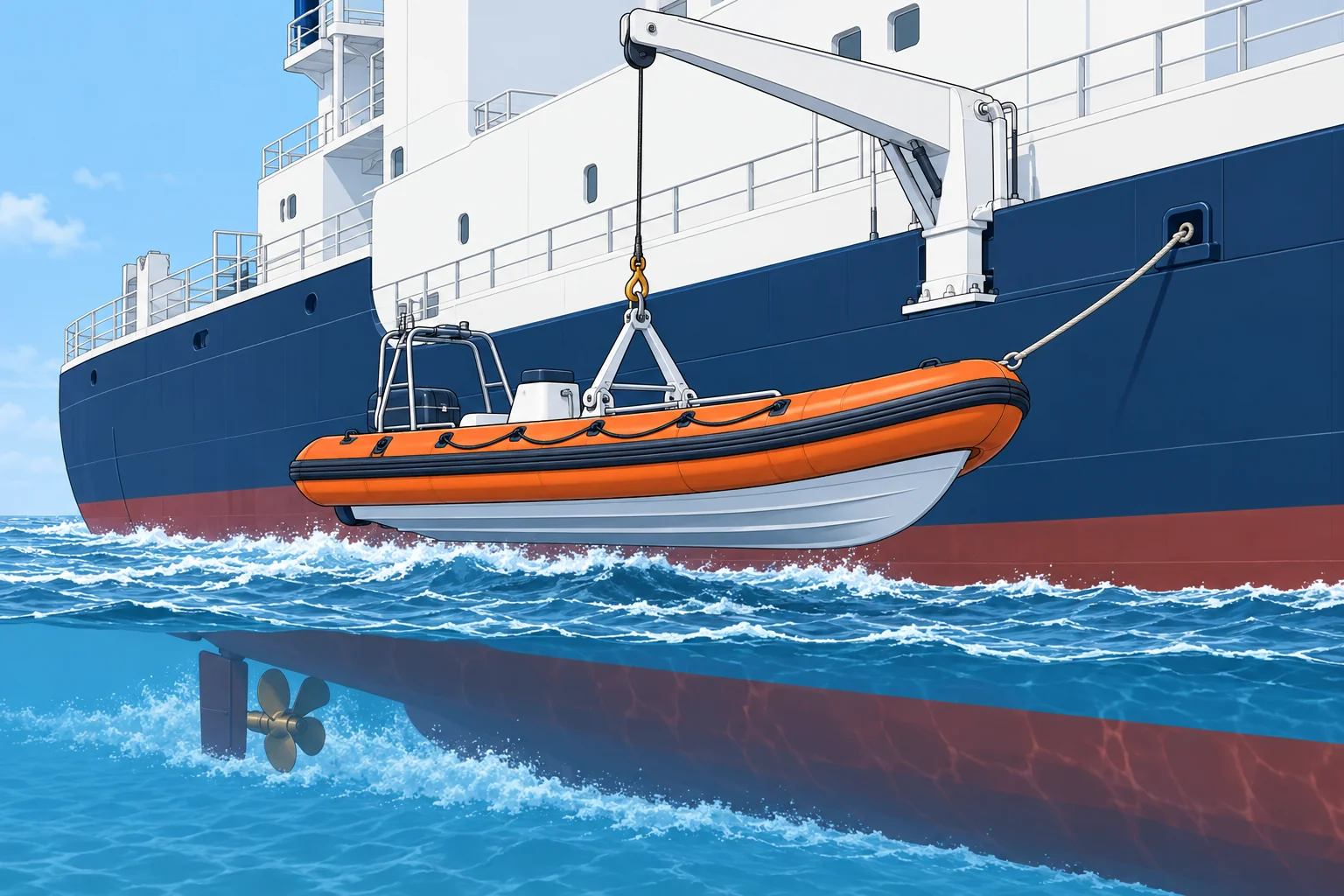
Recovering the FRB in a seaway, maintenance and drills
1The lesson in plain words
Match the ship's speed for recovery. Hook on as the boat rises, confirm the hook is reset and locked, then hoist promptly. Keep boat, davit and crew ready.
The approach
Wait until the bridge confirms a safe lee, the side sheltered by the ship, and steady course and speed. Approach from astern on the lee side, come under the davit, the boat-launching crane, and match the ship's speed. Take the painter, a line controlling the boat alongside, or a recovery line, so the boat rides steadily under the hook. Ship handling for the lee is in Manoeuvring: heavy weather.
Hooking on
Bring the hook within safe reach; keep clear of a swinging fall block, the pulley assembly above it. Use foul-weather recovery strops, lifting straps that keep a dangerous heavy block away from the crew, where provided. As the boat rises, connect the lifting point and confirm the hook is fully closed, correctly reset and locked. Signal the winch operator, then take the weight and hoist promptly using the approved system procedure. Stay seated, hold on and keep clear of the fall, the hoisting wire.
Upkeep
Check weekly: tubes and pressure, hull, fuel, engine operation as the maker allows, kill cord, lights, radio and equipment. Check the davit, wire, damper and hook to the manual. Under MSC.402(96), certified personnel of the manufacturer or an authorised service provider carry out annual thorough examinations and operational tests. Five-yearly work includes thorough examination, release-gear overhaul and overload operational tests by appropriately certified personnel.
Drills
Rescue boats are launched with their crew and manoeuvred each month where reasonable and practicable, and at least every 3 months (SOLAS III/19). FRB crews practise launching, handling, recovery and righting in different conditions, building up from calm weather. Brief every launch, stop any drill that becomes unsafe, and debrief afterwards.
2Key data
- Recovery position
- From astern, lee side, matching the ship's speed
- Hook on
- Boat rising; confirm hook reset and locked, then hoist at once
- Foul weather
- Recovery strops where heavy fall blocks are a danger
- Drills
- Launch monthly if practicable; at least every 3 months
- Servicing
- Annual examination/tests; 5-year examination, overhaul, overload tests
3Key points
- 1
Approach from astern into the lee, match the ship's speed and ride on the painter.
- 2
Hook on as the boat rises; once the hook is confirmed correctly reset and locked, signal to hoist at once.
- 3
Stay seated and clear of the fall; use foul-weather recovery strops where needed.
- 4
Launch and manoeuvre monthly where practicable, at least every 3 months.
4Frequent mistakes
Wrong: Hook on in the trough and wait for the ship's crew to take the weight.
Right: Hook on as the boat rises. Confirm the hook is fully closed, correctly reset and locked, then signal to hoist promptly using the approved procedure.
Wrong: Grab the swinging hook as soon as it comes near.
Right: Wait until it is steady and in reach; a swinging hook and block can break bones.
Wrong: Only practise FRB launches in harbour on calm days.
Right: Build up to realistic conditions with care, so the crew can launch and recover when it matters.
5Practice case & exam keys
The FRB returns with a survivor. The ship has stopped and is rolling in a 2 m beam swell, with the davit on the weather side.
Show the answer
Tell the bridge the recovery side is exposed. Hold clear until a safe lee and agreed steady speed are confirmed. Approach from astern, match speed and take the painter. Connect as the boat rises, confirm the hook is fully closed, correctly reset and locked, then signal to hoist at once under the approved procedure. Keep crew seated and clear of the fall.
Exam keys
- Recovery: ship makes a lee at slow steady speed; FRB approaches from astern and matches speed on the painter.
- Hook on as the boat rises; confirm fully closed, correctly reset and locked; signal to hoist at once; crew seated and clear.
- Foul-weather recovery strops where heavy fall blocks are a danger (LSA 6.1.1.11).
- Drills monthly where practicable, at least every 3 months; MSC.402(96) servicing applies.
Finish this unit
When you've read it, answer three questions. Get all three right to finish the unit; opening the page alone doesn't count.
My notes for this unit
No notes