

Familiarisation, training and drills on board
1The lesson in plain words
You get safety familiarisation before any duties, training within two weeks, and regular drills set by SOLAS. Know the intervals: they are exam favourites.
Familiarisation first
Before you are given any duties, you receive safety familiarisation on board (STCW Regulation VI/1, Code section A-VI/1). You learn to understand safety signs and alarm signals; what to do if someone falls overboard, if fire or smoke is found, or if the fire or abandon-ship alarm sounds; your muster and embarkation stations and escape routes; how to put on a lifejacket, raise the alarm and use a portable extinguisher; immediate first aid; and how to close the fire, weathertight and watertight doors.
Training on board
SOLAS III/19 adds that crew with emergency duties must know them before the voyage begins. Training in the ship's life-saving and fire-fighting appliances is given as soon as possible, and not later than two weeks after you join.
How often
Every crew member takes part in at least one abandon-ship drill and one fire drill every month. If more than 25 % of the crew have not taken part in these drills on that ship in the previous month, they are held within 24 hours of leaving port. On a new ship, after major modification or with a new crew, drills are held before sailing. Passenger ships hold them every week. Crew with enclosed-space duties drill at least every two months.
Boats in the water
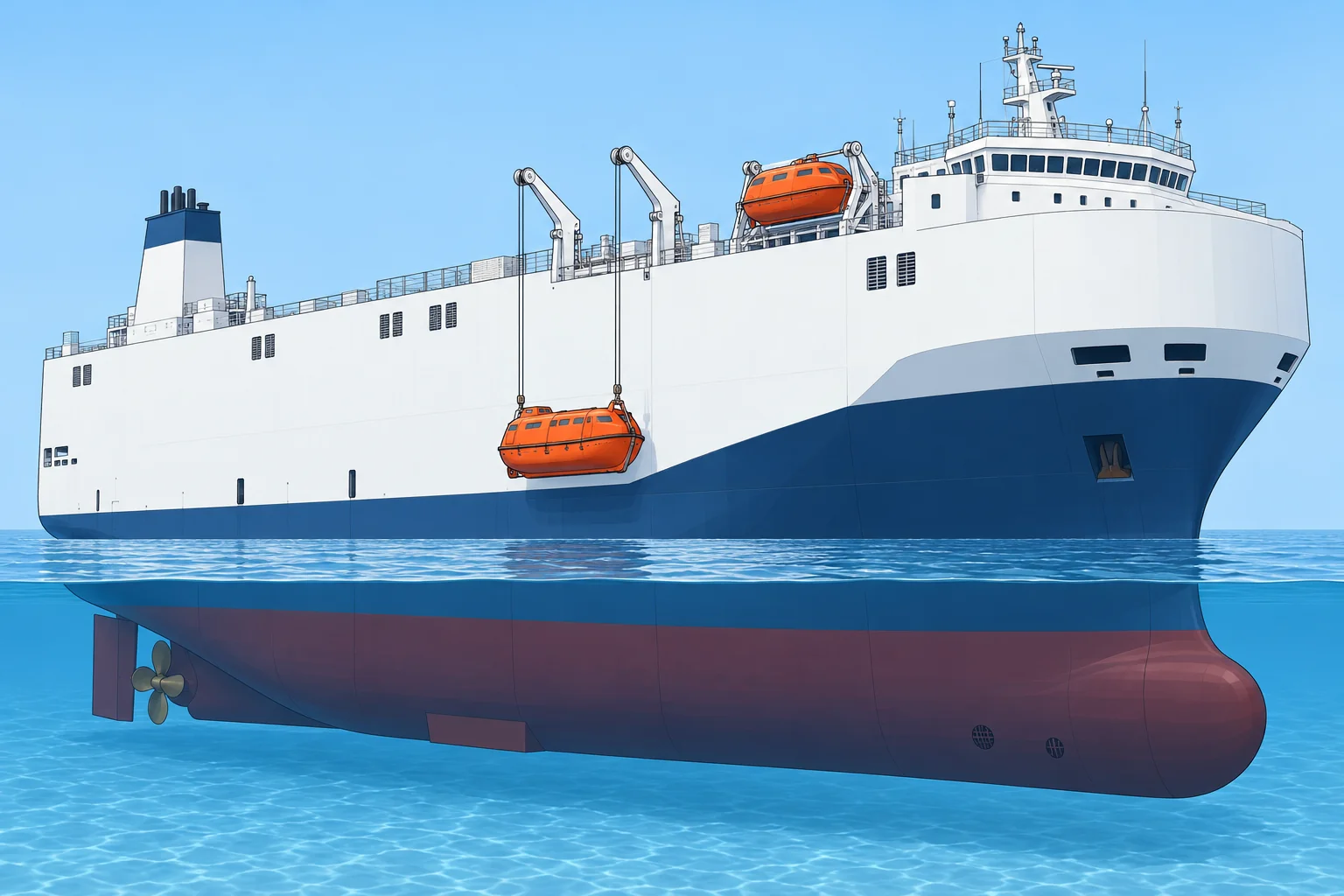
Conventional lifeboats on davits (boat-handling arms) are launched and manoeuvred by their operating crew at least every three months. For free-fall lifeboats, every three months crew board, strap in and rehearse up to release; the boat is then free-fall launched with its operating crew or lowered by its secondary system, and manoeuvred by that crew. At least every six months, carry out a free-fall launch with operating crew or approved simulated launch. Rescue boats launch and manoeuvre with their crew monthly where practicable, and at least every three months.
Inside an abandon-ship drill
The drill starts with the general alarm and a PA announcement. Crew report to muster stations, prepare for their duties, and are checked for suitable clothing and lifejackets put on correctly. At least one lifeboat is lowered after the preparations for launching, and its engine is started; liferaft davits are operated; the crew are taught to use the radio life-saving appliances. Emergency lighting for mustering and abandonment is tested at every drill. Drills are recorded in the logbook.
Safe drills
A drill must teach, not injure. Follow the officer's briefing, report faulty equipment, and never stand under a boat being lowered. IMO guidance on safety during abandon-ship drills (MSC.1/Circ.1578) helps officers plan them. Small-boat drills are in Emergencies: drills.
2Key data
- Abandon-ship and fire drill
- Each crew member monthly; passenger ships hold drills weekly
- 24-hour rule
- Within 24 h of sailing if over 25 % missed last month's drills
- Lifeboat in the water
- Each lifeboat, with its operating crew, at least every 3 months
- Free-fall lifeboat
- 3-month rehearsal and water drill; free-fall/simulation every 6 months
- Enclosed-space drill
- At least every 2 months
- On-board training
- Within 2 weeks of joining (SOLAS III/19)
3Key points
- 1
Safety familiarisation comes before any shipboard duties (STCW VI/1).
- 2
Each crew member joins abandon-ship and fire drills at least monthly. Passenger ships hold these drills weekly.
- 3
Over 25 % missed last month: drills within 24 h of leaving port.
- 4
Lifeboats: 3-month launch/lower and manoeuvring; free-fall boats also rehearse. Free-fall launch or simulation every 6 months.
- 5
Enclosed-space drills every 2 months; emergency lighting tested at each abandon-ship drill.
4Frequent mistakes
Wrong: A drill is a formality: walk to the muster station and sign the sheet.
Right: Act as in a real emergency: follow your assigned duty. Collect clothing and your lifejacket only if safe and without delaying escape. That is how you learn.
Wrong: Familiarisation can wait until the first monthly drill.
Right: Safety familiarisation comes before you are given any duties on board.
Wrong: Stand close under the lifeboat to watch it being lowered.
Right: Keep clear of a boat being lowered or recovered, and follow the officer's briefing.
5Practice case & exam keys
Your tanker sails tomorrow. Eight of the 24 crew joined this week and have not yet done a drill on this ship. The last drills were held three weeks ago.
Show the answer
Eight of 24 is one third, more than 25 % of the crew, who have not taken part in drills on this ship in the previous month. SOLAS therefore requires an abandon-ship drill and a fire drill within 24 hours of leaving port. The new crew must also have had safety familiarisation before being given duties, and must know their emergency duties before the voyage begins. Training in the ship's equipment follows within two weeks.
Exam keys
- Safety familiarisation before duties; on-board training within two weeks.
- Every crew member participates at least monthly. Passenger ships hold abandon-ship and fire drills weekly.
- More than 25 % missed last month: drills within 24 h of sailing.
- Lifeboats: 3-month launch/lower and manoeuvring; free-fall boats also rehearse. Free-fall launch or simulation every 6; enclosed space every 2 months.
Finish this unit
When you've read it, answer three questions. Get all three right to finish the unit; opening the page alone doesn't count.
My notes for this unit
No notes