

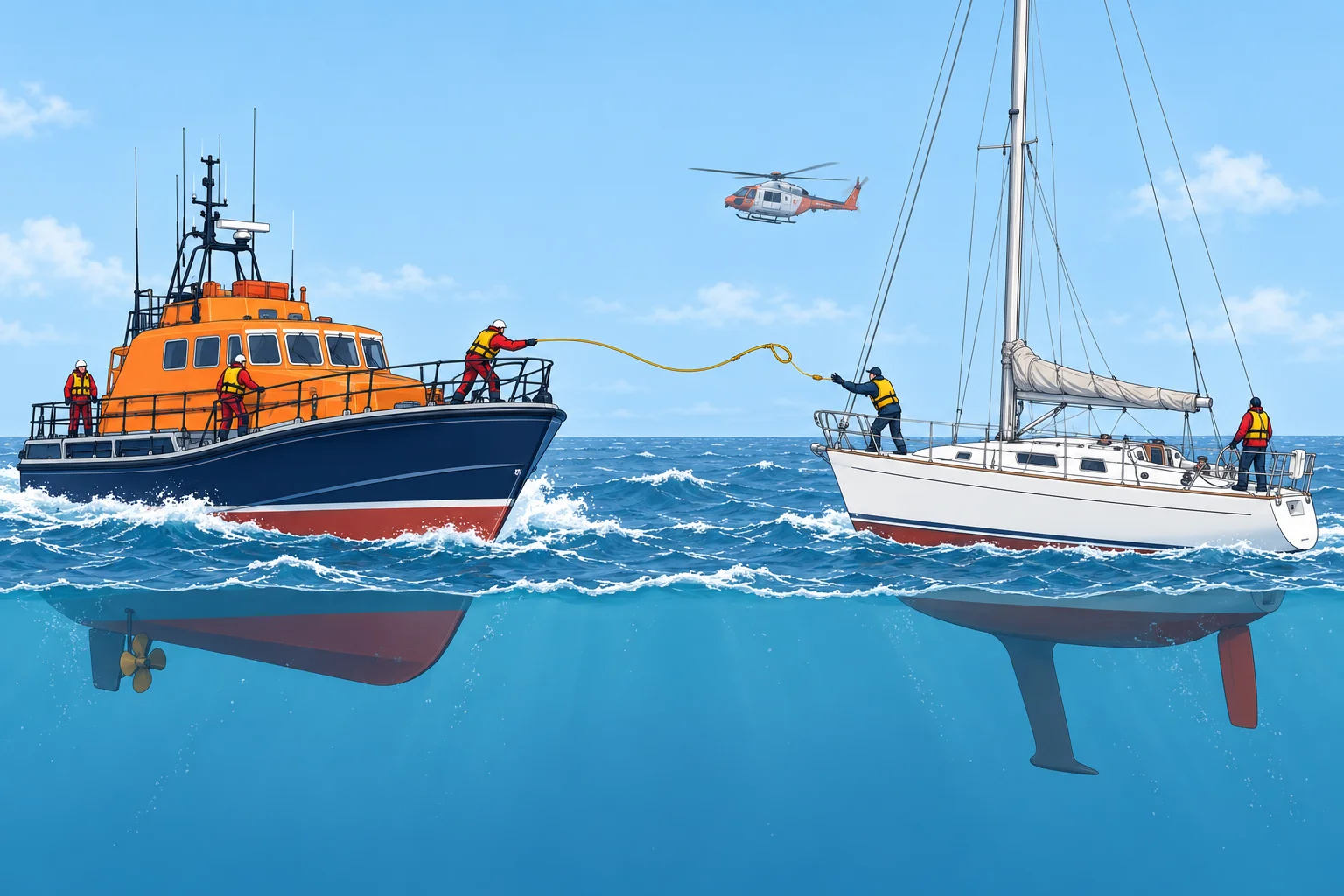
What to expect from lifeboats and helicopters
1The lesson in plain words
Rescuers will call you on VHF, tell you what they want and may put crew aboard. Your job is to be ready, visible and to follow instructions.
Lifeboats
Rescue boats come from coastguards, navies and volunteer services such as the RNLI, the Dutch KNRM, the German DGzRS, the French SNSM and Spain’s Salvamento Marítimo with its Salvamar boats. Expect a VHF call, often moved to a working channel. Keep the radio on and answer briefly: position, people aboard, injuries and the problem.
Getting ready
Put lifejackets on everyone. Clear loose lines and gear from the deck and cockpit. Show a light at night and keep the boat steady. Agree a suitable towing attachment with the lifeboat crew. A tow bridle (a line arrangement sharing the load between strong attachment points) may be needed. Protect the line from chafe (wear from rubbing). Do not assume a windlass (anchor winch), mast or cleat can take towing loads. A lifeboat crew member may board to help.
Being towed
Take the line as the lifeboat crew tells you, secure it to the agreed towing attachment, and keep a knife ready. Steer to follow the towing boat unless told otherwise. Keep someone on the radio. Do not stand where a line could break and whip back. Tell them if anything changes: water coming in, a line chafing, someone hurt.
Helicopters
Secure loose gear against downdraught (air blown down by the rotors), keep listening on VHF and follow the aircrew; see Emergencies: helicopter and flares.
2Key points
- 1
Rescuers will call on VHF: keep listening and answer briefly.
- 2
Lifejackets on, deck clear, light at night.
- 3
For a tow: suitable towing attachment, chafe protection, knife ready.
- 4
Follow instructions exactly; tell rescuers when anything changes.
- 5
Helicopters: secure loose gear, keep listening on VHF and follow the aircrew.
3Frequent mistakes
Wrong: Secure the tow line to any handy cleat.
Right: Use attachment points suitable for towing loads, following the lifeboat crew’s advice. A bridle still needs strong fittings.
Wrong: Switch the VHF off once the lifeboat is in sight, to save battery.
Right: Keep the radio on: rescuers give instructions by VHF until you are safe.
4Practice case & exam keys
Your engine has failed near a lee shore (a shore the wind blows you towards). You are drifting towards it. The lifeboat is 20 minutes away and plans to tow you. What must you decide while preparing?
Show the answer
Assess whether you can stay clear until help arrives and tell the lifeboat about your drift. If needed and safe for the depth and seabed, anchor early rather than wait until close to shore. Put lifejackets on, clear the deck, agree suitable tow attachments and chafe protection, and keep a knife ready. Keep listening on the agreed VHF channel and report any worsening danger.
Exam keys
- Expect VHF contact on a working channel; give position, people, injuries, problem.
- Prepare: lifejackets, clear deck, lights, suitable towing attachment, chafe protection.
- Under tow: steer to follow, keep clear of the line, keep a knife ready, report changes.
- Helicopters: secure loose gear, keep listening on VHF and follow the aircrew.
Finish this unit
When you've read it, answer three questions. Get all three right to finish the unit; opening the page alone doesn't count.
My notes for this unit
No notes