

First actions in the survival craft
1The lesson in plain words
Get clear of the ship, gather survivors, stream the sea anchor, make the craft habitable, and use the first hours well.
Get clear
Once afloat with everyone in reach aboard, follow the person in charge. In a liferaft, cut the painter, the line joining the raft to the ship, when ordered, using the safety knife by the entrance. In a lifeboat, follow the person in charge and trained crew. Move clear of the ship's side, fire and burning oil, but stay near the position: rescuers search there first. Basic raft actions are in Emergencies: abandon ship.
Gather and link
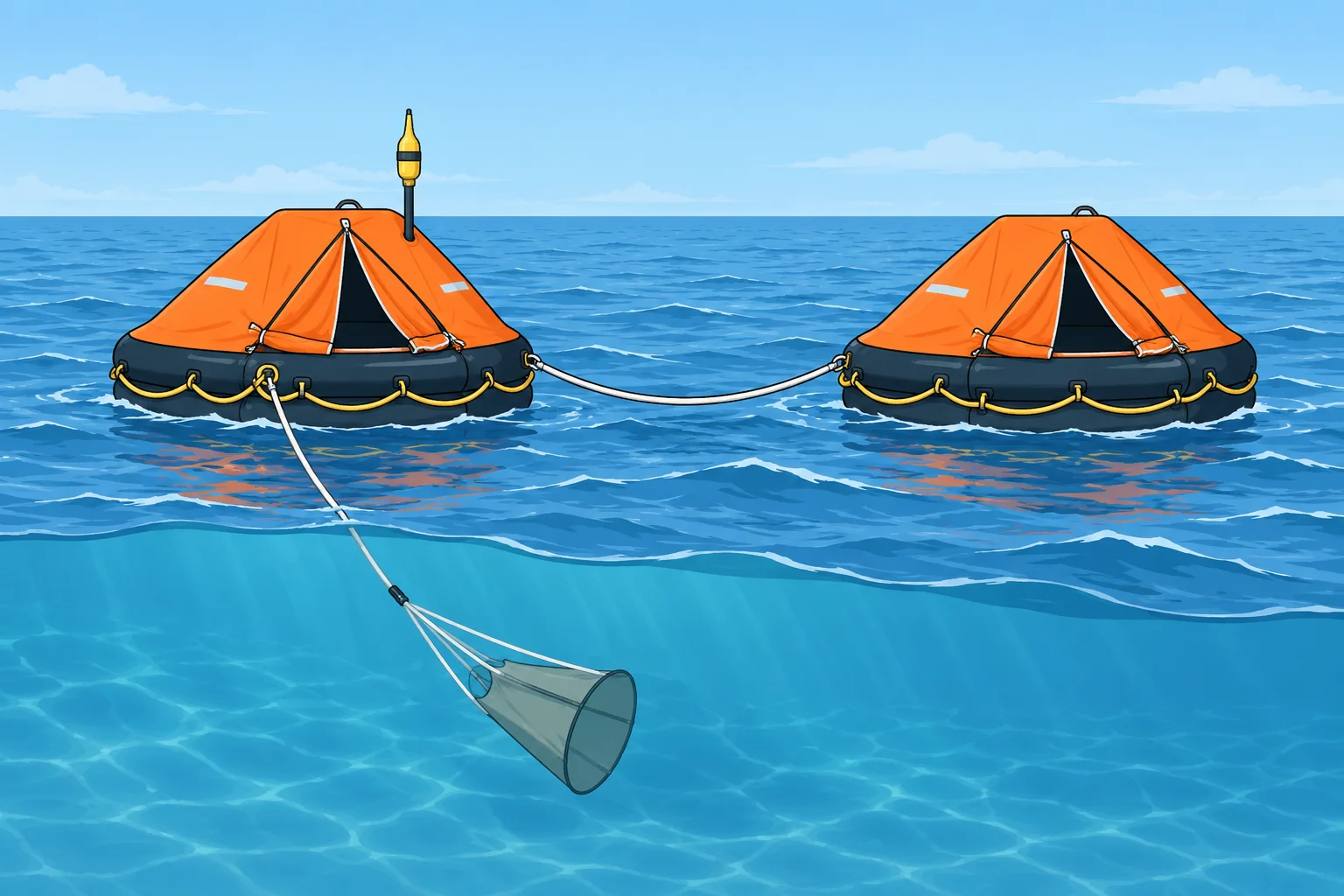
Pick up survivors in the water. A lifeboat can tow liferafts; rafts can be paddled. Follow the craft's instructions and leader's directions when linking. Use lines long enough to keep craft safely separated as waves move them. Watch for collisions and lines jerking tight. A group of craft is easier to see from the air and on radar, and you can share people, water and equipment.
Make it habitable
Stream means deploy: put out the sea anchor, a fabric drag device that slows drift and steadies the craft. Close the entrances against wind and spray, but ventilate, let fresh air in, regularly: carbon dioxide builds up in a closed craft, causing headaches and drowsiness. Bail, scoop out water, and sponge the floor dry. Inflate the raft floor if it has one. Huddle together for warmth.
The first 24 hours
Treat the injured. Offer seasickness tablets promptly to survivors who can safely swallow, following the medicine's instructions. Preventing vomiting saves body water. Assign someone to prepare location aids according to their instructions and training; detailed beacon operation is in the linked lessons. Keep a listening watch on the portable radio. Read the survival instructions. Set a lookout rota, a schedule of short watches, day and night, and keep a log.
2Step by step
First actions after boarding
- 1
Once afloat, follow the person in charge: cut the raft's painter when ordered and move clear of the ship.
A sinking or burning ship is the greatest danger to the craft.
- 2
Pick up survivors and link the craft together.
More people survive, and a group is easier to find.
- 3
Stream the sea anchor near the ship's last position.
It reduces drift and capsizing; rescuers search the last known position.
- 4
Close the entrances, ventilate regularly and bail the craft dry.
Keeping out wind and water saves heat; fresh air stops carbon dioxide building up.
- 5
Treat the injured. Offer seasickness tablets promptly to survivors who can safely swallow, following the medicine's instructions.
Seasickness causes vomiting, dehydration and loss of will.
- 6
Assign location aids to someone following their instructions and training. Set a lookout rota and read the survival instructions.
Rescue depends on being seen and heard; the instructions are written for this craft.
3Key data
- Seasickness tablets
- Offer promptly; follow medicine instructions; safe swallowing required
- Location aids
- Use as instructed; keep a listening watch
- Lookout
- Short watches, day and night
4Key points
- 1
Once afloat, follow orders: cut the raft's painter, clear the ship and stay near the position.
- 2
Gather survivors; link craft with safe separation and watch for lines jerking tight.
- 3
Stream the sea anchor; close up, but ventilate regularly; bail dry.
- 4
Offer seasickness tablets promptly if survivors can safely swallow; follow the medicine's instructions.
- 5
Use location aids as instructed; set a lookout rota, keep a log and give everyone a job.
5Frequent mistakes
Wrong: Keep the entrances tightly shut all the time to stay warm.
Right: Close them against wind and spray, but ventilate regularly. Carbon dioxide builds up in a closed craft.
Wrong: Take seasickness tablets only once you start to feel sick.
Right: Offer tablets promptly to survivors who can safely swallow, following the medicine's instructions. Preventing vomiting saves water.
Wrong: Motor or paddle away from the area to search for land.
Right: Stay near the ship's last position, with the sea anchor out, unless the person in charge decides otherwise.
6Practice case & exam keys
Your liferaft has cleared the sinking ship with 12 people aboard. A second raft with 6 people is drifting 100 m away. Two people in your raft are injured, and several are already looking pale and queasy.
Show the answer
Have helpers assess the injured and offer seasickness tablets as instructed if swallowing is safe. Signal the other raft. The leader should arrange linking only if conditions and available strength allow safe manoeuvring. Otherwise keep contact by signals. Stream the sea anchor when clear and not manoeuvring. Close against spray, ventilate and bail. Prepare location aids, assign watches and read the survival instructions.
Exam keys
- Once afloat, follow orders: cut the raft's painter, clear the ship, stay near the position, stream the sea anchor.
- Gather survivors and link craft.
- Close, ventilate, bail; offer seasickness tablets promptly if safe to swallow, following the medicine's instructions.
- Use location aids as instructed; keep listening, set lookout watches, read survival instructions and assign jobs.
Finish this unit
When you've read it, answer three questions. Get all three right to finish the unit; opening the page alone doesn't count.
My notes for this unit
No notes