

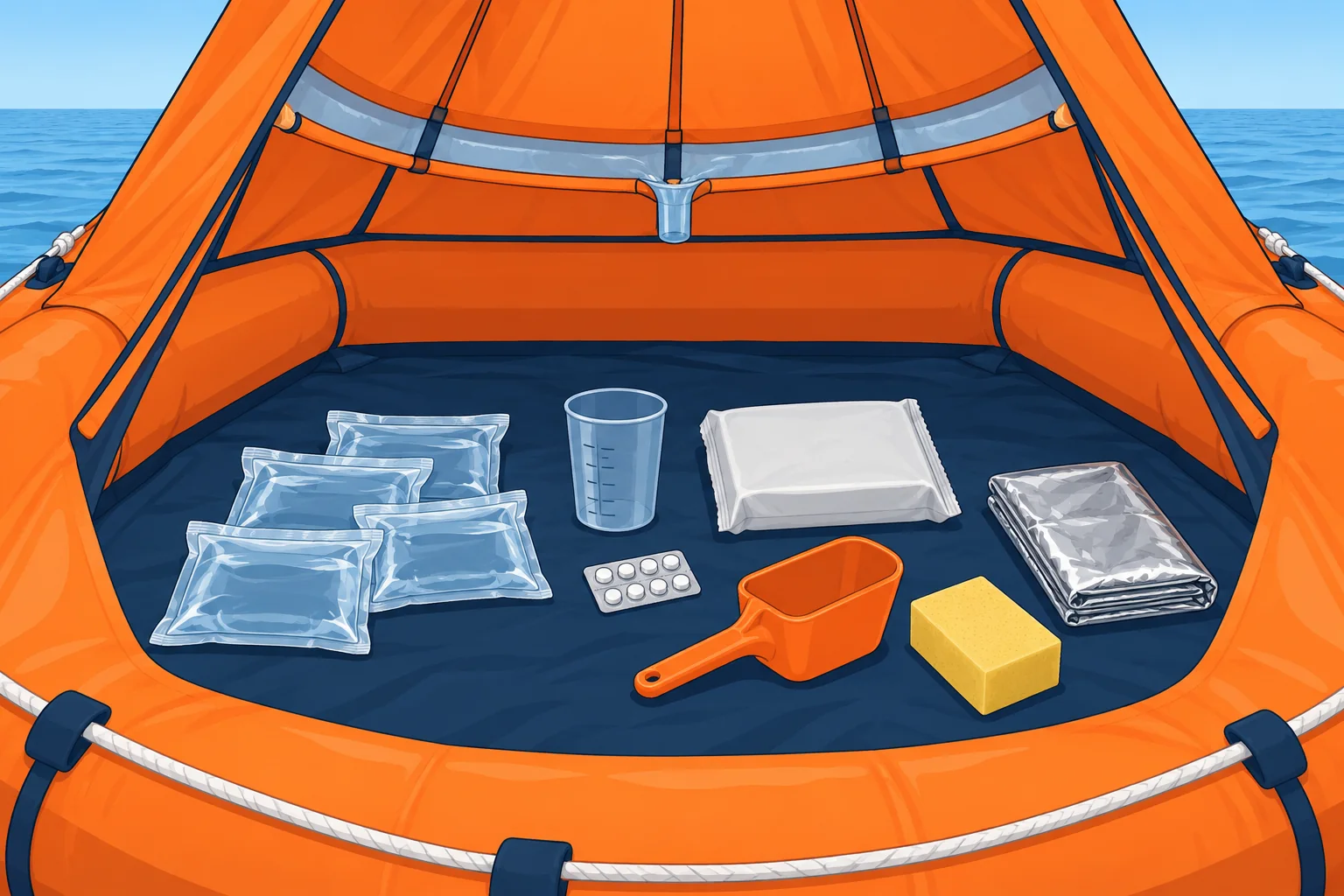
Survival priorities, water and the dangers to survivors
1The lesson in plain words
Protect yourself first, help rescuers find you, then manage water and food. Never drink seawater or urine, and keep hope and routine going.
Priorities
Think protection, location, water, food, in that order. Protection comes first: shelter from wind, spray, cold and sun, keep dry and close together, and treat injuries. Location means helping rescuers find you. Water keeps you alive for days; food matters least, because healthy people can live for weeks without it.
Water rules
The usual training rule is no water in the first 24 hours except for injured, sick or vomiting survivors. Start sooner in great heat or if anyone is already dehydrated, under the person in charge. Follow the craft's instructions and review rations as conditions change. Give small, regular sips and collect rain. Never drink seawater or urine.
Food
Eat the emergency rations only after the first day, in small amounts, and only when there is water: digesting food uses body water. Do not eat fish or seabirds unless you have plenty of water to spare.
Dangers to survivors
The main dangers are cold, seasickness and dehydration, a shortage of water in your body. Cold can cause hypothermia, a dangerously low body temperature. Other dangers include sunburn, heat, injuries, skin sores from wet clothing, swollen cold feet and loss of hope. Keep clothing as dry as possible and cover your skin from the sun. Treatment is in Medical: cold water.
Leadership and routine
The person in charge keeps everyone busy and informed: lookout watches, bailing, checking the craft, rationing and a written log. A routine and a leader prevent panic and keep hope alive. Talk, encourage each other and believe you will be rescued: the will to live is one of the strongest survival tools.
2Key data
- Priorities
- Protection, location, water, food
- Water, first 24 h
- Usually none; except injury, sickness, vomiting, heat or dehydration
- Water after that
- Share evenly as the instructions say, in small sips
- Never drink
- Seawater or urine
- Supplies carried
- Lifeboat 3 L water per person; SOLAS A pack raft 1.5 L
3Key points
- 1
Priorities: protection, location, water, food.
- 2
Normally no water for 24 h; exceptions: injury, sickness, vomiting, heat or dehydration. Follow the craft's instructions.
- 3
Then share water evenly in small sips; collect rain; never seawater or urine.
- 4
Main dangers: cold, seasickness, dehydration; also sun, sores, injury and despair.
- 5
A leader and a routine keep people alive.
4Frequent mistakes
Wrong: Drink plenty in the first hours while everyone is strong.
Right: Usually no water for 24 hours except for injury, sickness or vomiting. Start sooner in great heat or existing dehydration under the person in charge; follow the craft's instructions.
Wrong: A little seawater mixed with fresh water stretches the supply.
Right: Never drink seawater, even mixed. The salt makes dehydration worse.
5Practice case & exam keys
On the first evening in a liferaft, one survivor demands a full bottle of water, saying he is very thirsty. Another has been vomiting all afternoon. A third suggests drinking a little seawater to save supplies.
Show the answer
Check whether the thirsty survivor is unwell or already dehydrated, and assess the heat. Follow the craft's instructions under the person in charge. The usual first-day rule has exceptions for injury, sickness, vomiting, great heat and existing dehydration. Give the vomiting survivor small sips. Never use seawater or urine. Collect rain, review rations as conditions change and assign useful jobs.
Exam keys
- Priorities: protection, location, water, food.
- Normally no water for 24 h; exceptions: injury, sickness, vomiting, heat or dehydration. Follow the craft's instructions.
- Never drink seawater or urine; collect rain; eat only when there is water.
- Main dangers: cold, seasickness, dehydration; keep a leader and a routine.
Finish this unit
When you've read it, answer three questions. Get all three right to finish the unit; opening the page alone doesn't count.
My notes for this unit
No notes