

Situational awareness: perceive, understand, predict
1The lesson in plain words
Situational awareness is knowing what is happening, what it means and what will happen next. Learn the warning signs that you are losing it.
Three levels
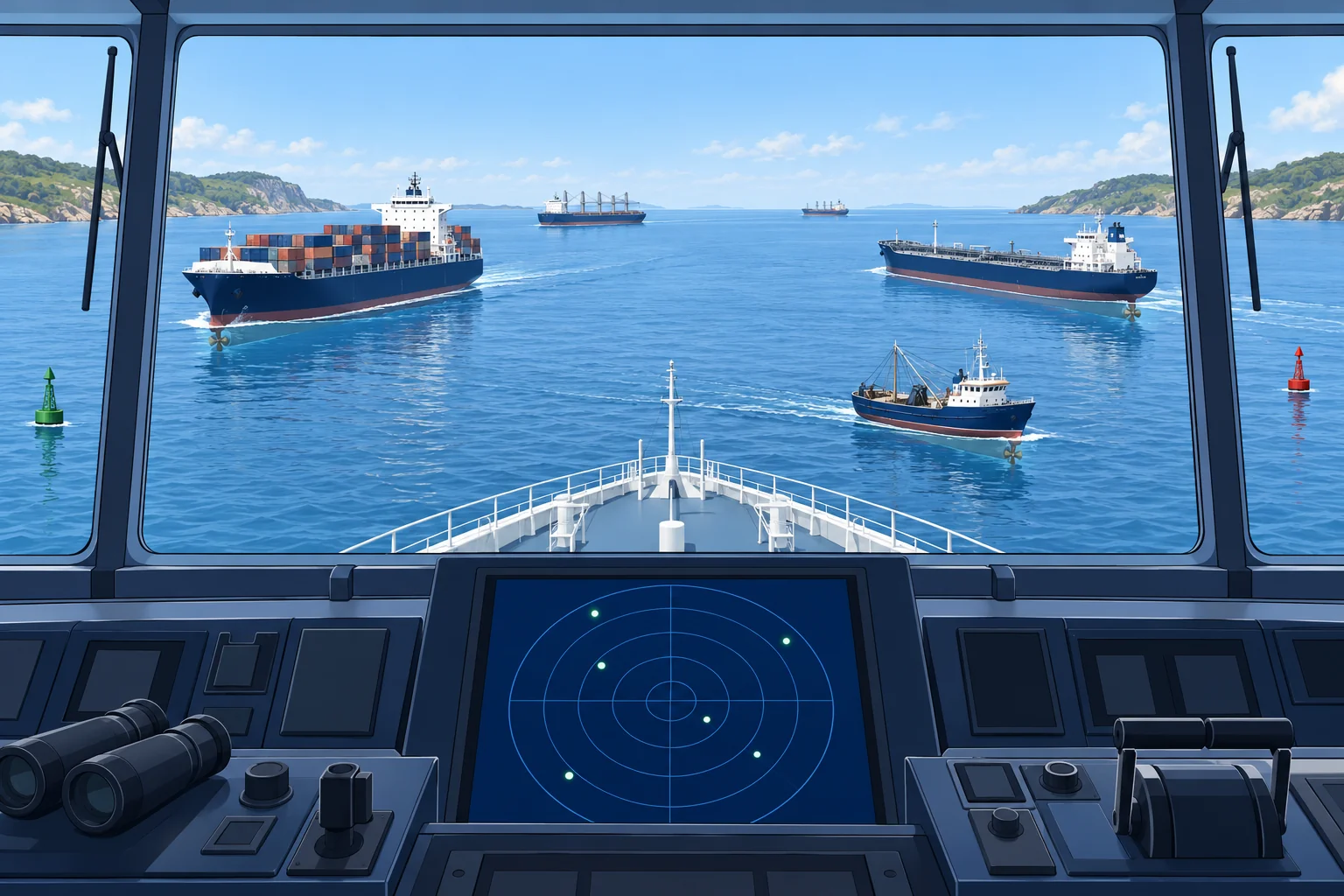
Psychologist Mica Endsley described situational awareness (SA) in three levels. Level 1, perception: noticing the relevant facts, such as a target, a depth or an alarm. Level 2, comprehension: understanding what they mean together, such as 'that ship is on a collision course'. Level 3, projection: predicting what will happen next, such as 'the ship will reach the harbour entrance before the tug arrives'. Good decisions need all three.
How it is lost
Most SA errors happen at Level 1: you did not notice, because of distraction, overload, fatigue or poor equipment set-up. Others happen at Level 2 or 3: you saw the facts but misread them, often because you expected something else. Confirmation bias means noticing facts that fit your picture and ignoring those that do not.
Warning signs
Signs that SA is slipping include: ambiguity, two sources disagreeing; fixation, staring at one screen or task; confusion or uncertainty; departing from the plan without a reason; not meeting a target or limit; nobody looking out of the window; and an unresolved discrepancy. When you notice one, stop and rebuild the picture.
Building it back
Compare genuinely independent observations; two displays may share the same source. Ask others what they see. Share what you know and what remains uncertain. Reduce distractions and delegate secondary tasks. Keep the person directing the ship free to concentrate on that task.
2Key points
- 1
Endsley's three levels: perception, comprehension, projection.
- 2
Most SA errors are at Level 1: a relevant fact is never noticed.
- 3
Warning signs: ambiguity, fixation, confusion, unexplained deviation, unresolved discrepancy.
- 4
Rebuild SA by cross-checking sources and sharing your picture aloud.
3Frequent mistakes
Wrong: If one display shows normal readings, you have full situational awareness.
Right: That is one Level 1 fact. Cross-check other sources and think about what is coming next.
Wrong: Two sources disagreeing is normal; pick the one you trust more.
Right: A discrepancy is a warning sign. Resolve it before you rely on either source.
4Practice case & exam keys
During cargo work, a rating reports water spreading near a hose connection. The control screen shows normal pressure, and the team is rushing to finish. What do you do?
Show the answer
Treat the disagreement as a warning, not proof that either source is right. Pause the affected task safely and alert the responsible officer. Cross-check independent observations and ask others what they see. Share what is happening, what it means and what could happen next. Reduce distractions. Resume only when the discrepancy is resolved and controls are agreed.
Exam keys
- SA (Endsley): Level 1 perception, Level 2 comprehension, Level 3 projection.
- Common losses: distraction, overload, fatigue, confirmation bias.
- Cues of lost SA: ambiguity, fixation, confusion, deviation, discrepancy.
- Rebuild by cross-checking and communicating.
Finish this unit
When you've read it, answer three questions. Get all three right to finish the unit; opening the page alone doesn't count.
My notes for this unit
No notes