

Leadership and teamworking at operational level (STCW A-II/1)
1The lesson in plain words
As a junior officer you lead a small team every watch. Plan the work, share it fairly, communicate clearly and decide with the team's knowledge.
The competence
STCW table A-II/1 lists application of leadership and teamworking skills for every officer of the watch (OOW). It covers four areas: knowing how crew are managed and trained on board; task and workload management; effective resource management; and decision-making techniques. You need these on watch, in port, in drills and when you supervise ratings at work on deck.
Task and workload
Task and workload management means planning and coordinating the work, assigning people to tasks, respecting time and resource limits, and setting priorities. Before mooring, for example, check who is at each station, what equipment they need, and what comes first. Spread the load: an overloaded person misses things, and an idle one loses attention.
Resources and communication
Effective resource management means allocating, assigning and prioritising people and equipment. It also means communicating clearly on board and ashore and making decisions that use the team's experience. Assertiveness means stating your view clearly and respectfully, neither silent nor aggressive. Leadership includes motivating people, giving reasons for orders and recognising good work.
Deciding
A simple decision method fits most situations: assess the situation and the risk; identify the options; choose a course of action; act; then evaluate whether it worked. Under time pressure, keep the steps but shorten them. Ask the team what they see before you choose. Say your decision aloud so everyone knows it.
Leading upwards
Leadership is not only for the master. When you see a risk, you lead by speaking up with facts and a proposal. When a rating raises a concern, you thank them and act on it. A ship where juniors stay silent is a ship waiting for an accident. Bridge communication techniques are covered in Law: watchkeeping.
2Key points
- 1
STCW A-II/1 requires leadership and teamworking skills from every OOW.
- 2
Plan tasks, assign people, respect limits and set priorities.
- 3
Use the team's experience; be assertive, not silent or aggressive.
- 4
Decide in steps: assess, options, choose, act, evaluate.
- 5
Leadership includes speaking up to seniors and listening to juniors.
3Frequent mistakes
Wrong: Leadership skills only matter for the master and chief mate.
Right: STCW A-II/1 makes them part of every watch officer's competence. You lead ratings every watch.
Wrong: Being assertive means insisting loudly until the other person gives in.
Right: Assertiveness is stating facts and your view clearly and respectfully, then listening to the answer.
4Practice case & exam keys
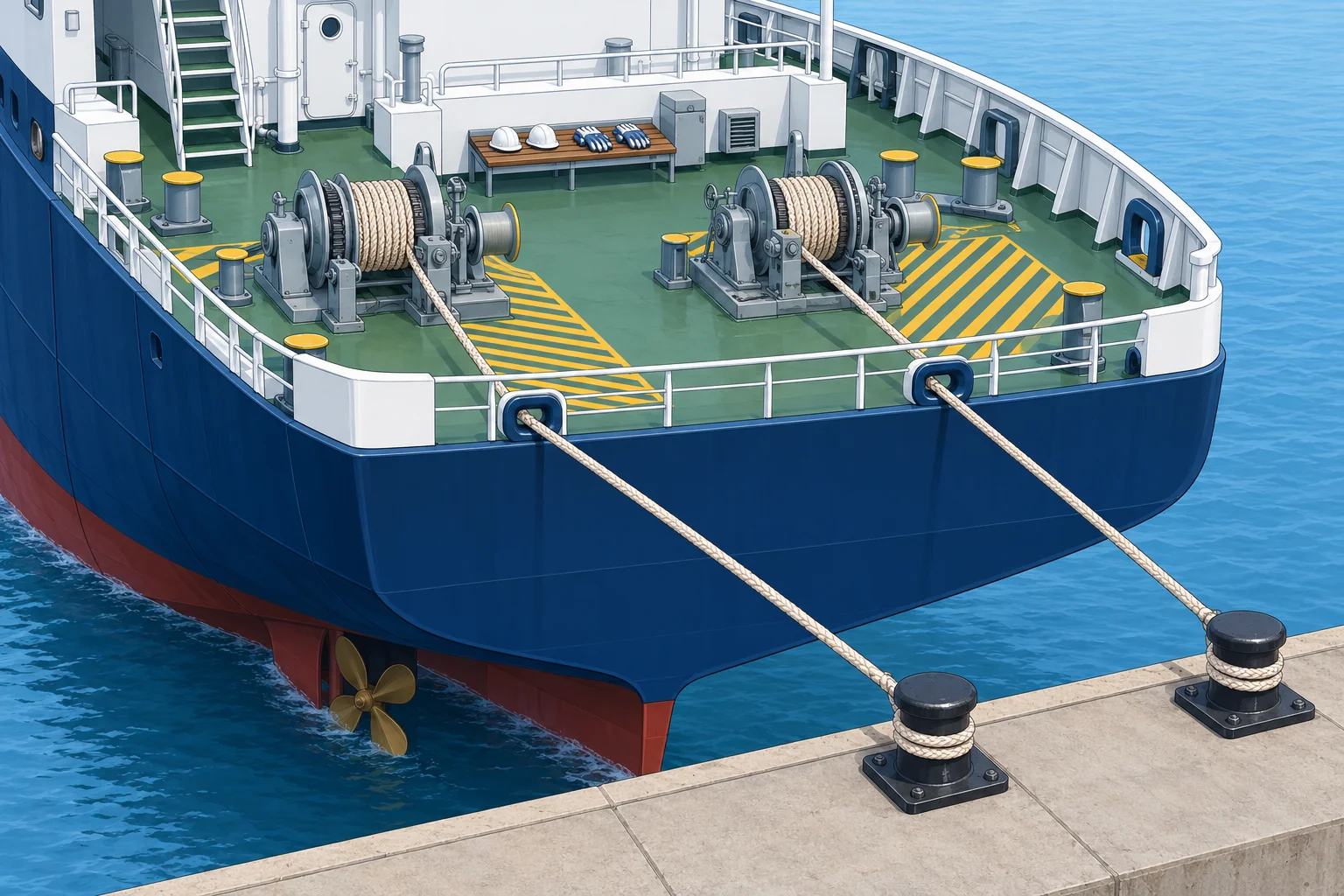
You are third officer in charge of the aft mooring station with two ratings. The master wants the ship all fast in 20 minutes. One rating is new and nervous; a spring line is fouled on the winch drum. How do you lead the station?
Show the answer
Stop the affected work and keep everyone clear of the fouled line. Tell the bridge about the hazard and delay. Agree a safe plan before work resumes. Assign tasks to match experience and supervise the new rating. Explain priorities and ask both ratings to raise concerns. Check whether the plan works and review the job afterwards.
Exam keys
- A-II/1 competence: application of leadership and teamworking skills.
- Task and workload management: planning, assignment, limits, prioritisation.
- Resource management: allocation, communication, assertiveness, leadership.
- Decision-making: situation and risk assessment, options, course of action, evaluation.
Finish this unit
When you've read it, answer three questions. Get all three right to finish the unit; opening the page alone doesn't count.
My notes for this unit
No notes