

Nationality of ships and the duties of the flag state
1The lesson in plain words
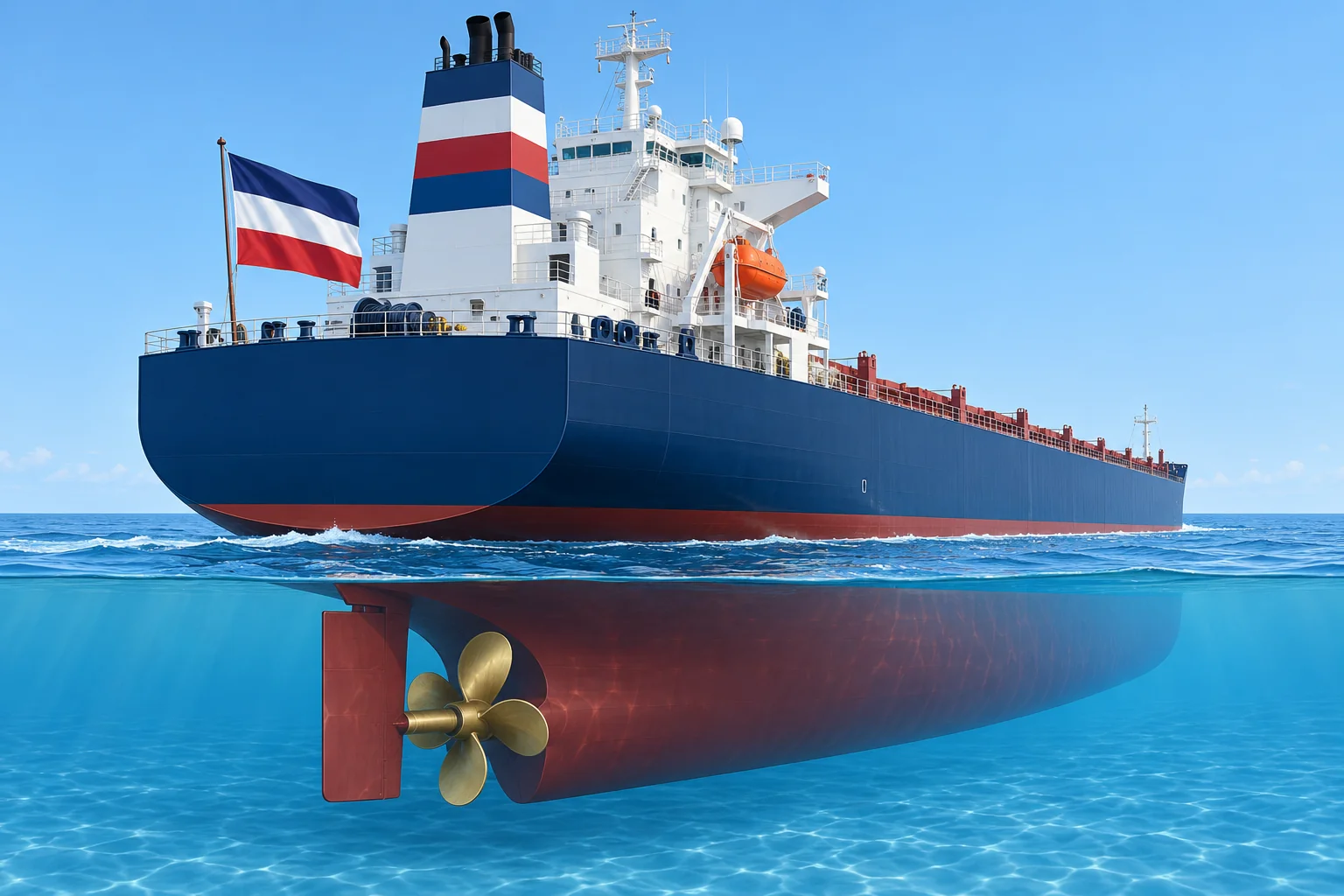
Your ship has the nationality of its flag. On the high seas, jurisdiction normally rests with that state, which must control the ship effectively.
Nationality
Every state may let ships fly its flag (article 90). It decides how a ship gets its nationality, registers her and issues documents. There must be a genuine link between the state and the ship (article 91). Many owners use open registers, flags that accept ships owned abroad. These are sometimes called flags of convenience. The genuine link then rests on the flag's real control over the ship, not on the owner's nationality.
One flag only
A ship sails under one flag only (article 92). During a voyage or port call, she may change flag only after a real transfer of ownership or change of registry. Using flags as convenient may lead to treatment as a ship without nationality. A bareboat charter hires a ship without crew. Where permitted, bareboat registration lets her fly the charter registry's flag while her right to fly the underlying registry's flag is suspended.
Flag state duties
Under article 94 the flag state must exercise effective jurisdiction and control over its ships in administrative, technical and social matters. It must keep a register. It must ensure that its ships are surveyed, properly built and equipped, and manned by qualified crews with decent conditions. It must ensure that masters and officers know the international rules on safety, collisions, pollution and radio. These duties are spelt out in SOLAS, MARPOL, STCW and the MLC.
Checks and inquiries
A state that has clear grounds to believe that the flag is failing may report this to the flag, which must investigate (article 94(6)). The flag must also hold an inquiry into a high-seas casualty or incident of navigation involving its ship if it kills or seriously injures another state's nationals, seriously damages another state's ships or installations, or seriously harms the marine environment (article 94(7)).
Collisions on the high seas
After a collision on the high seas, penal (criminal) or disciplinary proceedings against the master or crew may be brought only by the flag state or the person's national state (article 97). Only the state that issued a certificate may withdraw it. For these collision proceedings, only the flag state may order arrest or detention of the ship, even for investigation.
Duty to assist
Article 98 requires you to assist people in danger without serious danger to your ship, crew or passengers. When informed of people needing rescue, proceed with all possible speed if reasonably expected. After collision, assist the other ship and people; where possible, exchange ship names, registry ports and next ports of call.
2Key data
- Genuine link
- UNCLOS art. 91
- One flag only
- Art. 92: using flags as convenient may mean stateless treatment
- Flag state duties
- Art. 94: effective jurisdiction and control
- High-seas collisions
- Art. 97: flag/national state proceedings; only flag detains ship
- Duty to assist
- Art. 98, also SOLAS V/33
3Key points
- 1
A ship has the nationality of her flag; there must be a genuine link (article 91).
- 2
A ship using different national flags as convenient may be treated as stateless.
- 3
The flag must exercise effective jurisdiction and control (article 94).
- 4
High-seas collision: only the flag state or the person's state may prosecute (article 97).
4Frequent mistakes
Wrong: After a high-seas collision, any port state may bring penal proceedings against your master.
Right: Only the flag state or the master's national state may bring penal or disciplinary proceedings. For these collision proceedings, only the flag state may order arrest or detention of the ship, even for investigation.
Wrong: A ship may change flag during a voyage if the owner wishes.
Right: During a voyage or port call, a ship may change flag only after a real transfer of ownership or change of registry.
5Practice case & exam keys
Your Malta-flag ship collides with a Greek-flag ship on the high seas, beyond all EEZs. At the next port, in a third state, police want to arrest your Indian master for questioning about the collision. What does UNCLOS say?
Show the answer
Under article 97, only Malta or India may bring penal or disciplinary proceedings against your Indian master. For these collision proceedings, only Malta, the ship's flag state, may order her arrest or detention, even for investigation. Inform the company and flag and seek consular help. Separate civil claims follow their own rules.
Exam keys
- Article 91: nationality and genuine link; article 92: one flag only.
- Article 94: flag state's effective jurisdiction and control; casualty inquiries.
- Article 97: flag/national state penal proceedings; only flag state may detain the ship for these proceedings.
- Article 98: duty to render assistance.
Finish this unit
When you've read it, answer three questions. Get all three right to finish the unit; opening the page alone doesn't count.
My notes for this unit
No notes