

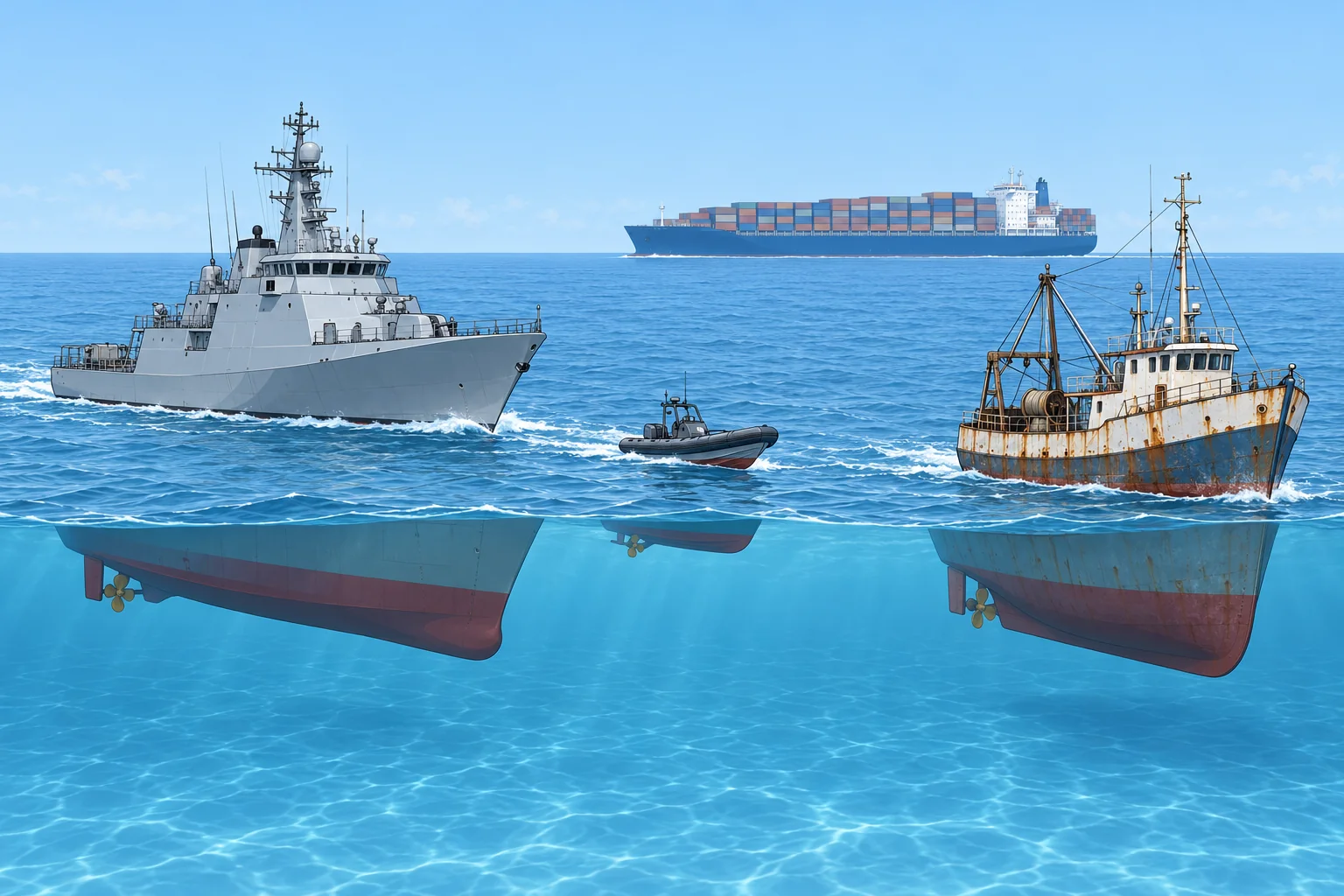
The high seas: freedoms, piracy, the right of visit and hot pursuit
1The lesson in plain words
The high seas are free to all, but not lawless. Warships may visit suspect ships, and a coastal state may chase a lawbreaker out to sea.
Freedoms
The high seas are open to all states (article 87). Their freedoms include navigation, overflight, laying cables and pipelines, fishing and scientific research, each subject to other rules. Each must be used with due regard for the interests of others. On the high seas your ship is under the exclusive jurisdiction of her flag state, with a few exceptions.
Piracy
Piracy (article 101) is illegal violence, detention or robbery for private ends, by crew or passengers of a private ship or aircraft against another ship, aircraft, people or property aboard. It occurs on the high seas or outside any state's jurisdiction. These piracy rules also apply in EEZs. Comparable attacks in internal, archipelagic or territorial waters are armed robbery against ships. Every state may seize pirate ships using warships, military aircraft or clearly marked, authorised government ships or aircraft.
Right of visit
Without treaty-based authority, article 110 permits a warship to visit a foreign merchant ship on reasonable suspicion of piracy, slave trade, unauthorised broadcasting, no nationality, or concealed nationality matching the warship's. For broadcasting, the warship's state must have jurisdiction. It may first check documents, then investigate further if suspicion remains. If suspicion is unfounded and the ship did nothing to justify it, compensation is due for resulting loss or damage.
Hot pursuit
A coastal state may pursue a foreign ship for breaching applicable laws from internal, archipelagic or territorial waters, or the contiguous zone, EEZ or continental shelf. The ship or its boat must be there at the start. First give a visual or sound stop signal within seeing or hearing distance. Pursuit must be continuous, by warships, military aircraft or clearly marked, authorised government ships or aircraft. It ends when the ship enters the territorial sea of its flag state or a third state.
Drug cooperation
Under article 108, states cooperate to suppress illicit drug trafficking by ships on the high seas. A flag state may request other states' assistance if it reasonably suspects a ship flying its flag. Drug suspicion alone is not an article 110 ground for boarding; treaty-based authority may provide separate powers.
2Key data
- High-seas freedoms
- Art. 87: navigation, overflight, cables, fishing, research
- Piracy
- Private ship/aircraft attacks another vessel; private ends; EEZ too
- Right of visit
- Art. 110: piracy, slaves, broadcasts, stateless, concealed own flag
- Hot pursuit
- Art. 111: start in relevant zone, stop signal, continuous
- Pursuit ends
- Entry into the flag state's or a third state's territorial sea
3Key points
- 1
On the high seas the flag state has exclusive jurisdiction, with listed exceptions.
- 2
Piracy: private ends, a private ship or aircraft attacking another vessel; rules apply on the high seas and in EEZs.
- 3
Without treaty-based authority, article 110 limits visits to its listed grounds; drug suspicion alone is insufficient.
- 4
Hot pursuit: start in the relevant zone, signal, continuous; ends in the flag state's or a third state's territorial sea.
- 5
Comparable attacks in internal, archipelagic or territorial waters are armed robbery against ships.
4Frequent mistakes
Wrong: An attack on an anchored ship in a port is piracy under UNCLOS.
Right: Comparable attacks in internal, archipelagic or territorial waters are armed robbery against ships. Piracy rules also apply in EEZs.
Wrong: Hot pursuit can start on the high seas once the coastal state learns of a breach.
Right: Pursuit must start while the ship is in the zone where the law applies, and be continuous.
Wrong: Any warship may search any merchant ship on the high seas.
Right: Without treaty-based authority, article 110 permits visits only on its listed grounds, starting with document checks.
5Practice case & exam keys
Your refrigerated cargo ship transfers fish without the required coastal-state licence, 20 NM inside its EEZ. A clearly marked, authorised coastguard boat gives a visible stop signal. You leave; it pursues continuously and stops you 30 NM beyond the EEZ. Is this lawful?
Show the answer
Yes. The pursuit starts in the EEZ for a breach of the coastal state's applicable fisheries law. The boat is authorised and clearly marked, its stop signal is visible, and pursuit is continuous. It may continue beyond the EEZ. It must end if your ship enters her flag state's or a third state's territorial sea.
Exam keys
- Article 87 high-seas freedoms; exclusive flag jurisdiction.
- Article 101 piracy: private ends, private ship/aircraft against another vessel; EEZ application via article 58(2).
- Article 110: suspected piracy, slave trade, unauthorised broadcasting, statelessness or concealed nationality matching the warship's.
- Article 111: start in relevant zone, signal, continuous; ends in flag state's or third state's territorial sea.
Finish this unit
When you've read it, answer three questions. Get all three right to finish the unit; opening the page alone doesn't count.
My notes for this unit
No notes