

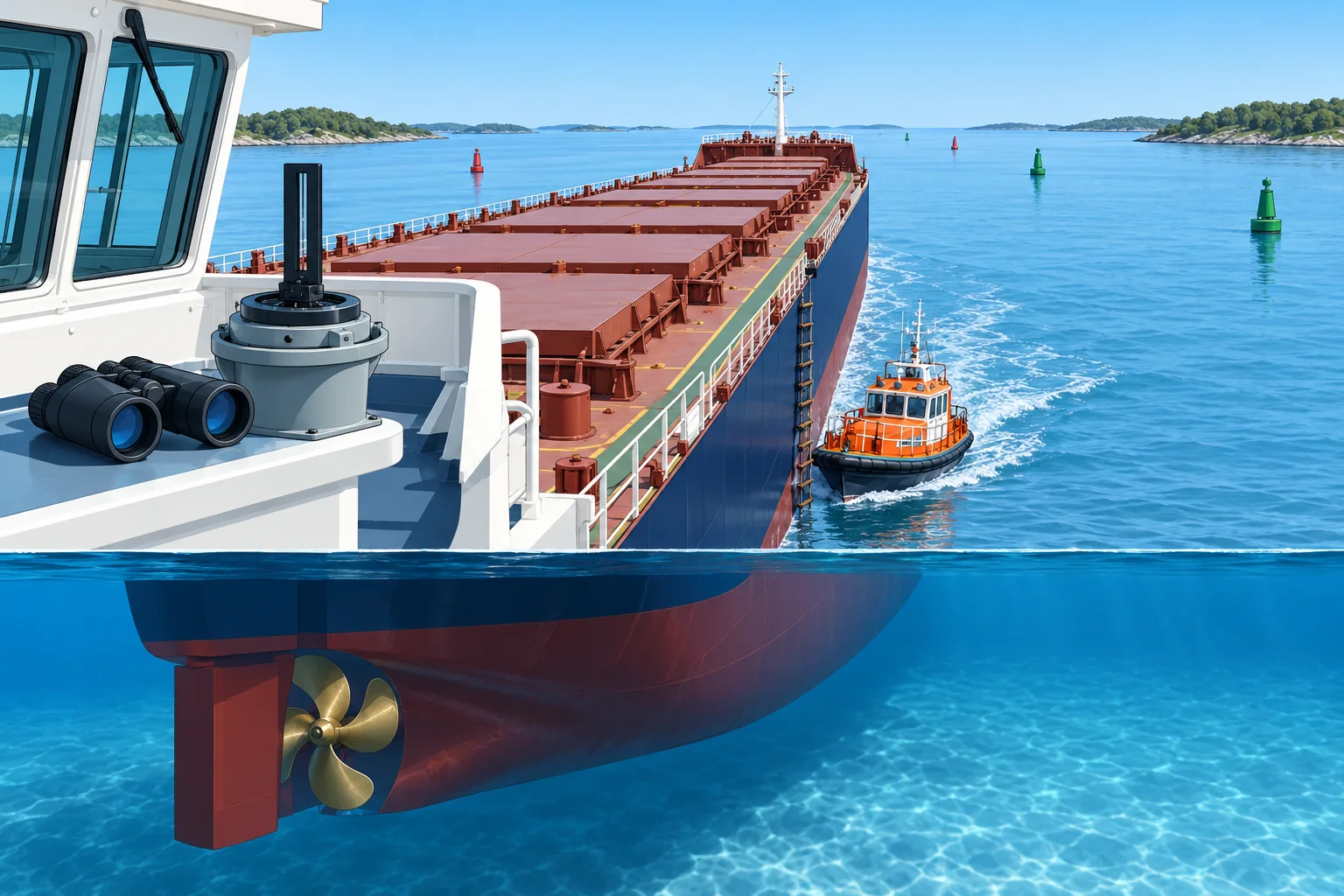
The look-out, calling the master and the pilot on board
1The lesson in plain words
Keep a proper look-out at all times. Call the master early when the STCW triggers apply, and never let a pilot's presence relieve you of your duties.
A proper look-out
COLREG Rule 5 requires a proper look-out by sight, hearing and all available means. The STCW Code adds that the look-out gives it full attention and takes no other duty. The look-out and the helmsperson are separate jobs. On a small ship, the helmsperson may also keep look-out only with an unobstructed all-round view from the steering position, unimpaired night vision and no other obstacle to keeping a proper look-out.
The OOW as sole look-out
In daylight only, after careful assessment, you may be the sole look-out. Every time, weather, visibility, traffic, nearby dangers and work near a traffic separation scheme must make it clearly safe. Help must be immediately available to be called to the bridge. You cannot use this daylight exception at night. Flag-state rules, company procedures and the master's orders may require an additional look-out even in daylight.
When to call the master
The Code says call the master immediately if: restricted visibility is met or expected; traffic or other ships' movements cause concern; you have difficulty keeping course; land, a mark or a sounding is not found when expected, or found unexpectedly; engines, steering, essential navigation equipment, an alarm or an indicator fail; radio equipment fails; heavy weather may cause damage; you meet any hazard to navigation, such as ice or a derelict (abandoned vessel); or any emergency or doubt arises.
Call and act without delay
Call the master immediately when a listed trigger applies. If safety requires immediate action, take it without waiting for the master. When another team member is available, have them call while you act. Report what you have done and keep monitoring.
The pilot on board
A pilot is a local expert who advises on navigation in a port or channel. The pilot's presence does not relieve the master or the OOW of their duties for the ship's safety. The master and pilot exchange information on the plan, local conditions and the ship's characteristics: the master–pilot exchange. You keep checking the position and movement. If you doubt the pilot's actions, ask for clarification. If doubt remains, call the master at once and act until the master arrives.
2Key data
- Sole look-out
- Daylight only, after careful assessment, help immediately available
- Helmsperson as look-out
- Small ships: all-round view, night vision intact, no other obstacle
- Pilot on board
- Does not relieve the master or OOW of their duties
- Doubt about the pilot
- Ask the pilot; if doubt remains, call the master and act
3Key points
- 1
The look-out gives full attention and does no other work; it is a separate job from steering.
- 2
The OOW may be sole look-out only in daylight, after careful assessment, with help at hand.
- 3
Call the master immediately for restricted visibility, worrying traffic, failures, heavy weather or doubt.
- 4
Notifying the master never delays your own immediate action for safety.
- 5
A pilot advises; the master and OOW keep their duties and keep monitoring.
4Frequent mistakes
Wrong: With a pilot on board, the OOW can relax and do paperwork.
Right: The pilot does not relieve you. Keep checking position, speed and heading, and question anything that looks wrong.
Wrong: Call the master only when you are certain there is a problem.
Right: Call when in doubt and when any STCW trigger applies. Early calls give the master time to understand the situation.
5Practice case & exam keys
Inbound with a pilot, the electronic chart display and information system (ECDIS) shows the ship drifting to starboard, 0.1 nautical miles from the channel edge. The pilot is on the phone and has given no correction. The master is in the chartroom. What do you do?
Show the answer
Tell the pilot clearly what you see: 'Pilot, the display shows us drifting towards the channel edge. Please check our track; I recommend a correction towards safe water.' If you get no clear answer or the doubt remains, call the master at once. If danger is close, act yourself with helm or engines until the master arrives. The pilot's presence does not relieve you.
Exam keys
- Rule 5 look-out by all available means; the look-out has no other duties.
- Sole look-out: daylight only, careful assessment each time, assistance immediately available.
- Notify the master immediately: restricted visibility, traffic concern, failures, missed or unexpected landmarks, heavy weather, ice, doubt.
- Pilot on board: duties unchanged; ask for clarification, then call the master and act.
Finish this unit
When you've read it, answer three questions. Get all three right to finish the unit; opening the page alone doesn't count.
My notes for this unit
No notes