

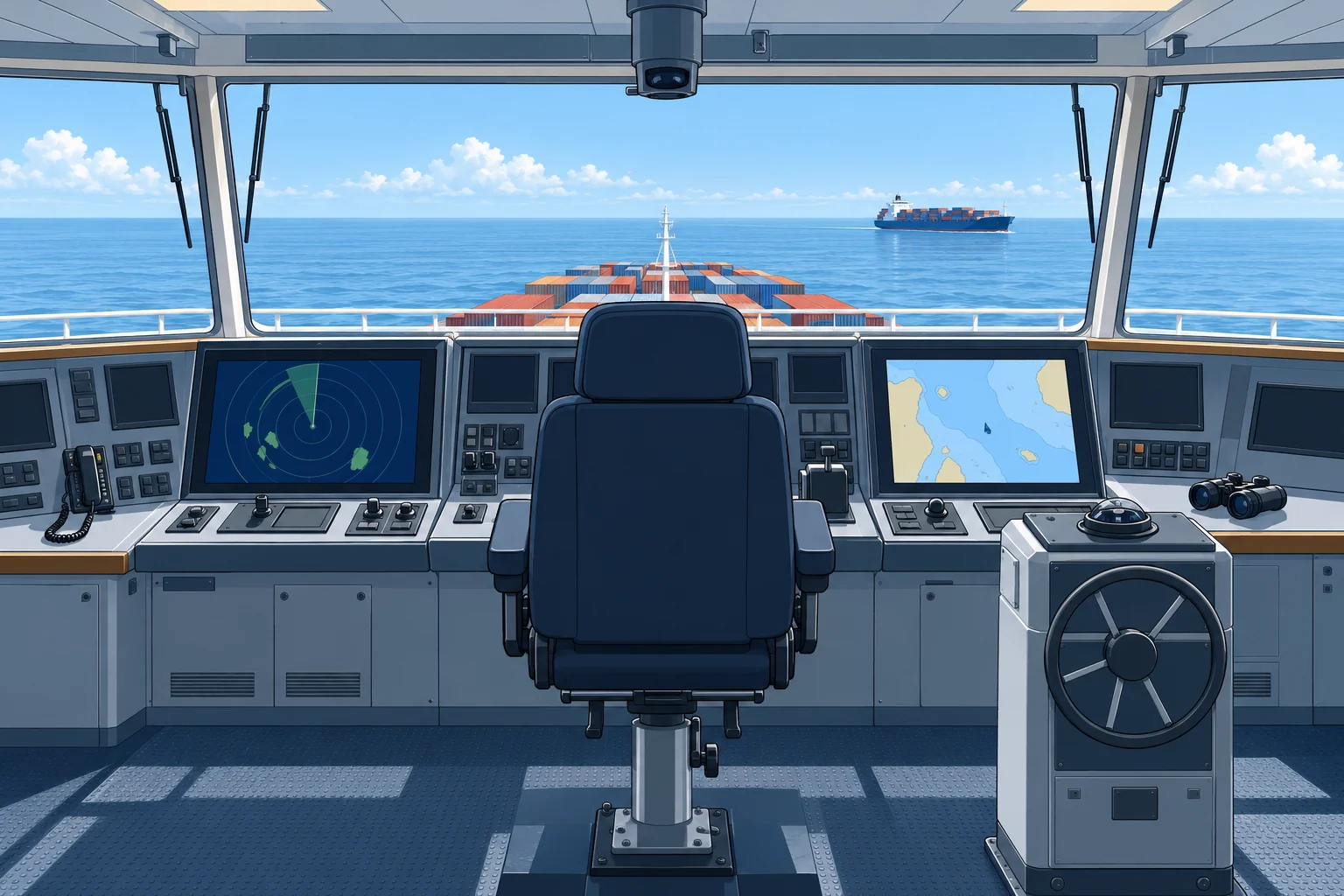
Watch arrangements and the officer of the watch (STCW A-VIII/2)
1The lesson in plain words
The master sets up the watch for the conditions. You, as officer of the watch, run it and keep the ship safe until you are properly relieved.
Where the rules sit
The STCW Code is the detailed part of the international training and watchkeeping convention. Section A-VIII/2 sets the principles for keeping a watch. Its Part 4-1 covers the navigational watch: the bridge watch while the ship is under way. Flag states make these principles national law, and your company adds them to its safety management system. Your master issues standing orders for routine watchkeeping and night orders for the coming night.
Composition of the watch
The master keeps the bridge attended and chooses the watch for the conditions. Consider daylight, visibility, weather, sea state, traffic, routeing and nearby dangers. Assess tasks, manoeuvres, crew fitness, experience, ship familiarity, radio duties and available help. Check bridge layout and the view from the conning position, where you direct the ship. Consider ship size, handling, automatic steering, navigation equipment, alarms and controls for machinery spaces without a continuous watch. Allow for extra workload near a traffic separation scheme, which divides opposing traffic into lanes.
Your core duties
As officer of the watch (OOW), you represent the master and remain responsible for safe navigation until properly relieved. Keep the watch on the bridge and never leave it until properly relieved. A short visit to a separate chartroom must be essential to navigation; first ensure safety and a proper look-out. Check position frequently, using more than one method where possible. Follow the passage plan. Use radar and other aids, knowing their limits. Take no other duty that interferes with your watch.
The master on the bridge
The master's presence alone does not transfer watch responsibility. You remain responsible until the master explicitly assumes that responsibility and you both understand it. Having the con means directing the ship's movements; make watch responsibility explicit. Confirm the transfer aloud, follow the ship's recording procedure and keep monitoring as assigned. Agree the transfer back before the master leaves.
Engines and steering
Do not hesitate to use the helm, the engines and the sound signals. Where you can, give the engine room timely notice of intended speed changes. Know the ship's stopping distance and turning circle from the manoeuvring data on the bridge. Change from automatic to hand steering in good time when traffic, restricted visibility or other hazards require it, so the look-out is never broken for an emergency.
2Key points
- 1
The master sets the watch composition from the STCW list of factors, not a fixed table.
- 2
You never leave the bridge until properly relieved.
- 3
You remain responsible until the master explicitly assumes watch responsibility and you both understand it.
- 4
Fix the position often, by more than one method where possible.
- 5
Switch to hand steering early in traffic, restricted visibility or close to danger.
3Frequent mistakes
Wrong: When the master comes to the bridge, the watch passes to the master.
Right: You stay responsible until the master explicitly assumes responsibility for the watch and you both understand it.
Wrong: The same watch composition suits every voyage.
Right: The master adapts each watch to visibility, traffic, hazards, workload and crew fitness.
Wrong: Using the engines without asking first shows poor seamanship.
Right: The OOW must not hesitate to use helm, engines and signals. Give the engine room notice where possible.
4Practice case & exam keys
At 0300 you are OOW in a coastal lane. The master comes up for coffee and stands behind the radar, watching. A crossing vessel's bearing remains steady while range decreases towards 4 nautical miles. The master says nothing. Who remains responsible for the watch, and what do you do?
Show the answer
You retain responsibility. Assess collision risk and take timely action under the applicable rules; tell the master what you are doing. Keep monitoring. You remain responsible until the master explicitly assumes responsibility for the watch and you both understand it. Agree who has the con and who keeps each monitoring duty, and record the transfer as required.
Exam keys
- A-VIII/2 Part 4-1: principles for the navigational watch; the master sets the watch from listed factors.
- The OOW is responsible for safe navigation and never leaves the bridge until properly relieved.
- Master on the bridge: the OOW stays responsible until the master explicitly assumes watch responsibility and both understand it.
- Use helm, engines and signals without hesitation; hand steering in good time.
Finish this unit
When you've read it, answer three questions. Get all three right to finish the unit; opening the page alone doesn't count.
My notes for this unit
No notes