

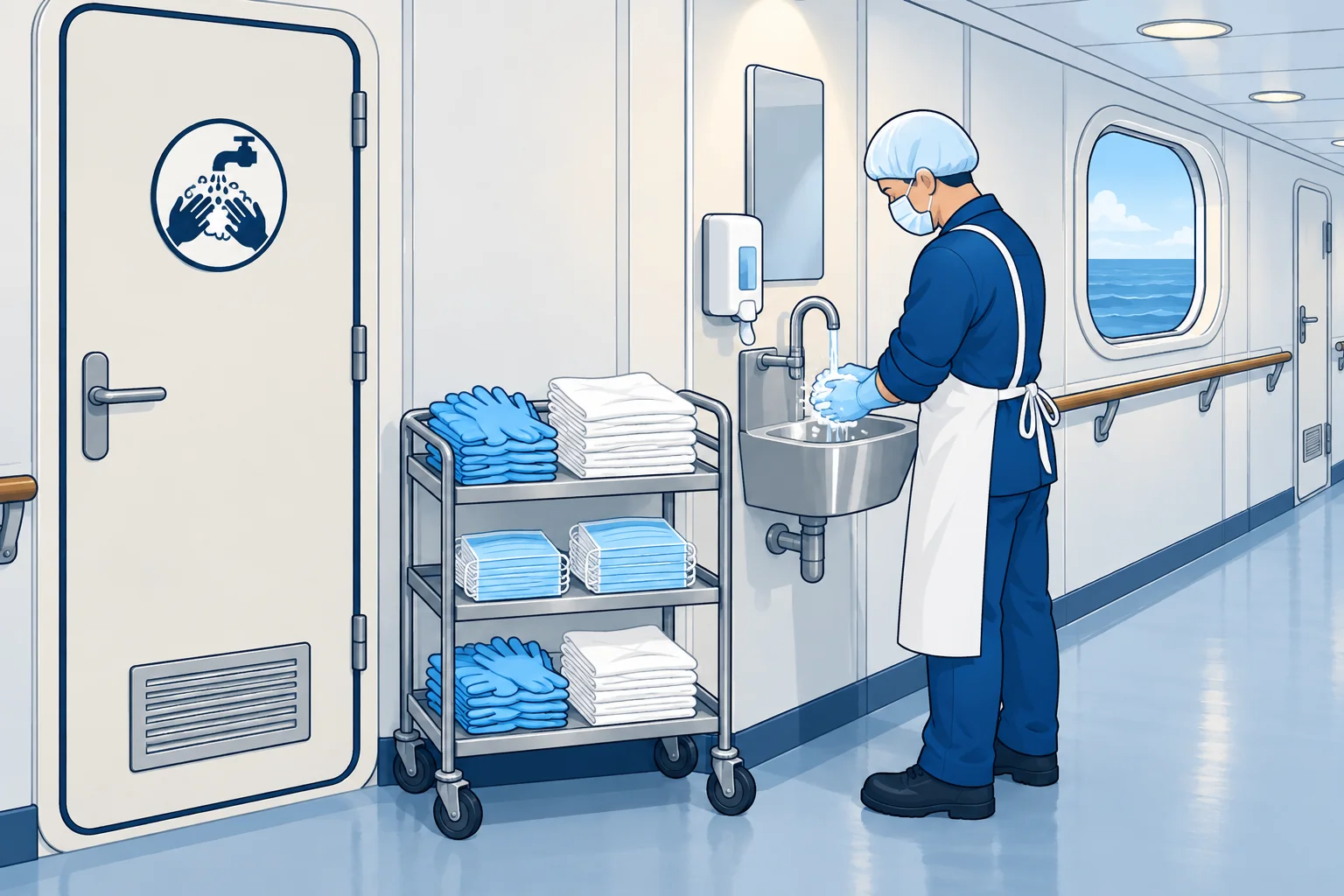
Infection control, isolation and communicable diseases
1The lesson in plain words
In a closed steel community one infection can stop a ship. Break the chain early: clean hands, the right protection, isolation and early advice.
How germs spread
A communicable disease can spread directly or indirectly between people, including through food, water or insects. Germs pass by contact (hands and surfaces), droplets (coughs and sneezes at close range), the air (fine particles, as with tuberculosis or measles), food and water, blood and body fluids, and insect bites (malaria, dengue). Standard precautions apply to every patient: hand hygiene, gloves for body fluids, safe sharps, cleaning and safe waste.
Isolation
Suspect infection with new vomiting or diarrhoea, fever with a rash or cough, jaundice, unusual bleeding or linked cases. Use the hospital or a single cabin with its own toilet. Keep the door closed and limit carers. Get radio medical advice on precautions and ventilation. Wear gloves and an apron or gown for body fluids, with eye protection for splashes. For suspected airborne infections such as tuberculosis or measles, carers need a fit-tested respirator (a tight-fitting filtering mask); a surgical mask is insufficient.
Common problems at sea
Gastroenteritis causes vomiting or diarrhoea. For suspected norovirus, isolate until 48 hours symptom-free; wash hands with soap and water and use a labelled norovirus-effective disinfectant after cleaning. Respiratory infections, including influenza and COVID-19, spread through the air: masks and ventilation help. Sexually transmitted infections spread mainly through sexual contact; condoms reduce risk. Hepatitis means liver inflammation. Hepatitis A/E often spread through contaminated food or water; B/C through blood, and B also through sex. Vaccines protect against A/B, not C.
Malaria
Malaria is spread by mosquitoes in tropical areas. Suspect it in any fever after a visit to a malaria area, even weeks or months later, and get radio medical advice at once: it can kill within days. Prevent it with nets, screens, long sleeves at dusk, repellent and the antimalarial tablets the company doctor prescribes.
Food, water and pests
Many outbreaks start in the galley or the water tanks. Galley staff with vomiting, diarrhoea or infected skin stop handling food until cleared. Keep cold food cold and hot food hot, and raw meat below cooked food. Keep drinking water disinfected as the World Health Organization (WHO) Guide to Ship Sanitation describes, and control rats, cockroaches and mosquitoes.
Records and cleaning
Record each case, its start date, symptoms and contacts to identify linked cases. Remove visible dirt before disinfecting. Use a product effective against the suspected germ, at its labelled dilution and wet contact time (how long the surface must stay wet); never mix cleaning chemicals. Wash linen hot and bag contaminated waste. Keep crew vaccination records up to date.
2Key data
- Standard precautions
- Hand hygiene, gloves, safe sharps, cleaning, safe waste
- Isolate
- Vomiting/diarrhoea, fever with rash or cough, jaundice; clusters
- Norovirus
- Isolate until 48 h symptom-free; clean, then disinfect as labelled
- Hand cleaning in outbreaks
- Soap and water; alcohol gel works poorly on norovirus
- Malaria
- Fever after a malaria area, even months later: advice at once
- Galley staff
- Off food handling with vomiting, diarrhoea or skin infection
3Key points
- 1
Standard precautions apply to every patient, whatever the diagnosis.
- 2
Isolate suspected infectious cases early; vomiting or diarrhoea may occur without fever.
- 3
In a vomiting and diarrhoea outbreak, wash hands with soap and water; clean surfaces, then disinfect as labelled.
- 4
Any fever after a malaria area needs radio medical advice at once.
- 5
Sick galley staff stop handling food until cleared.
4Frequent mistakes
Wrong: Alcohol gel is enough during a vomiting outbreak.
Right: Alcohol gel works poorly against norovirus. Wash hands with soap and water. Clean surfaces, then use a norovirus-effective disinfectant as labelled.
Wrong: A fever weeks after leaving a tropical port cannot be malaria.
Right: Malaria can start weeks or months later. Get radio medical advice at once.
Wrong: A cook with mild diarrhoea can keep working if careful.
Right: Take sick galley staff off food handling until cleared; one cook can infect the whole crew.
5Practice case & exam keys
Two days after leaving a West African port, three crew have vomiting and watery diarrhoea. The second cook was sick yesterday but kept working. What do you do?
Show the answer
Treat it as an outbreak. Isolate the sick in cabins or the hospital with their own toilets; take the second cook off food handling. Wash hands with soap and water; clean first, then disinfect toilets and touch points as labelled. Check shared food and water sources and seek advice on any suspected source. Record cases and contacts, and get radio medical advice; any fever after West Africa could also be malaria.
Exam keys
- Routes: contact, droplets, air, food and water, blood and body fluids, insects.
- Standard precautions for every patient; isolation with own toilet and limited carers.
- Norovirus: soap and water; clean, then disinfect as labelled; isolate until 48 h symptom-free.
- Fever after a malaria area: urgent radio medical advice.
Finish this unit
When you've read it, answer three questions. Get all three right to finish the unit; opening the page alone doesn't count.
My notes for this unit
No notes