

Seasickness: why it happens and how to prevent it
1The lesson in plain words
Seasickness comes from a mismatch between what your eyes see and what your balance organs feel. It is not a weakness, but it is a safety problem.
Why it happens
Your inner ear senses movement. Below deck your eyes see a cabin that seems still, while your inner ear feels the boat rolling and pitching. The brain gets two different messages, and the result is seasickness: yawning, cold sweat, pale skin, headache, nausea and vomiting. Almost anyone gets it in the right conditions, including experienced sailors.
Why it matters
Seasickness is more than unpleasant. A seasick crew member gets cold, tired and dehydrated, thinks slowly and may stop caring about safety. Leaning over the rail to vomit puts you at risk of falling overboard. A seasick skipper makes poor decisions. Most people adapt after two or three days at sea, but some never fully do.
Prevention on deck
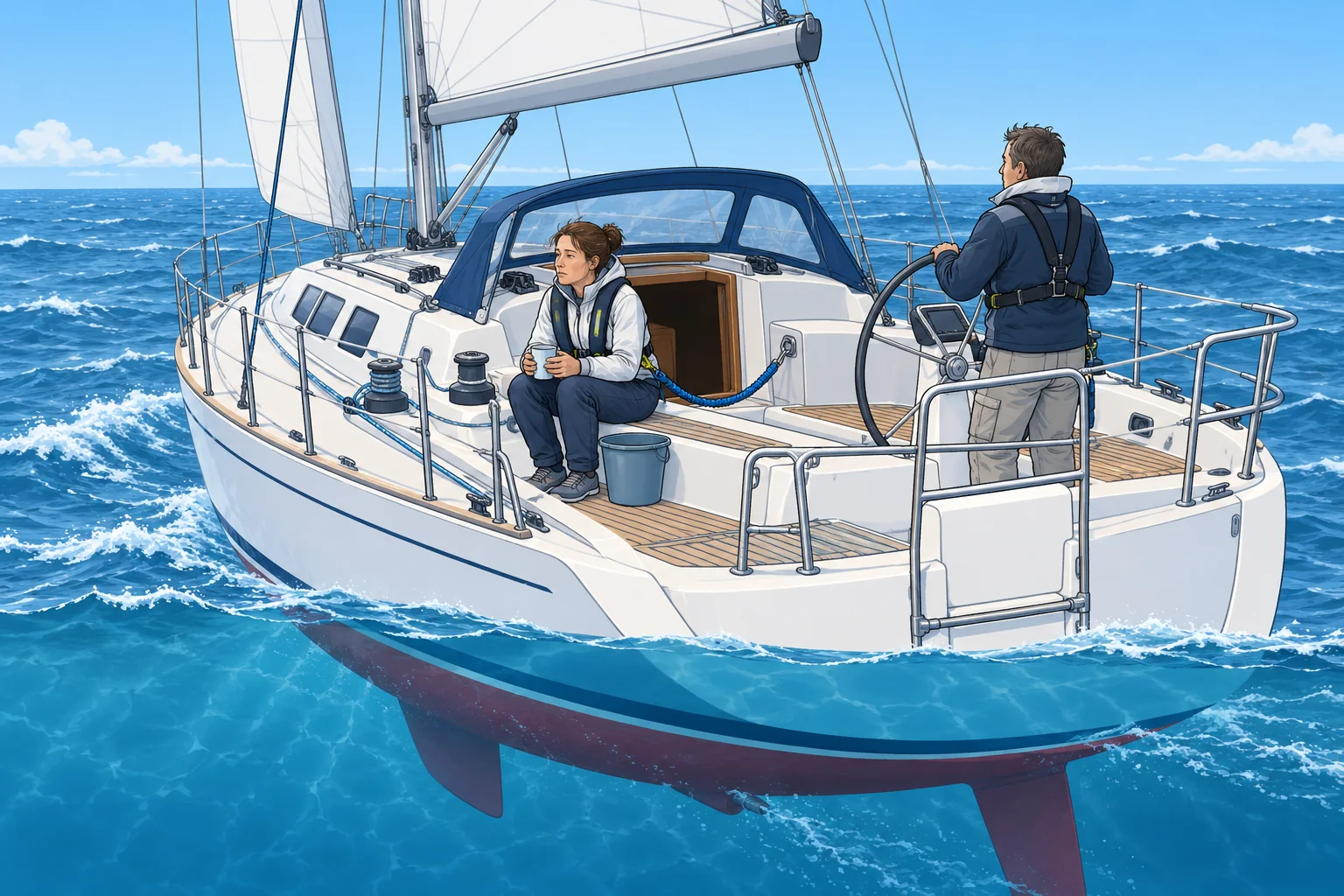
Stay on deck in fresh air and watch the horizon. Taking the helm can help you anticipate the motion, but do so only if alert and fit. Sit low and near the middle of the boat (amidships), where the motion is least. Keep warm and dry, and avoid diesel fumes and strong smells.
Before and during the passage
Sleep well the night before, avoid alcohol and heavy or greasy food, and eat small, plain meals and snacks often. Drink small amounts regularly. Below deck, lie down with your eyes closed. Avoid reading, screens and chart work below when you feel queasy. Ginger and wrist bands help some people; the evidence for them is weak.
Looking after a seasick crew member
Keep them on deck if they can be, wearing a safety harness tethered to a suitable strong point. Keep watch and give them a bucket in the cockpit rather than letting them lean over the lee rail. Give small sips of water often. If they are very ill, let them lie down below, warm and wedged in, with a bucket. Do not leave them alone on deck.
2Key data
- Cause
- Eyes and inner ear send different messages
- Early signs
- Yawning, cold sweat, pallor, headache
- Adaptation
- Most people after 2–3 days at sea
- Best place
- On deck, low and amidships, eyes on the horizon
3Key points
- 1
Seasickness is a mismatch between the eyes and the inner ear.
- 2
It is a safety problem: cold, tired, dehydrated, and at risk of going overboard.
- 3
Watch the horizon, low near the middle of the boat; helm only if alert and fit.
- 4
Rest, no alcohol, small plain meals, small regular drinks.
- 5
Seasick crew stay clipped on, watched, and vomit into a bucket.
4Frequent mistakes
Wrong: Go below to rest and read until you feel better.
Right: Reading below makes it worse. Go on deck and watch the horizon, or lie down with eyes closed.
Wrong: Let a seasick crew member lean over the lee rail unclipped.
Right: Clip them on, keep watch, and give them a bucket in the cockpit.
Wrong: Experienced sailors never get seasick.
Right: Anyone can be seasick in the right conditions. Plan for it on every passage.
5Practice case & exam keys
Two hours into a lumpy crossing, a guest who has been navigating at the chart table below comes up pale, sweating and yawning. She says she feels awful and wants to lie on the foredeck.
Show the answer
She is becoming seasick. Keep her in the cockpit, not on the foredeck, clipped on and low near the middle of the boat. Ask her to watch the horizon or offer her the helm if she is up to it. Give small sips of water and a plain biscuit, keep her warm, and give her a bucket. Take over the navigation yourself.
Exam keys
- Cause: conflict between visual and inner-ear motion signals.
- A safety problem: cold, fatigue, dehydration, poor judgement, falls overboard.
- Prevention: on deck, horizon, helm only if fit, low and amidships, rest, no alcohol, small meals.
- Seasick crew: clipped on, watched, bucket, small sips.
Finish this unit
When you've read it, answer three questions. Get all three right to finish the unit; opening the page alone doesn't count.
My notes for this unit
No notes