

Stowing, checking and recording
1The lesson in plain words
Keep the kit dry, secured and where everyone can find it. Check it before every season and after every use, and write down every treatment.
Where to keep it
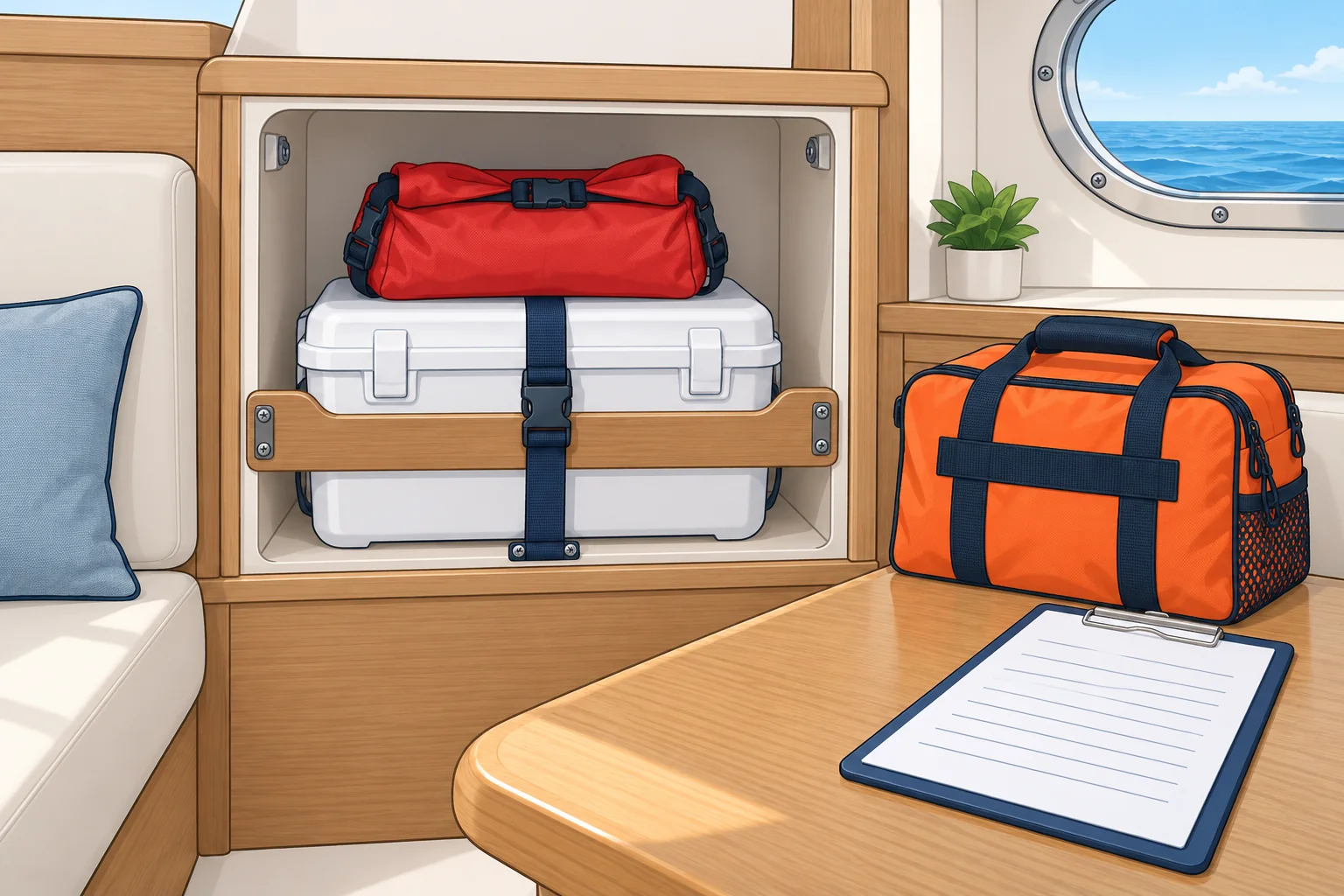
Stow the kit in a dry, cool place away from the engine, the galley and direct sun, secured so it cannot fly across the cabin in a knockdown. Everyone on board must know where it is. Pack the items you need fastest, gloves, mask, tourniquet, dressings, in a waterproof bag on top. Keep a small kit in the grab bag for the liferaft.
Heat, damp and light
Follow each medicine’s storage label; many specify below 25 °C. Protect medicines from heat, damp and light. A hot locker in summer can ruin them. Keep them in their original packs with the leaflet, inside sealed plastic boxes. Some medicines need a fridge: ask the pharmacist and keep a note of which ones.
Expiry and restocking
Check every item against the list before the season and after each use. Replace used supplies, expired products and items whose sterile packaging is damp or damaged. For opened multidose products, follow the label’s storage and after-opening limit. Write the earliest expiry date on the outside of the box. Out-of-date medicines can be weaker; return them to a pharmacy rather than throwing them overboard.
Record everything
Keep a treatment record: who was treated, what happened, what you saw, which medicines you gave, when and how much, and what the radio doctor advised. Note the times. Keep the detailed treatment record confidential and hand it to medical staff. In the vessel log, note the incident and operational actions without unnecessary medical details.
Controlled and personal medicines
Follow your flag’s supply, secure-storage and recording rules for controlled medicines (legally restricted drugs); crew manage their own prescriptions and tell the skipper what they take.
2Key data
- Storage
- Dry, secured; follow each medicine’s temperature label.
- Check
- Before the season and after every use
- Record
- Who, what, medicine, dose, time, doctor’s advice
- Old medicines
- Return to a pharmacy, never overboard
3Key points
- 1
Dry, cool, secured, and everyone knows where it is.
- 2
Urgent items on top in a waterproof bag; a small kit in the grab bag.
- 3
Check against the list before the season and after every use.
- 4
Record every treatment, medicine and time, and the doctor’s advice.
- 5
Controlled medicines: follow your flag’s supply, secure-storage and recording rules.
4Frequent mistakes
Wrong: Keep the medicine box in the engine compartment where it is out of the way.
Right: Heat ruins medicines. Store them dry and cool, where everyone can reach them.
Wrong: Remember what you gave and tell the doctor later.
Right: Write it down at the time: medicine, amount, time and effect.
5Practice case & exam keys
Before a summer cruise you open the medical box. Two dressings are damp, the painkillers expired last year and a tube of burn gel is half used. The box lives in a locker beside the engine.
Show the answer
Replace the damp dressings and expired painkillers; return old medicines to a pharmacy. Check the opened tube’s label and opening date; replace it if its usable period or storage conditions cannot be confirmed. Move the kit to a dry, cool place, secure it and tell everyone where it is. Keep urgent items in a waterproof bag on top, note the next expiry date and start a confidential treatment record.
Exam keys
- Store medicines dry, cool and secured; tell all crew where the kit is.
- Check before each season and after use; replace used, expired or damaged supplies. Follow opened products’ label limits.
- Record every treatment, medicine, dose, time and radio advice.
- Controlled medicines: follow your flag’s secure-storage and recording rules.
Finish this unit
When you've read it, answer three questions. Get all three right to finish the unit; opening the page alone doesn't count.
My notes for this unit
No notes