

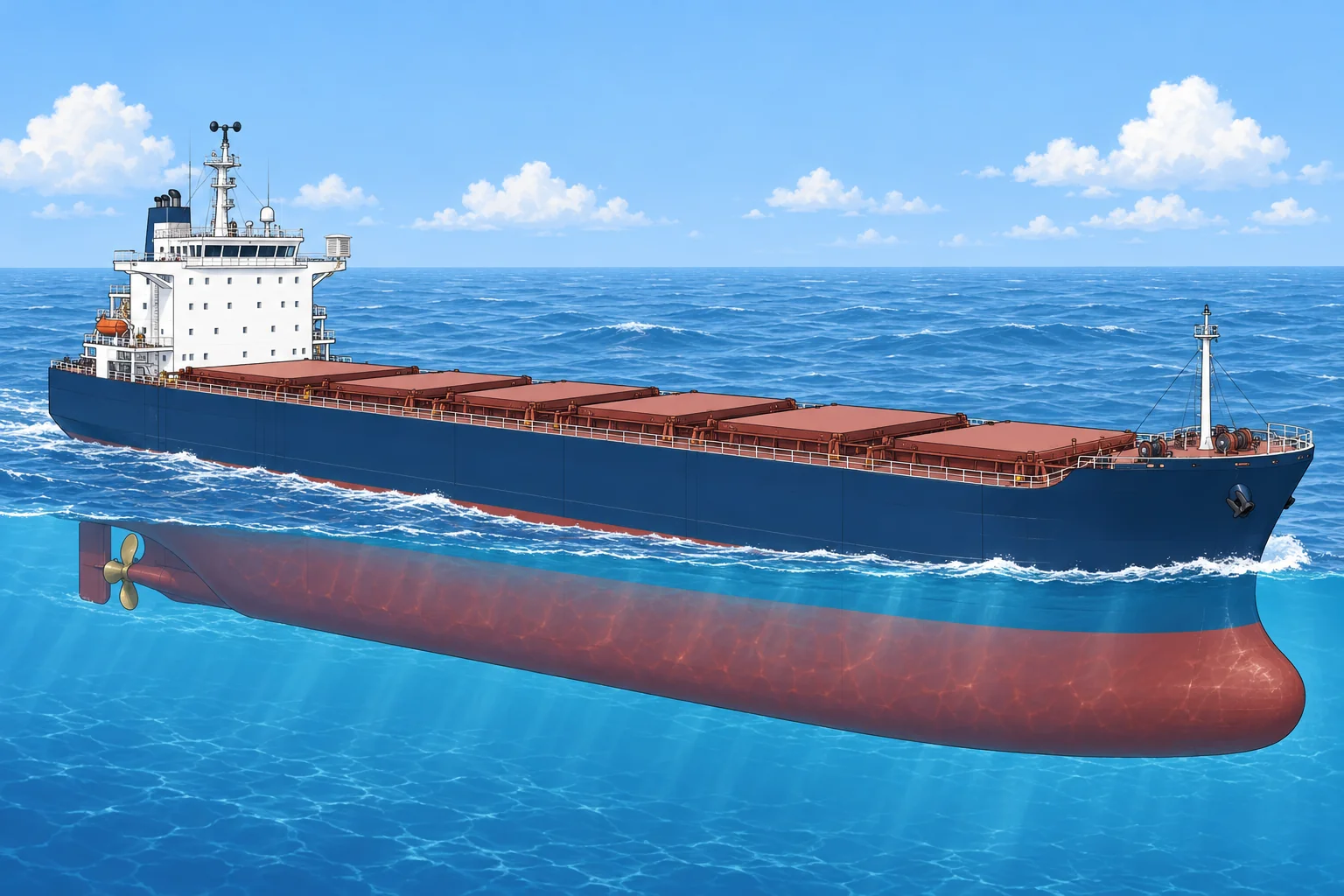
Why ships observe: SOLAS V/5 and the Voluntary Observing Ships scheme
1The lesson in plain words
Ships report the weather where few other surface observations exist. SOLAS V/5 asks governments to recruit them; the VOS scheme makes it work.
Why your report matters
Satellites see cloud and estimate wind, but they cannot measure surface air pressure well, and the open ocean has few other surface stations. Ship reports feed the computer models behind every forecast, check satellite data and go straight into warnings for ships nearby. One report from a quiet ocean, such as the Southern Ocean or the South Pacific, can be worth more than many from a busy coast.
The SOLAS duty
SOLAS regulation V/5 binds governments, not ships. They encourage ships to observe and arrange for selected ships to carry tested instruments: a barometer, a barograph, a psychrometer and sea-temperature apparatus. Those ships take, record and send observations at the main synoptic times, at least four times daily when circumstances permit. Other ships are encouraged to report in a simpler form, especially where shipping is sparse. Transmission is free of charge to the ship.
The VOS scheme
The Voluntary Observing Ships (VOS) scheme is run by the World Meteorological Organization (WMO) through National Meteorological Services (NMSs). Old classes were selected (full observations), supplementary (limited observations), auxiliary (basic observations using ship-owned instruments), and VOSClim (extra climate-quality data). The first, second and VOSClim classes became NMS Operated, with service-supplied instruments. Auxiliary became NMS Cooperative, recruited by an NMS but using ship-owned instruments. Independent ships observe without NMS recruitment.
Port Meteorological Officers
A Port Meteorological Officer (PMO) works for a national service in a port. PMOs recruit ships, supply and check instruments, compare the ship's barometer with a standard, train observers, set up the electronic logbook and collect the stored observations. If your barometer seems wrong or your reports will not send, ask the PMO at your next port.
When to observe
The main synoptic hours are 0000, 0600, 1200 and 1800 UTC; the intermediate hours are 0300, 0900, 1500 and 2100 UTC. Start about 10 minutes before the hour, observe the other elements first and read the barometer last, as close to the hour as you can. Near a tropical cyclone or other severe weather, the services ask for reports more often, whenever navigation allows.
2Key data
- Main synoptic hours
- 0000, 0600, 1200, 1800 UTC
- Intermediate hours
- 0300, 0900, 1500, 2100 UTC
- SOLAS V/5
- Governments encourage; selected ships report at least 4 times a day
- VOS classes now
- NMS Operated, NMS Cooperative, Independent
- Cost to the ship
- None: SOLAS V/5 makes transmission free to the ship
3Key points
- 1
Ship reports fill the gaps that satellites and land stations leave, above all for pressure.
- 2
SOLAS V/5 obliges governments to encourage and equip observing ships; joining the VOS is voluntary.
- 3
The PMO is your contact for instruments, software and training.
- 4
Main synoptic hours 00, 06, 12, 18 UTC; intermediate 03, 09, 15, 21 UTC.
4Frequent mistakes
Wrong: SOLAS V/5 obliges every ship to send weather reports.
Right: V/5 binds governments to encourage and equip ships. The VOS scheme is voluntary; danger messages under V/31 are the mandatory part.
Wrong: Satellites have made ship observations unnecessary.
Right: Satellites cannot measure surface pressure well. Ship reports still feed models and check satellite data, especially in data-sparse oceans.
5Practice case & exam keys
At 1150 UTC a bridge manoeuvre needs your attention. A junior officer suggests rushing all readings now to meet 1200. How do you balance the report and the watch?
Show the answer
Keep the navigational watch safe. Start observations when duties allow and read pressure last, as close to 1200 UTC as practicable. Record the actual observation time; do not invent readings or leave the bridge watch unattended. Selected ships aim for at least four reports daily when circumstances permit.
Exam keys
- SOLAS V/5: governments encourage and equip ships; selected ships report at least 4 times daily.
- VOS is run by WMO through national services and their PMOs.
- Synoptic hours: 00, 06, 12, 18 UTC (main); 03, 09, 15, 21 UTC (intermediate).
Finish this unit
When you've read it, match the terms, then answer three questions. Get them all right to finish the unit; opening the page alone doesn't count.
My notes for this unit
No notes