

Heavy-weather voyage planning and amending the plan
1The lesson in plain words
Prepare the ship before the weather arrives, write your limits into the voyage plan, and record every change of route and the reasons for it.
Plan the limits
Before sailing into a season or area with heavy weather, write the ship's limits into the voyage plan: the significant wave height, wind, roll angle and slamming the ship and cargo can take, and the action at each limit. Base them on the loading condition, the Cargo Securing Manual that SOLAS requires and any operational guidance in the stability documents. Plan alternative routes and places of shelter where they exist.
Prepare early
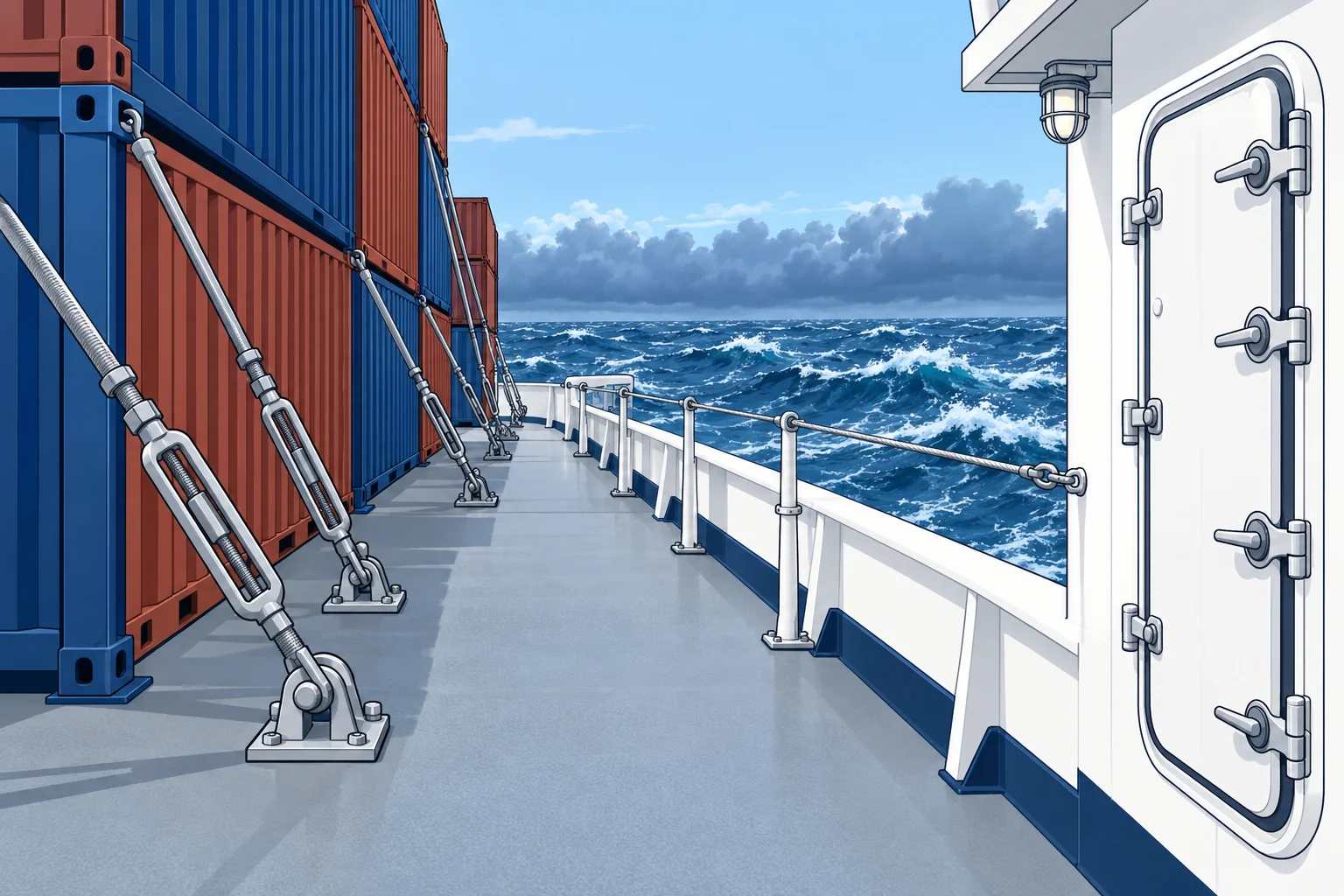
Before the weather arrives: check watertight and weathertight closures, hatch covers, vents and doors; re-check cargo lashings against the Cargo Securing Manual; secure stores and loose gear; review ballast and stability; minimise slack (partly filled) tanks as permitted by the approved loading plan; brief the crew, restrict deck access and rig lifelines. Heavy rolling can loosen lashings, so plan safe checks for when the motion allows.
Tropical cyclones
At management level the rule is to plan clear of tropical cyclones, not to fight them. Use the official advisories, keep outside the forecast 34-knot wind radius with a margin for forecast error, and decide early. Semicircles, signs and avoidance tactics are in Tropical revolving storms; the seasons are in Ocean passage planning.
Head to sea or running
In very heavy weather the choice is usually between heading into the sea at reduced speed and running before it. Head seas bring slamming, water on deck and, at low speed, parametric rolling risk. Following seas bring surf-riding, broaching and successive high waves. Check both against MSC.1/Circ.1228 for your speed and heading, and consider a course with the sea on the bow or quarter that avoids the circular's zones while also checking slamming, hull stresses, shallow-water and current effects, collision and grounding.
Amending the plan
A change of route is a voyage plan amendment. Check the new track for dangers, traffic schemes, Electronic Chart Display and Information System (ECDIS) safety settings and reporting points; recalculate fuel and arrival time; brief the officers; and inform the company, router and agents. Log the time, the reason, the weather and the forecasts used. These records help explain your decisions if damage occurs.
2Step by step
Before heavy weather arrives
- 1
Compare the forecast with the limits in the voyage plan.
It tells you early whether to change route, speed or timing.
- 2
Close and check watertight and weathertight openings.
Openings can admit water and cause progressive flooding.
- 3
Re-check cargo lashings against the Cargo Securing Manual.
Heavy rolling can loosen lashings and increase cargo movement.
- 4
Reduce free surfaces where practicable, keeping ballast changes within approved stability, trim, draught and strength limits.
Moving liquid in partly filled tanks reduces initial stability: the free-surface effect.
- 5
Brief the crew, restrict deck access and rig lifelines.
Restricting access reduces the risk of injury or being washed overboard.
- 6
Log the preparations, forecasts and decisions.
The record shows the ship was prepared if damage occurs.
3Key points
- 1
Write the ship's weather limits and the action at each into the voyage plan.
- 2
Prepare before the weather: openings, lashings, stability, crew.
- 3
Plan clear of tropical cyclones; decide early.
- 4
Check head-sea and following-sea options against MSC.1/Circ.1228 and assess hazards it excludes separately.
- 5
Every route change is a plan amendment: check, brief, inform, log.
4Frequent mistakes
Wrong: Check the lashings once the ship starts rolling heavily.
Right: Check them before the weather, then again only when the motion allows it safely.
Wrong: A route change agreed by email with the router does not need a new plan.
Right: Every change of route is a voyage plan amendment: check the new track, brief the team and log it.
5Practice case & exam keys
Two days out from Rotterdam, a feeder container ship hears of a deep low forecast to give Hs 8 m on her track across the Bay of Biscay. Her voyage plan limit is Hs 6 m. Slowing to 10 knots lets the low pass ahead of her, keeping Hs near 5 m, at a cost of 18 hours.
Show the answer
The forecast exceeds the plan's limit, so amend the plan. Re-time the passage and waypoints, check the track and reporting points still suit the new timing, recalculate fuel and arrival, and brief the officers. Inform the company and router. Prepare the ship anyway: openings, lashings, stability, crew. Log the forecasts and reasons.
Exam keys
- Weather limits and actions belong in the voyage plan.
- Preparation: openings, lashings (Cargo Securing Manual), stability, crew.
- Route change = voyage plan amendment, logged with reasons.
Finish this unit
When you've read it, match the terms, then answer three questions. Get them all right to finish the unit; opening the page alone doesn't count.
My notes for this unit
No notes