

Night sailing: seeing, being seen and staying aboard
1The lesson in plain words
At night you see less, judge distance badly and are harder to recover if you fall in. Protect your night vision and tighten the deck rules.
Prepare before dark
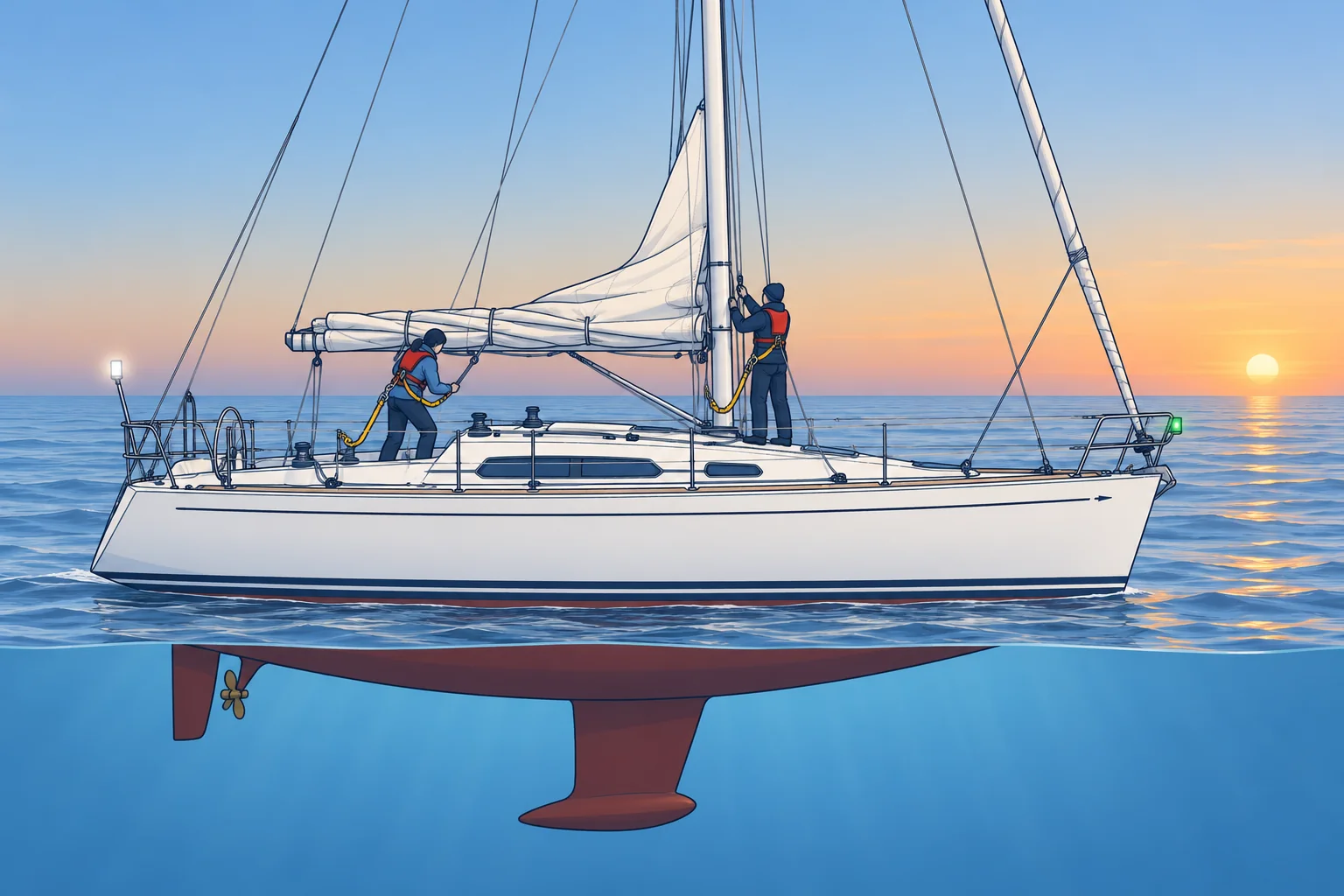
Do the jobs that are hard at night while it is still light: put in the reef you may need, rig the jackstays, check the navigation lights, set out torches and the night-vision red light, and prepare food and hot drinks. Brief the crew on the night's plan, the lights to expect and when to call the skipper. A passage plan already lists the lights you expect to see; the Passage planning unit shows how.
Night vision
Your eyes take about 20 to 30 minutes in the dark to reach full night vision. One look at a bright screen or a white torch spoils it for many minutes. Use dim red light below and in the cockpit, turn plotter and instrument screens to night mode, and look away from bright lights. Scan the horizon slowly: at night you see a faint light better slightly off-centre.
Lights
Show the correct navigation lights from sunset to sunrise and in restricted visibility, and check them at dusk. Recognise ships' lights to judge what they are and which way they are heading; the COLREG lights units are the home for that. At night distance is hard to judge, so take a compass bearing of each light that may be closing and watch it.
Deck rules
Wear a lifejacket with a light, and clip on before you leave the companionway, and stay clipped on until you are below again. Nobody goes forward without telling the helm, and never alone in rough weather if you can avoid it. A crew member who falls in at night is very hard to see and to recover. The Safety equipment unit covers harnesses, tethers and jackstays.
Calling the skipper
The skipper's standing orders say when the watch must call them, for example: any ship closing with a steady bearing, a wind change or rise, a light not identified, a deviation from the plan, or simply doubt. Calling early is good seamanship, not a failure.
2Key data
- Full night vision
- About 20–30 minutes in the dark; lost quickly to white light
- Navigation lights
- Sunset to sunrise and in restricted visibility (COLREG Rule 20)
- On deck at night
- Lifejacket with light; clipped on from companionway to companionway
- Spanish terms
- Navegación nocturna, luces de navegación, órdenes permanentes
3Key points
- 1
Reef, rig jackstays and prepare torches and food before dark.
- 2
Protect night vision: red light, night-mode screens, no white torches in the cockpit.
- 3
Clip on before leaving the companionway; never go forward without telling the helm.
- 4
Standing orders tell the watch when to call the skipper; call early when in doubt.
4Frequent mistakes
Wrong: Delay an already-needed reef until after dark.
Right: Reef in daylight for expected conditions. If the wind later rises beyond them, reef promptly and safely using the agreed deck precautions.
Wrong: Check the plotter at full brightness to see it better.
Right: Bright screens ruin night vision. Use night mode and dim red light.
Wrong: Clip on once you reach the side deck.
Right: Clip on before you leave the companionway, to a strong point you can reach from below.
5Practice case & exam keys
At 2300 the wind rises to force 5 and the new watch wants to reef. One crew member goes forward without a harness while the other steers with the cockpit lit by a white head torch. You are woken by the noise. What do you change?
Show the answer
Stop the work until both are clipped on, with lifejackets and lights, and the helm knows who is on deck. Switch the head torch to red or off to protect night vision. Next time, reef before dark for the expected wind. Write in the standing orders that the watch calls you before any deck work at night, and brief it at the evening meal.
Exam keys
- Prepare deck, reefs and lights before dark.
- Night vision takes about 20–30 minutes; protect it with red light.
- Lifejacket with light and clip on from companionway to companionway.
- Standing orders: when to call the skipper.
Finish this unit
When you've read it, match the terms, then answer three questions. Get them all right to finish the unit; opening the page alone doesn't count.
My notes for this unit
No notes