

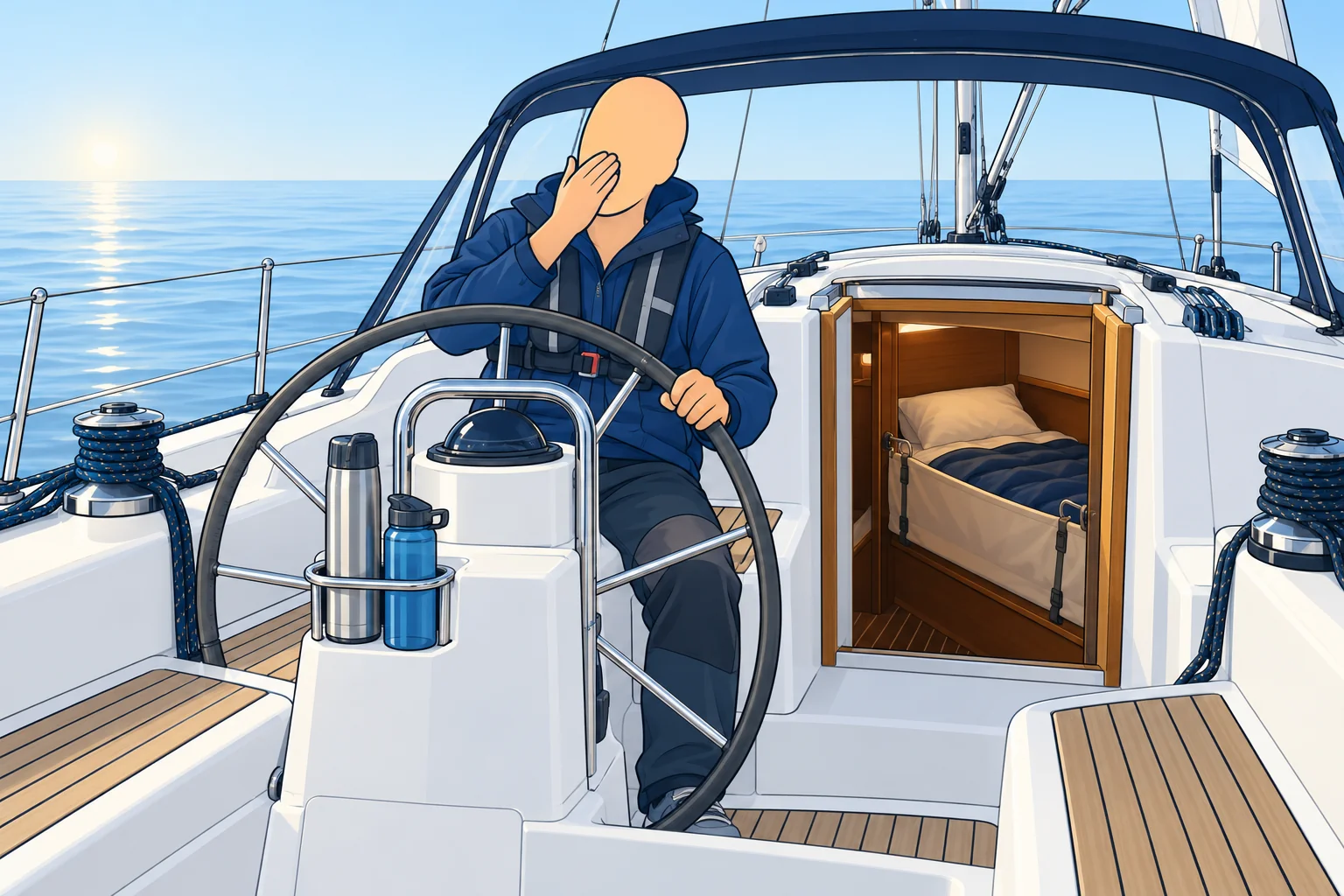
Fatigue: sleep debt, the body clock and naps
1The lesson in plain words
Fatigue builds up over days and peaks before dawn. Plan sleep like fuel, recognise the signs and use naps wisely.
Sleep debt
Most adults need about seven to nine hours' sleep in 24. On passage you get it in pieces, and broken sleep is less restful. Each short night adds to your sleep debt. After about 17–19 hours awake, reaction and judgement can be as poor as after drinking alcohol. Fatigue appears in accident reports again and again: a watchkeeper falls asleep and the boat sails on.
The body clock
Your circadian rhythm, the body clock, makes you sleepiest between about 0200 and 0600, with a smaller dip in the early afternoon. Night watches in that window are the hardest and the most error-prone. Put your most alert people there when you can, and keep that watch short.
Naps
A short nap of about 20–30 minutes can help, but deep sleep may begin sooner when you are sleep-deprived. About 90 minutes may allow a full sleep cycle; timing varies. Sleep inertia means grogginess after waking. It often lasts 15–30 minutes, sometimes longer. Allow at least 15–30 minutes before watch, longer if needed, and do not take over until alert. Wake early enough to dress and adapt your eyes.
What makes it worse
Cold, wet conditions, seasickness, dehydration, hunger and noise make fatigue worse. Keep bunks warm and dry. A lee cloth is a fabric barrier that keeps you in your bunk. Eat regularly and drink water. Avoid alcohol. For seasickness treatment, see Medicine chest.
Signs to watch
Yawning, slow reactions, missing steps in a routine, poor decisions, irritability and microsleeps, brief lapses you may not notice. If you see them in yourself or others, say so and change the plan: shorten watches, heave to or reduce sail, and put an alert person on deck.
2Key data
- Daily sleep need
- About 7–9 hours in 24 for most adults
- Circadian low
- About 0200–0600, with a smaller early-afternoon dip
- Short nap
- 20–30 min target; 90 min may allow a cycle; timing varies
- Sleep inertia
- Often 15–30 min after waking; sometimes longer
- Spanish terms
- Fatiga, deuda de sueño, ritmo circadiano, siesta corta
3Key points
- 1
Sleep debt adds up over the passage; broken sleep is less restful.
- 2
The body clock's low, about 0200–0600, is the riskiest time for watchkeepers.
- 3
Short naps can refresh; allow grogginess to clear before taking over.
- 4
Cold, seasickness, hunger and dehydration all make fatigue worse.
4Frequent mistakes
Wrong: Coffee cures fatigue.
Right: Caffeine can mask it for a while. Only sleep repays sleep debt.
Wrong: Wake the next watch at the minute their watch starts.
Right: Wake early enough to dress and adapt your eyes. Allow at least 15–30 minutes for grogginess, longer if needed; take over only when alert.
Wrong: Tiredness is a matter of willpower.
Right: Fatigue impairs judgement however motivated you are. Plan sleep like fuel.
5Practice case & exam keys
On day three of a passage, the 0300 watchkeeper misses a ship's lights until it is 1 NM away, then argues about a simple course change. The crew have slept in two-hour pieces since leaving. What is happening, and what do you change?
Show the answer
These are signs of fatigue: a growing sleep debt plus the circadian low around 0300. Take over or put an alert person on deck now. Then change the system so each person gets longer unbroken sleep, keep the hardest night watch short, and give each sleeper a warm, dry bunk, hot food and water. Consider slowing or heaving to for a rest if the crew cannot recover.
Exam keys
- Sleep debt builds; broken sleep is less restful.
- Circadian low about 0200–0600; early-afternoon dip.
- Short naps about 20–30 min; 90 min may allow a cycle; timing and sleep inertia vary. Take over only when alert.
- Signs: slow reactions, missed steps, poor decisions, microsleeps.
Finish this unit
When you've read it, match the terms, then answer three questions. Get them all right to finish the unit; opening the page alone doesn't count.
My notes for this unit
No notes