

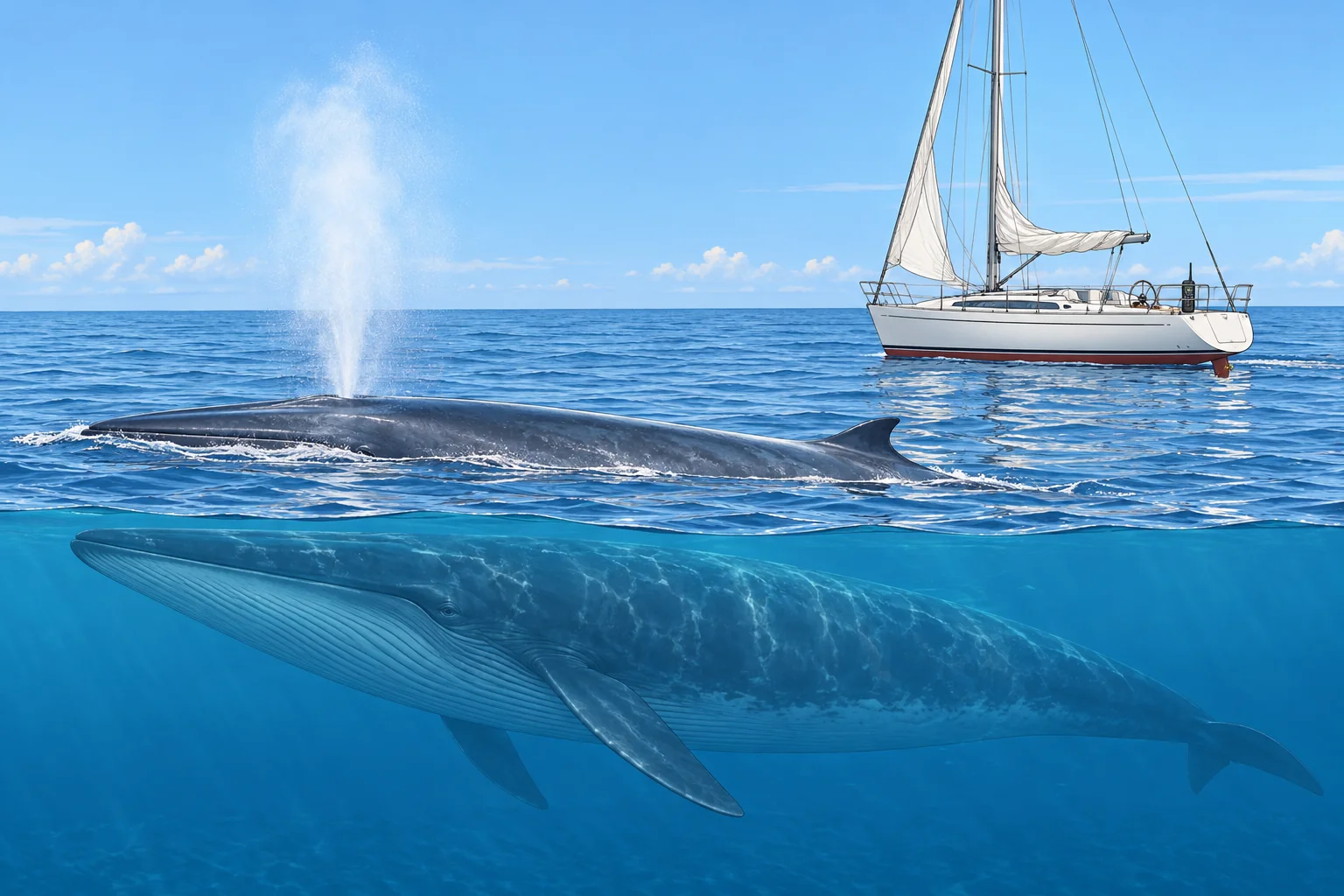
Collisions with whales, orca encounters and reporting
1The lesson in plain words
Whales are hard to see and can be hit by any boat. Keep a lookout, slow down where they gather, and report strikes, strandings and entanglements.
Ship strikes
Whales breathe and rest at the surface and may not move clear. Strikes can injure people and kill whales. Keep a lookout and slow down where whales gather, especially at night. In the NW Mediterranean Particularly Sensitive Sea Area (PSSA), voluntary advice under International Maritime Organization (IMO) resolution MEPC.380(80) includes reducing to 10–13 knots where whales are detected or reported, when safe. Check applicable published measures. Slow further around nearby animals and follow local rules.
Iberian orcas
Since 2020, a small group of orcas off Spain and Portugal has been pushing and biting rudders of sailing yachts, sometimes sinking them. The cause is uncertain; play and social learning are possible explanations. Spain’s official advice: do not stop the boat; head towards the coast and shallower water only where safe for your draught and the sea conditions; keep crew away from the sides; do not use anything that harms or frightens the animals; report to the nearest rescue centre on VHF 16.
When and where
The Spanish authorities ask sailors to take extra care from April to August in the Strait of Gibraltar and the Gulf of Cádiz, and publish risk maps for Galicia from July to October. Choose coastal routes only where depths, hazards and conditions allow. Check the latest notices from the rescue centres, which broadcast warnings in season.
Reporting
Report a whale you have hit, or a dead, injured, stranded or entangled animal, to the coastguard or rescue centre on VHF 16 or by phone, with position and time. In US waters use NOAA’s reporting channels or VHF 16 for right whales. Ship-strike reports also go to the IWC global ship strike database, which anyone can use. Photos help, if taking them is safe.
Entanglement
A whale or dolphin caught in rope or net may tow gear for miles. Never try to free it yourself: a large whale can kill a person with one movement of its tail. Keep your distance, note the gear and report the position. Follow the rescue centre’s instructions.
2Key data
- Orca interaction (Spain)
- Keep moving towards safe coastal depths; report on VHF 16
- Iberian orca high season
- April–August, Strait of Gibraltar and Gulf of Cádiz
- Entangled whale
- Never free it yourself; report and stand off
- Global strike reports
- IWC ship strike database
3Key points
- 1
Collision risk with whales rises sharply with speed; slow down where they gather.
- 2
Iberian orcas: keep moving towards safe coastal depths; report on VHF 16.
- 3
Report strikes, strandings and entanglements with position and time.
- 4
Never try to cut an entangled whale free yourself.
4Frequent mistakes
Wrong: If orcas start pushing the rudder, stop the boat and wait.
Right: Spain’s advice is to keep moving towards the coast and shallower water only where safe for your draught and sea conditions. Report on VHF 16.
Wrong: I can cut the rope off an entangled whale from the dinghy.
Right: Its tail can kill you. Keep your distance, note the gear and call the coastguard for a trained team.
5Practice case & exam keys
In June you are sailing south past Barbate, west of the Strait of Gibraltar, when three orcas start hitting your rudder. The wheel jerks hard in your hands.
Show the answer
Keep hands clear of the jerking wheel or tiller and the crew away from the sides. If steering remains effective, keep moving towards the coast and shallower water where safe for your draught and the conditions. Report to the nearest rescue centre on VHF 16 and follow its instructions. Check the rudder and steering for damage once the orcas leave.
Exam keys
- Whale strikes: lookout, slow down, avoid fast night sailing in whale areas; check applicable PSSA measures. NW Mediterranean advice: 10–13 kn where whales are detected or reported, when safe; slower near animals.
- Iberian orcas: keep moving towards safe coastal depths; crew away from the sides; report on VHF 16 and follow rescue-centre instructions.
- Report strikes, strandings and entanglements to the coastguard; never free an entangled whale yourself.
Finish this unit
When you've read it, answer three questions. Get all three right to finish the unit; opening the page alone doesn't count.
My notes for this unit
No notes