

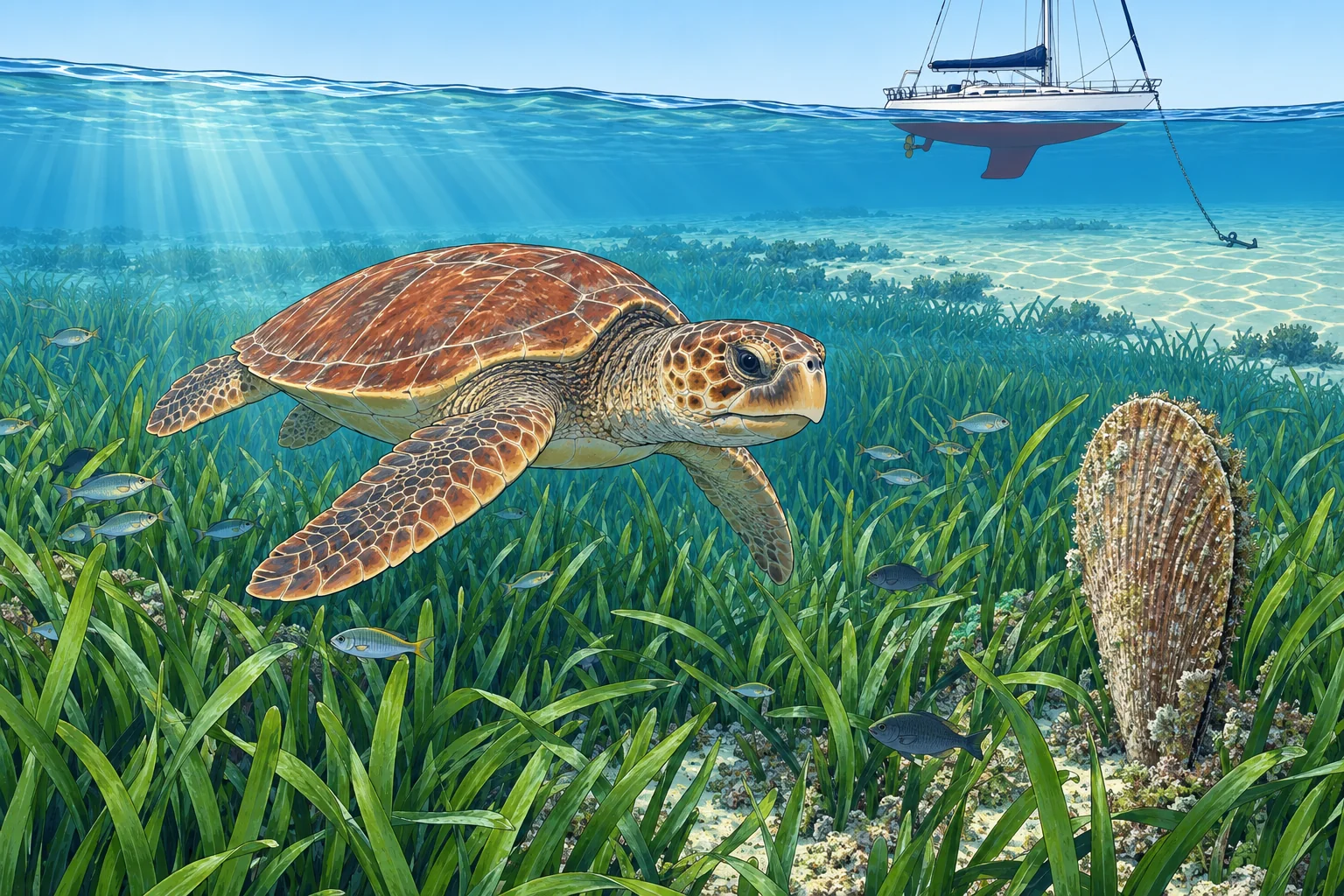
Sea turtles, seagrass and plastic
1The lesson in plain words
Turtles, seagrass meadows and the animals living in them suffer from boats, hooks and plastic. A few simple habits on board protect them.
Sea turtles
The loggerhead turtle is the most common sea turtle in the Mediterranean and nests on its beaches in summer. Turtles breathe air and often rest at the surface, where propellers and hulls hit them. Keep a lookout, slow down if you see one and keep at least 50 yards (about 45 m) away, as NOAA advises. Put the engine in neutral and let it pass.
Plastic and ghost gear
Turtles mistake floating plastic bags for jellyfish, their food, and die with blocked guts. Lost nets and lines, called ghost gear, keep catching turtles, dolphins and seabirds for years. Never let plastic or fishing line go overboard. If you find floating plastic and can pick it up safely, take it aboard and land it.
A hooked turtle
Never lift a turtle by the line, pull on the line or try to remove the hook: this can worsen injuries. Keep the line slack and let the turtle surface to breathe. Call the coastguard or a turtle-rescue service before cutting. Follow their instructions on handling, cutting and release. If release is advised or unavoidable, cut the line as close to the hook as you safely can without pulling.
An entangled turtle
Keep clear of the gear and propeller. Call the coastguard or a turtle-rescue service with your position and what you can see. Do not enter the water, tow the turtle or lift or pull it by the line or net. Follow the rescuers’ instructions and keep it in sight from a safe distance if possible.
Seagrass as a nursery
Posidonia oceanica is a seagrass that forms underwater meadows in the Mediterranean. Fish, octopus, seahorses and the giant fan mussel (Pinna nobilis) live and breed in them. The leaves shelter young fish and other marine animals. The seagrass releases oxygen, helps keep the water clear, stores carbon and reduces wave energy. Dead leaves piled on beaches in winter protect the sand from storms. Anchoring rules live in the Pollution lesson.
2Key data
- Common Mediterranean turtle
- Loggerhead (Caretta caretta)
- Distance from turtles (NOAA)
- At least 50 yards; neutral and let it pass
- Hooked turtle
- Keep the line slack; call rescuers before cutting or release
- Posidonia meadows
- Nursery, oxygen, clear water, carbon store, beach protection
3Key points
- 1
Turtles rest at the surface; keep a lookout and slow down near them.
- 2
Plastic bags look like jellyfish to turtles; nothing plastic goes overboard.
- 3
Hooked turtle: keep the line slack; call rescuers before cutting. Entangled turtle: stand clear and call for help.
- 4
Posidonia meadows are a nursery for fish, octopus and seahorses.
4Frequent mistakes
Wrong: Pull firmly on the line to get the hook out of a turtle’s mouth.
Right: Pulling can worsen injuries. Keep the line slack and call the coastguard or turtle rescuers. Follow their advice on handling, cutting and release.
Wrong: Seagrass leaves piled on a beach are rubbish that should be cleared.
Right: These piles protect the beach from winter storms and are part of the meadow’s life cycle.
5Practice case & exam keys
Fishing from your yacht at anchor off Sicily, you hook a loggerhead turtle. It is tired and close to the stern. One crew member wants to haul it aboard by the line and pull the hook out.
Show the answer
Do not haul it aboard by the line or try to remove the hook. Keep the line slack and let it surface to breathe. Call the coastguard on VHF 16 or by phone before cutting; give your position and follow the turtle-rescue service’s handling and treatment advice. If release is advised or unavoidable, cut the line as close to the hook as you safely can without pulling.
Exam keys
- Turtles: lookout, slow down, keep at least 50 yards, neutral to let them pass.
- Plastic and ghost gear kill turtles and dolphins; nothing plastic overboard.
- Hooked turtle: slack line, call rescuers before cutting or release. Entangled turtle: stand clear, do not enter the water or pull the gear; call for help.
- Posidonia meadows: nursery, oxygen, clear water, carbon store; beach piles protect the sand.
Finish this unit
When you've read it, answer three questions. Get all three right to finish the unit; opening the page alone doesn't count.
My notes for this unit
No notes