

 See units
Deck work safely: snap-back zones, working aloft and over the side, enclosed spaces and permits to work (ratings)
Working aloft and over the side
1The lesson in plain words
Assess risks and use any permit your ship requires. Aloft, use fall protection and a rescue plan. Overside, add a lifejacket, lifebuoy and watcher.
What counts
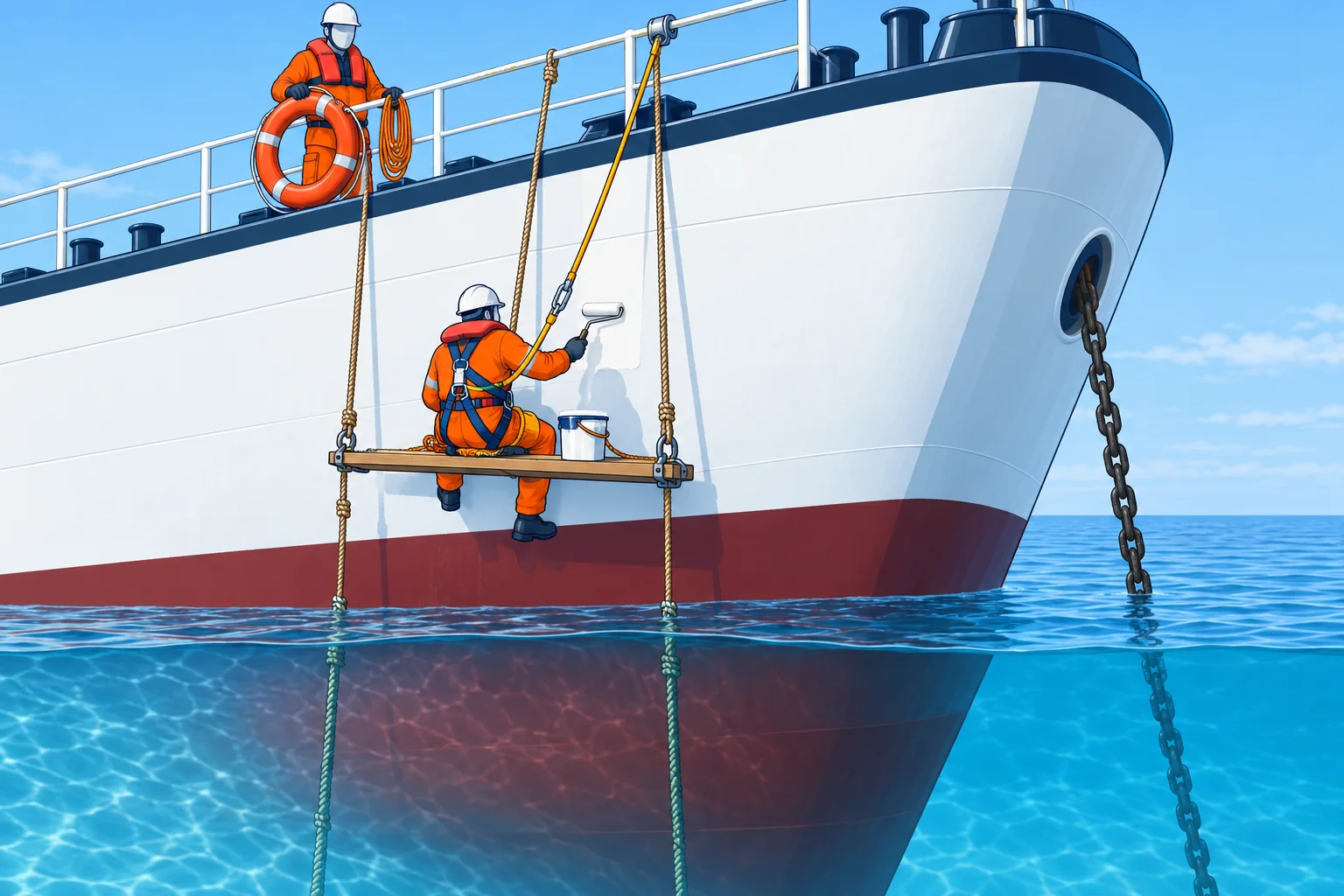
Working aloft (work at height) is any work where you could fall: on masts, ladders and staging, near open hatches, or inside tanks. Working over the side (overside) is work on a stage (a suspended work platform) or chair hung over the ship's side, or anywhere you could fall into the water. Both need a risk assessment and, where the ship's procedures require one, a permit to work (lesson 4). Only competent people do it, and trainees are supervised.
Equipment
Wear a safety harness with a lifeline or fall-arrest device secured to a strong point, at all times where you could fall. Over the side, also wear a working lifejacket and keep a lifebuoy with line ready. Someone on deck watches you all the time. The ropes of an overside stage should be long enough to trail into the water as extra lifelines. Inspect the harness, lanyard (a short securing line or strap), chair or stage and the gantlines (their hoisting ropes) before use.
Bosun's chair
A bosun's chair is a suspended seat for one person. Secure it to its gantline with a double sheet bend and seize the free end to the standing part (main rope) with small cord. Have the chair and gantlines examined and tested to four times the intended load under the ship's approved procedure. Use blocks (rope pulleys) rated for the work. Haul by hand, not with a winch. Secure anchor points to the ship's structure, never portable rails or stanchions (upright rail supports).
Tools and isolation
Send tools in a container by line, use tool lanyards and keep an exclusion zone below. Before work near the whistle or radar scanner, the officer arranges isolation and warning notices. Near radio aerials, prevent transmissions. Near the funnel, the duty engineer reduces steam, harmful gases and fumes as far as possible. Avoid work aloft near cargo operations.
Under way and weather
Do not work over the side while the ship is under way, except in an emergency; then a rescue boat must be ready and a responsible person watches closely. Allow for the ship's motion and the weather, even alongside.
2Step by step
Before you go over the side
- 1
Confirm the ship is not under way unless this is emergency work. Check the briefing, rescue plan and any required permit.
Everyone must know the controls and rescue plan. Emergency overside work under way needs a rescue boat ready.
- 2
Inspect the harness, lanyard, lifeline, gantlines and the stage or chair.
Damaged gear fails under load.
- 3
Put on the harness and a working lifejacket; secure your lifeline to an independent strong point.
If the stage or chair fails, the lifeline still holds you.
- 4
Place a lifebuoy with line ready and confirm who is watching from deck.
Someone must see a fall and act at once.
- 5
Secure tools with lanyards and send them down in a container.
A dropped tool can injure someone or knock you off balance.
- 6
Confirm with the officer: whistle/radar isolated with warning notices, radio transmissions stopped and funnel fumes controlled as needed.
Whistle blasts, moving radar scanners, radio transmissions and funnel emissions can injure you.
3Key data
- Bosun's chair
- Chair and gantlines: test to 4 × intended load; double sheet bend
- Overside extras
- Working lifejacket, lifebuoy with line, watcher on deck
- Under way
- No overside work except in emergency; rescue boat ready
- Control first
- Isolate whistle/radar; stop radio transmissions; control funnel fumes
4Key points
- 1
Assess risks, use any permit the ship requires, and have competent people and a rescue plan for aloft and overside work.
- 2
Harness and lifeline wherever you could fall; add a working lifejacket over the side.
- 3
Lifebuoy with line and a deck watcher; no overside work under way except in emergency.
- 4
Tools on lanyards; keep the area below clear. Isolate whistle/radar, stop radio transmissions and control funnel fumes.
5Frequent mistakes
Wrong: Clip your lifeline to the stage you are working from.
Right: Secure it to an independent strong point, so it holds you if the stage fails.
Wrong: Use the winch to haul a shipmate up in the bosun's chair.
Right: Haul by hand so you can control the lift. Stop immediately if the chair or line snags; never force it.
Wrong: Carry the paint tin up the ladder in one hand.
Right: Keep both hands for climbing; send tools and paint up by line in a container.
6Practice case & exam keys
While the ship lies at anchor in a light swell, the mate wants the ship's name repainted on the bow. You are to go down on a stage.
Show the answer
Being at anchor does not make the swell safe. Start only if the officer accepts the risks and confirms the rescue plan and any required permit; postpone if the stage cannot be kept safe. Wear a harness on an independent lifeline and a working lifejacket. Have a deck watcher and lifebuoy with line ready. Secure tools and keep the stage ropes trailing into the water.
Exam keys
- Risk assessment and rescue plan for aloft and overside work; a permit where the ship's procedures require one.
- Harness and lifeline; overside also a working lifejacket, lifebuoy with line and a deck watcher.
- Bosun's chair: double sheet bend; chair and gantlines tested to 4 × intended load; haul by hand.
- No overside work under way except in emergency; isolate whistle/radar, stop radio transmissions and control funnel fumes.
Finish this unit
When you've read it, match the terms, then answer three questions. Get them all right to finish the unit; opening the page alone doesn't count.
My notes for this unit
No notes