
Ocean, tides and environment · Level P3 · 6 parts · about 23 min
Pollution prevention on ships: oil record book, garbage plan, SOPEP, ballast water and emission control areas
6 short parts: Oil record book · Garbage · SOPEP · Ballast water · Air and ECAs · Carbon rules. Each part explains the idea, then gives the points to remember, the common mistakes, a worked case and a practice question; the Academy unit adds all 38 check questions.
1 · Oil record book
The oil record book and the oil discharge limits
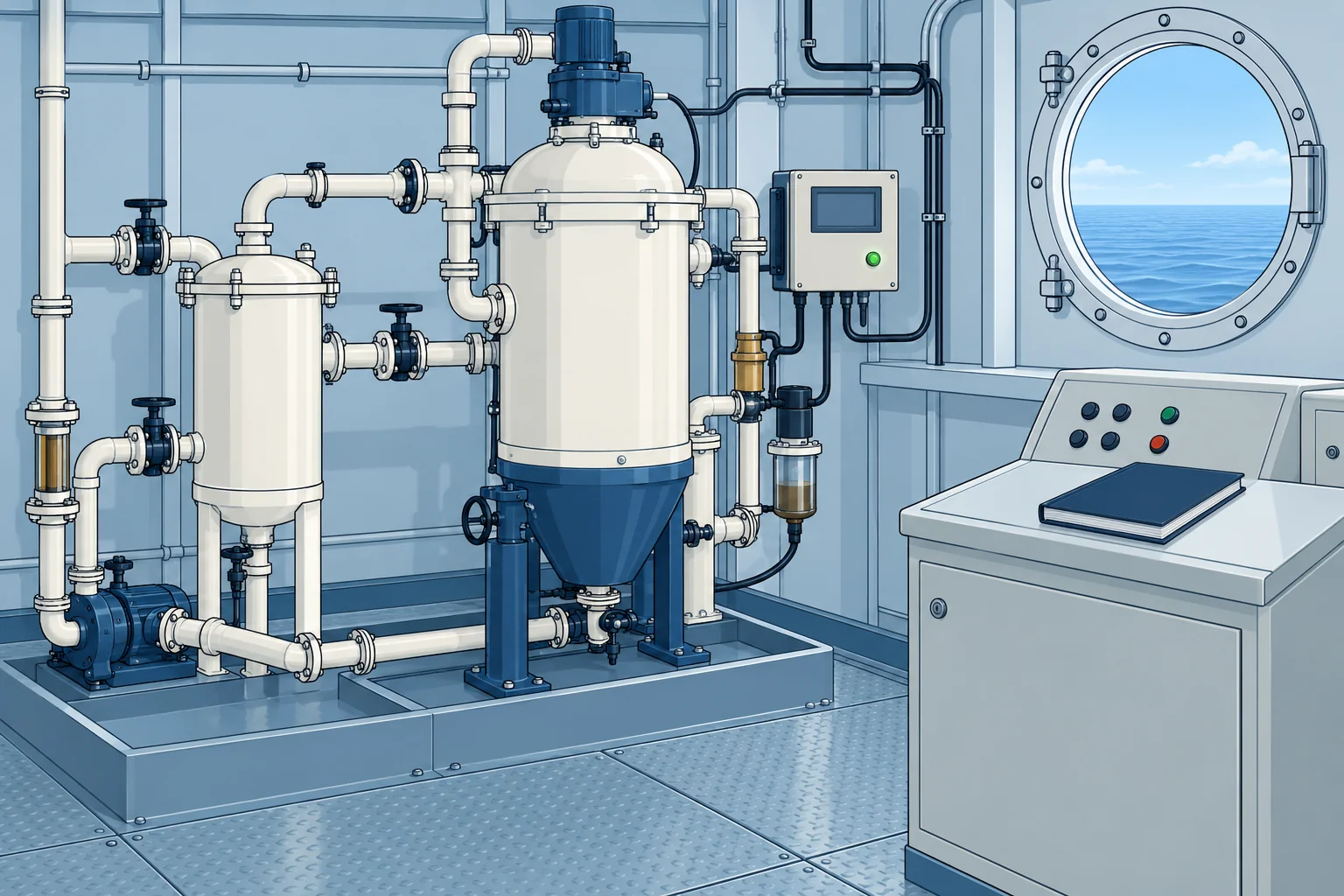
Record oil operations fully and without delay. Discharge only when all MARPOL conditions are met, through approved equipment while en route.
Who needs it
MARPOL Annex I covers oil. Gross tonnage (GT) measures enclosed volume, not weight. Every oil tanker of 150 GT or more and every other ship of 400 GT or more carries an oil record book (ORB) Part I for machinery-space operations. Oil tankers of 150 GT or more also carry Part II for cargo and ballast operations.
Part I codes
Each entry starts with a code letter. A ballasting or cleaning of fuel oil tanks. B discharge of dirty ballast or cleaning water from those tanks. C collection, transfer and disposal of oil residues (sludge). D non-automatic discharge or disposal of bilge water. E automatic discharge of bilge water. F condition of the oil filtering equipment. G accidental or other exceptional discharges. H bunkering (taking on fuel) or receiving bulk lube oil. I other operations and remarks.
Part II
Part II records cargo and ballast work on a tanker: loading, internal transfer and unloading of cargo, crude oil washing, ballasting of cargo tanks, tank cleaning, discharge of dirty ballast and of water from slop tanks, and the condition of the oil discharge monitoring and control system (ODMCS), the equipment that measures and limits oil discharged from the cargo area.
Signing and keeping
Record each operation fully and without delay. The officer or officers in charge sign each entry, and the master signs each completed page. Keep the book on board, readily available for inspection, for 3 years after the last entry. Since 1 October 2020 an electronic record book approved by the flag may replace the paper book. Port state officers may inspect it and take certified copies.
Machinery-space discharges
Discharge only while en route (proceeding on passage), through approved filtering equipment, at 15 ppm (parts per million) or less without dilution. Tanker bilges must not come from cargo pump rooms or contain cargo residues. Ships of 10,000 GT or more need a 15 ppm alarm and automatic stopping device; in special areas, so do ships of 400 GT or more. No oily discharge is allowed in Antarctic waters or, for ships subject to the Polar Code, Arctic waters. Otherwise retain the water and land it ashore.
Tanker cargo-area discharges
Outside special areas, discharge only while en route, more than 50 nautical miles (NM) from the nearest land, with the ODMCS operating and slop tanks (tanks for oily cargo mixtures) in use. The instantaneous rate of oil, not the whole mixture, must not exceed 30 litres per nautical mile. Total oil discharged must not exceed 1/30 000 of the cargo from which the residue came. Example: 90,000 t of cargo ÷ 30,000 = 3 t of oil in total.
Key figures
- ORB Part I
- Oil tankers ≥150 GT; other ships ≥400 GT
- ORB Part II
- Oil tankers ≥150 GT (cargo and ballast operations)
- Kept
- 3 years after last entry; approved electronic books since 1 Oct 2020
- Machinery-space limit
- ≤15 ppm; en route; filter/alarm/stops as required; polar bans
- Tanker cargo area
- Outside special areas: >50 NM; en route; oil ≤30 L/NM, ≤cargo/30 000
- Worked example
- 90,000 t cargo ÷ 30,000 = 3 t oil ceiling, if other conditions met
Remember
- Part I for machinery spaces; Part II for tanker cargo and ballast.
- Officer signs each entry; the master signs each completed page.
- Keep the ORB 3 years; approved electronic books allowed since 2020.
- Bilge: ≤15 ppm, en route, approved filter; required alarm/stop. No oil discharge in Antarctic or covered Arctic waters.
- Outside special areas: >50 NM, en route; ≤30 L oil/NM, total oil ≤1/30 000 of the cargo; ODMCS operating.
Common mistakes
Wrong: Record the sludge transfers at the end of the week, all together.
Right: Record each operation without delay, with its code, and have the officer in charge sign it.
Wrong: Bilge water at 15 ppm may be pumped out while the ship is at anchor.
Right: The ship must be en route. At anchor or alongside, keep it on board or land it.
Wrong: The 1/30 000 limit applies to each separate discharge.
Right: It limits the total oil discharged, compared with the cargo the residue came from; all other discharge conditions still apply.
Worked case
On passage, the oil filtering equipment's 15 ppm alarm sounds and the three-way valve recirculates. The second engineer suggests bypassing the alarm so the bilge tank can be emptied before arrival. What do you do?
Show the answer
Refuse the bypass. Stop discharge, retain the bilge water and investigate the alarm. Tell the chief engineer and master. Record what actually happened under the applicable bilge-operation code, D or E; use F for any confirmed equipment failure and G for any accidental or exceptional discharge. Make truthful entries and arrange disposal ashore if needed.
Practice question
Which ORB code do you use for bunkering fuel oil?
- Code C
- Code D
- Code F
- Code H
Show the answer
Answer: D. Code H is bunkering of fuel or bulk lubricating oil. C is sludge, D is non-automatic bilge discharge, F is the condition of the filtering equipment.
2 · Garbage
The garbage management plan and the garbage record book
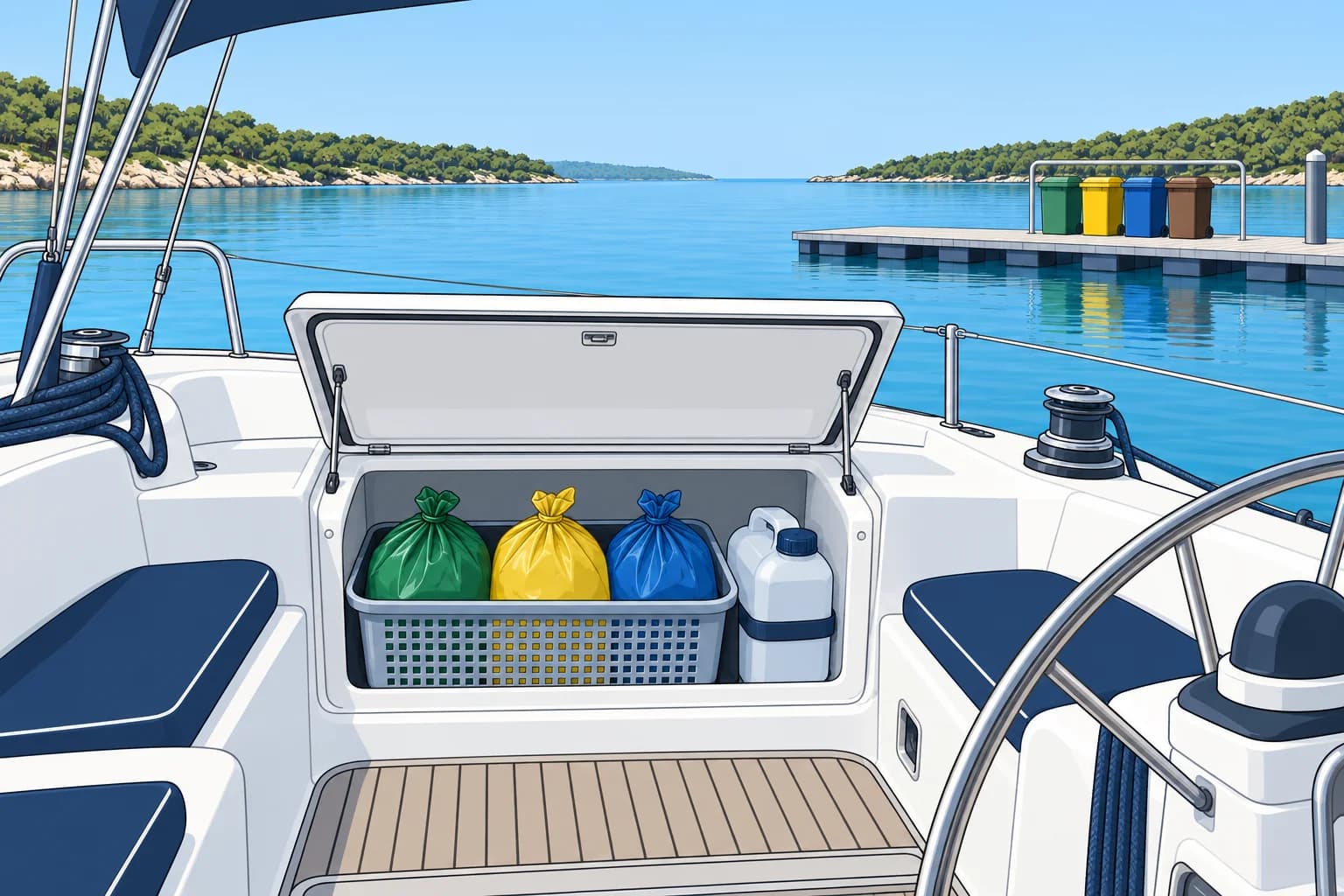
Plan how you reduce, sort, store and land garbage. Record every discharge, incineration and landing by category, A to K.
The plan
MARPOL Annex V covers garbage. Every ship of 100 GT or more, every ship certified to carry 15 or more persons, and every fixed or floating platform must have a garbage management plan (GMP). It sets procedures to minimise, collect, store, process and dispose of garbage, names the person in charge and lists the equipment. Write it in the crew's working language. The discharge rules themselves are in Pollution at sea.
The record book
Since 1 May 2024, ships of 100 GT or more need a garbage record book (GRB); before, the limit was 400 GT. Ships certified for 15 or more persons on international voyages and platforms need one too. Part I covers all garbage except cargo residues. Part II covers cargo residues, for ships that carry solid bulk cargoes. Electronic GRBs approved by the flag are allowed.
What to record
Record each discharge, landing, incineration and accidental loss, with date, time, category and estimated volume in cubic metres. For sea discharges, give position; for landings, give the port, or receiving ship and position. For incineration, give start and stop times and positions. For accidental losses, record the circumstances and precautions too. The officer in charge signs each entry; the master signs each completed page. Keep reception receipts and the GRB for 2 years after the last entry.
Categories
The GRB uses eleven categories: A plastics, B food waste, C domestic waste, D cooking oil, E incinerator ash, F operational waste, G animal carcasses, H fishing gear, I e-waste, J cargo residues not harmful to the marine environment, K cargo residues harmful to the marine environment. Plastics, cooking oil, incinerator ash and e-waste never go overboard.
Placards
Every ship of 12 m length overall or more must show placards telling crew and passengers the discharge rules. They must be in the working language and, on voyages to other parties' ports, in English, French or Spanish too. Put them where people dispose of garbage: galley, mess, bridge and engine room.
Key figures
- Garbage management plan
- ≥100 GT, or certified for ≥15 persons, and platforms
- Garbage record book
- ≥100 GT; certified ≥15 persons on international voyages; platforms
- GRB kept
- 2 years after the last entry
- Categories
- A plastics to K harmful cargo residues (11 categories)
- Placards
- Ships of 12 m length overall or more
Remember
- GMP: 100 GT or more, or certified for 15 or more persons.
- GRB required from 100 GT since 1 May 2024.
- Record discharges, landings, incineration and losses by category A–K.
- Keep the GRB 2 years; keep reception facility receipts.
- Placards on ships of 12 m or more.
Common mistakes
Wrong: Ships under 400 GT do not need a garbage record book.
Right: Since 1 May 2024 the threshold is 100 GT. Ships certified for 15 or more persons on international voyages need one too.
Wrong: Incinerator ash is harmless and may go overboard.
Right: Incinerator ash (category E) may not be discharged into the sea. Land it ashore.
Worked case
Alongside in port you land 2.5 m³ of mixed plastics, 0.8 m³ of food waste and 4 discarded computer circuit boards. The truck driver gives a receipt with only the total volume. What do you record?
Show the answer
Record one landing with date, time and port, and the estimated amount for each category: A plastics 2.5 m³, B food waste 0.8 m³, I e-waste for the circuit boards, with their small volume. Sign it as officer in charge. Ask for a receipt that shows the categories, and keep it with the GRB. The master signs the page once complete.
Practice question
Since 1 May 2024, which ships need a garbage record book?
- Ships of 400 GT or more, and no others
- Ships of 100 GT or more, and others
- Ships of 12 m length or more
- Only passenger ships of any size
Show the answer
Answer: B. The threshold was lowered from 400 to 100 GT. Ships certified for 15 or more persons on international voyages and platforms also need one.
3 · SOPEP
SOPEP and SMPEP: the shipboard pollution emergency plan
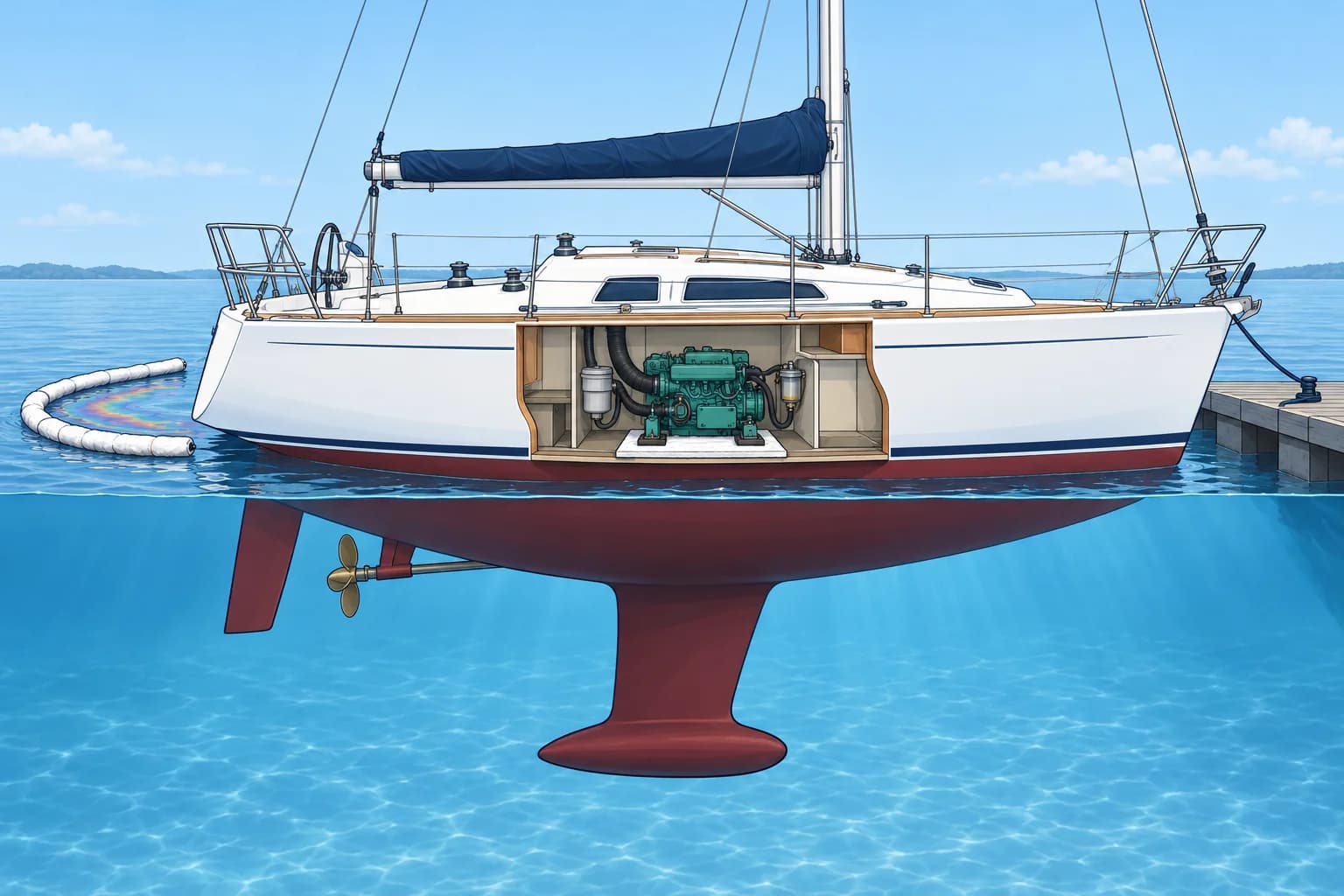
The SOPEP tells you whom to call and what to do in an oil spill. Know where it is, what is in it, and the first steps at a bunker overflow.
Who needs one
Every oil tanker of 150 GT or more and every other ship of 400 GT or more must carry a shipboard oil pollution emergency plan (SOPEP), approved by the flag. Ships of 150 GT or more certified to carry noxious liquid substances (NLS), the bulk chemicals of Annex II, need a shipboard marine pollution emergency plan for noxious liquid substances. One combined SMPEP may cover both.
What is in it
The plan follows IMO guidelines and must contain: the procedure for the master or others to report a pollution incident; the list of authorities and people to contact; a detailed description of the actions to reduce or control the discharge; and the procedures and contact point for coordinating with national and local authorities. The contact lists in the appendix must be kept up to date.
Reporting
Report without delay to the nearest coastal state any discharge, or probable discharge, of oil or NLS above the permitted levels, or from damage to the ship. Use the fastest means, and follow the report format in the plan. Tell the company too. Oil tankers of 5,000 t deadweight or more also need prompt access to shore-based computer programs for damage stability and residual strength.
Equipment and drills
The SOPEP locker holds absorbents, plugs for scuppers (deck drains), shovels, buckets, protective clothing and sometimes a small pump. Check it is complete. Train the crew in the plan and practise bunker-overflow or hydraulic-leak scenarios. In US waters, covered tank vessels and self-propelled non-tank vessels of 400 GT or more carrying oil as fuel need a vessel response plan (VRP). A SOPEP does not replace it.
Record it
Record an accidental discharge in the ORB under code G, with the time, position, estimated amount and what was done, and keep copies of your reports.
Key figures
- SOPEP
- Oil tankers ≥150 GT; other ships ≥400 GT (Annex I reg. 37)
- NLS plan
- NLS ships ≥150 GT (Annex II reg. 17); may be one SMPEP
- Report
- Without delay to the nearest coastal state
- Tankers ≥5,000 t DWT
- Shore-based damage stability and strength programs
First steps at a bunker overflow on deck
- Stop bunkering at once and sound the alarm. — Every second of flow adds oil to the deck and the sea.
- Make sure scuppers (deck drains) are plugged; contain the oil with absorbents. — Oil kept on deck does not reach the water.
- Remove ignition sources and keep people upwind. — Fuel vapour can ignite and can harm the crew.
- Report to the master, the terminal and the coastal state as the SOPEP says. — Early reports bring help and are a legal duty.
- Clean up and keep the waste for proper disposal ashore. — Washing oil overboard is a second discharge.
- Record what happened, including whether oil reached the sea. Use code G for an accidental discharge to sea; follow flag guidance for a deck-only spill. — Accurate records show what happened and what you did.
Remember
- SOPEP: oil tankers 150 GT or more, other ships 400 GT or more.
- NLS ships of 150 GT or more need a plan; a combined SMPEP may cover both.
- Report spills without delay to the nearest coastal state.
- Keep the contact list and the SOPEP locker up to date.
- Record an accidental discharge in the ORB under code G.
Common mistakes
Wrong: A small spill that was cleaned up on deck does not need reporting.
Right: Follow the SOPEP and local rules. Report any oil that reached the water, and tell the master and terminal of any spill.
Wrong: Wash the oil off the deck with water so it disperses.
Right: Contain and collect it with absorbents. Washing it overboard is a discharge.
Worked case
Alongside at a terminal, a hydraulic hose on a deck crane bursts. About 20 litres of oil spray over the deck and some drips over the side. What do you do?
Show the answer
Stop the crane and isolate the hydraulic system. Plug the scuppers and contain the oil on deck with absorbents from the SOPEP locker. Tell the master and the terminal at once, and report the oil in the water to the port authority as the SOPEP and local rules require. Clean up, keep the waste for disposal ashore, and record it in the ORB under code G.
Practice question
Which ship must carry a SOPEP?
- A 300 GT general cargo ship
- A 200 GT oil tanker
- A 120 GT oil tanker
- A 350 GT fishing vessel
Show the answer
Answer: B. Oil tankers of 150 GT or more and other ships of 400 GT or more need a SOPEP.
4 · Ballast water
Ballast water management: from exchange to the D-2 standard
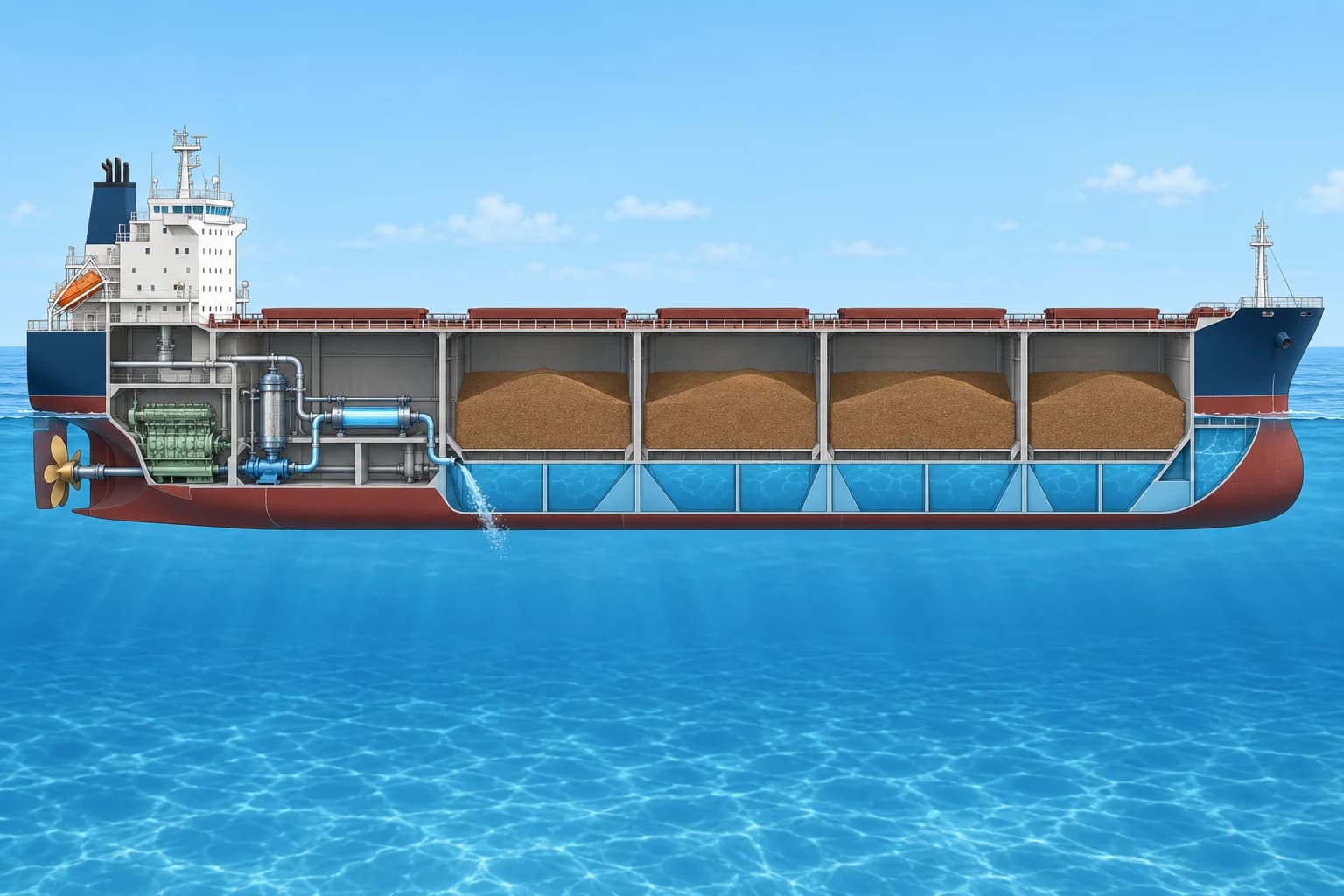
Ships covered by the BWM Convention must now meet the D-2 standard, normally with an approved treatment system, and record every ballast operation.
Why it matters
Ballast water moves organisms from one sea to another, where some become invasive. The Ballast Water Management (BWM) Convention entered into force on 8 September 2017. It applies to ships designed to carry ballast water on international voyages. Each ship needs an approved ballast water management plan (BWMP) and an International Ballast Water Management Certificate from 400 GT.
D-1: exchange
The D-1 standard is ballast water exchange: replace at least 95 % of the volume, or pump three tank volumes through. Normally exchange at least 200 NM from the nearest land in water at least 200 m deep. If impossible, exchange as far from land as possible, at least 50 NM offshore and 200 m deep. Follow the BWMP; the master must not exchange if it would threaten safety or stability. Exchange replaces water; it does not guarantee D-2 compliance.
D-2: performance
The D-2 standard limits discharged organisms: fewer than 10 viable organisms per m³ at least 50 µm in minimum dimension; fewer than 10 viable organisms per mL at least 10 but less than 50 µm; and limits for specified indicator microbes. New ships and existing ships followed different implementation schedules; the final D-2 phase-in deadline was 8 September 2024. D-1 alone is now only an agreed contingency, not routine compliance.
Treatment systems
Most ships meet D-2 with a type-approved ballast water management system (BWMS), using filters plus UV light or active substances. Systems fitted since 1 June 2022 need a commissioning test. Run it as the maker says: wrong flow, a blocked filter or a bypass can make discharged ballast fail D-2, and a bypass must be recorded and reported.
The record book
Record every ballast operation in the ballast water record book (BWRB), with date, time, tank, position, volume and treatment details. The officer in charge signs each entry; the master signs each completed page. New format: 1 February 2025; approved electronic books: 1 October 2025. Keep it on board for at least 2 years after the last entry, then under the company’s control for 3 more years.
What is coming
MEPC 84 agreed amendments for adoption at MEPC 85 in late 2026, expected in force in 2028. They end the experience-building phase, ask for annual sampling of residual active substances and biological tests at surveys, and update the certificate and plan. They are not in force yet. The US applies its own rules and type-approval.
Key figures
- BWM Convention
- In force 8 September 2017
- D-1 exchange
- ≥200 NM and ≥200 m deep (else ≥50 NM, 200 m); 95 %
- D-2 standard
- <10 viable/m³ at ≥50 µm; <10 viable/mL at ≥10–<50 µm; microbes
- D-2 deadline
- All covered ships by 8 September 2024
- BWRB
- New format 1 Feb 2025; electronic since 1 Oct 2025; 2 + 3 years
- Next amendments
- For adoption at MEPC 85 (late 2026); expected in force 2028
Remember
- D-1 is exchange at sea; D-2 is a discharge standard, usually met by a BWMS.
- All covered ships had to meet D-2 by 8 September 2024.
- Exchange: ≥200 NM from land and ≥200 m deep; if impossible, ≥50 NM and ≥200 m deep.
- Record every operation in the BWRB; electronic allowed since 1 Oct 2025.
- The 2026 amendments are not in force; expected 2028.
Common mistakes
Wrong: Exchanging ballast mid-ocean still satisfies the Convention.
Right: Since 8 September 2024 covered ships must meet D-2. Exchange alone is only a contingency measure or part of an approved method.
Wrong: If the BWMS trips, discharge untreated and fix it later.
Right: Follow the BWMP contingency measures, inform the port state and record the failure. Do not discharge untreated ballast without agreement.
Worked case
Approaching a loading port, your BWMS shows a UV lamp fault and treatment stops. You must discharge 8,000 m³ of ballast to load. The chief officer suggests discharging anyway, since the water came from the open ocean. What do you do?
Show the answer
Do not discharge untreated ballast on your own decision. Follow the contingency measures in the BWMP: try to repair, then contact the port state with the facts. It may accept a contingency measure such as exchange in a set area, discharge to a facility or retaining ballast. Record the failure, the messages and every operation in the BWRB, and tell the company.
Practice question
By when did all ships covered by the BWM Convention have to meet D-2?
- 8 September 2017
- 8 September 2019
- 8 September 2024
- 1 January 2026
Show the answer
Answer: C. New ships and existing ships followed different implementation schedules. The final D-2 phase-in deadline was 8 September 2024.
5 · Air and ECAs
MARPOL Annex VI: sulphur limits, emission control areas and NOx
Use ≤0.50 % sulphur fuel worldwide and ≤0.10 % where an ECA limit applies, unless using an approved equivalent. Plan and log fuel changeovers.
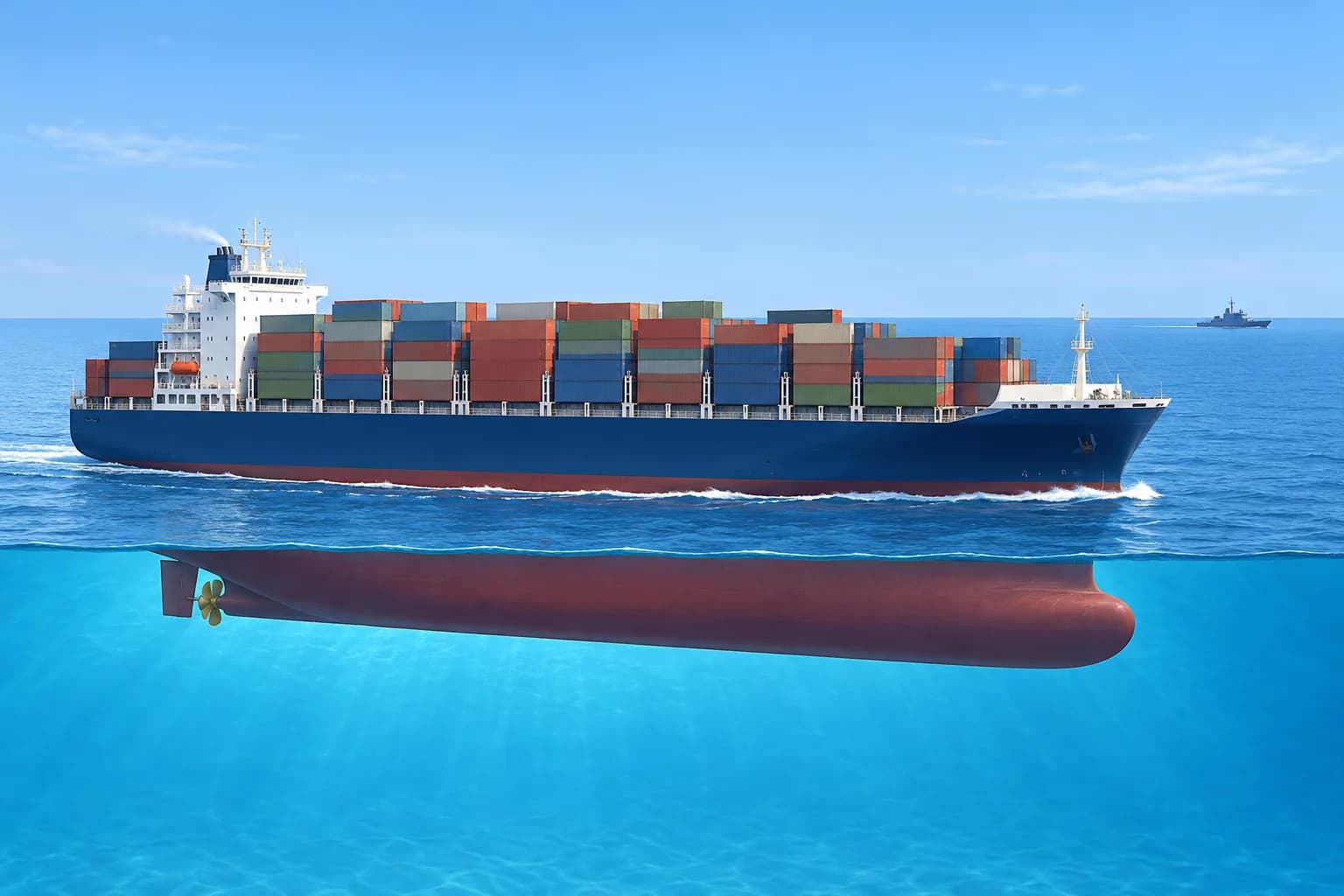
Sulphur limits
MARPOL Annex VI covers air pollution. Since 1 January 2020 fuel oil used on board must contain at most 0.50 % sulphur by mass. Where an emission control area (ECA) sulphur limit is in effect, it is 0.10 %. An approved equivalent, such as an exhaust gas cleaning system (scrubber), may be used instead. Since 1 March 2020 a ship without one may not even carry fuel above 0.50 % for use.
The ECAs
Sulphur ECAs: Baltic Sea, North Sea, North American, US Caribbean, and the Mediterranean, where 0.10 % applies since 1 May 2025. The Canadian Arctic and Norwegian Sea ECAs entered into force on 1 March 2026; their 0.10 % limit starts on 1 March 2027. The North-East Atlantic ECA, adopted at MEPC 84 in 2026, enters into force on 1 September 2027, with 0.10 % from 1 September 2028.
NOx tiers
Diesel engines over 130 kW must meet a nitrogen oxides (NOx) tier set by the ship's construction date. Tier II applies worldwide to ships built from 2011. Tier III, about 80 % lower than Tier I, applies only inside a NOx ECA, for ships meeting that area's construction-date criteria: North American and US Caribbean from 2016, Baltic and North Sea from 2021. The Mediterranean ECA is for sulphur only.
New NOx dates
Canadian Arctic: ships constructed (normally keel-laid) on or after 1 January 2025. Norwegian Sea: building contract from 1 March 2026; if there is no contract, keel laid from 1 September 2026; or delivery from 1 March 2030, regardless of contract date. North-East Atlantic: contract from 1 January 2027; if none, keel laid from 1 July 2027; or delivery from 1 January 2031, regardless of contract date.
Changeover
If you use separate fuels for ECA compliance, follow your written changeover procedure and finish before entry. Fuel already at or below 0.10 % needs no changeover. If flushing takes 6 hours and you reach the boundary at 1800, start by 1200. Log date, time, position and compliant fuel volume in each tank at completion before entry and at commencement after exit.
Fuel papers
Keep each bunker delivery note for 3 years. Keep the sealed MARPOL sample until the fuel is substantially used, and for at least 12 months after delivery. If a supplier cannot give compliant fuel, report it to the flag and the port state before departure. EU rules, such as the EU ETS and FuelEU Maritime, add their own duties in EU trades.
Key figures
- Global sulphur limit
- 0.50 % m/m since 1 January 2020
- ECA sulphur limit
- 0.10 % m/m (since 1 January 2015 in the first ECAs)
- Mediterranean SOx ECA
- 0.10 % since 1 May 2025 (sulphur only)
- Canadian Arctic, Norwegian Sea
- In force 1 March 2026; 0.10 % from 1 March 2027
- North-East Atlantic ECA
- In force 1 Sept 2027; 0.10 % from 1 Sept 2028
- Bunker delivery note / sample
- BDN 3 years; sample ≥12 months and until fuel substantially used
Remember
- 0.50 % globally; 0.10 % where the ECA limit applies, unless using an approved equivalent.
- Mediterranean SOx ECA since 1 May 2025.
- Canadian Arctic and Norwegian Sea: 0.10 % from 1 March 2027.
- Tier III NOx applies only in NOx ECAs, for ships meeting their construction-date criteria.
- Log changeovers: date, time, position and compliant fuel volume in each tank.
Common mistakes
Wrong: Start the fuel changeover as you cross the ECA boundary.
Right: Finish it before you enter. Plan back from the boundary using the flushing time in your procedure.
Wrong: Every ship in a NOx ECA must have Tier III engines.
Right: Tier III applies in a NOx ECA to ships meeting that area's construction-date criteria. Older ships keep their Tier I or II engines.
Worked case
In March 2027 your ship, built in 2015 and without a scrubber, will sail from Halifax to Iqaluit in the Canadian Arctic. The chief engineer says the new ECA is not in force for fuel until 2028. Is he right?
Show the answer
No. The Canadian Arctic ECA entered into force on 1 March 2026, and the 0.10 % sulphur limit applies from 1 March 2027. You need fuel containing no more than 0.10 % sulphur inside the ECA. If changing fuels, finish and log the changeover before entry. Halifax lies in the North American ECA, so you may already be burning compliant fuel. Tier III does not apply, since she was built before 2025.
Practice question
Without an approved equivalent, what fuel sulphur limit applies in the Mediterranean ECA on 26 October 2026?
- 0.10 % by mass
- 0.50 % by mass
- 1.00 % by mass
- 3.50 % by mass
Show the answer
Answer: A. The Mediterranean ECA fuel sulphur limit is 0.10 % by mass from 1 May 2025, unless an approved equivalent is used. The global limit is 0.50 %.
6 · Carbon rules
Carbon intensity: EEXI, CII, SEEMP, DCS and the Net-Zero Framework
EEXI rates the ship's design, CII her year at sea. Ratings run A to E, and each year the required CII gets tighter. The Net-Zero Framework is not adopted.
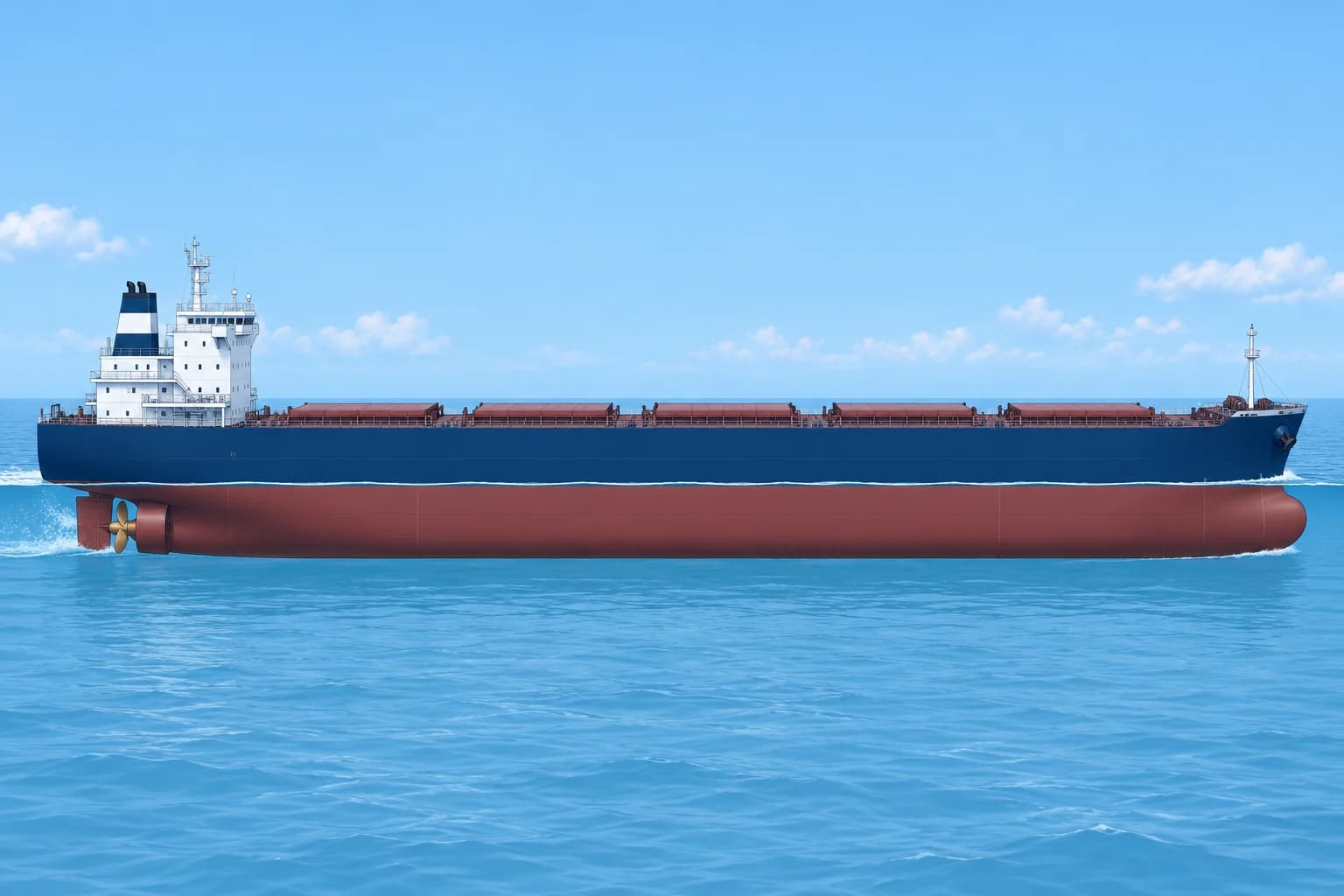
EEXI
The Energy Efficiency Existing Ship Index (EEXI) is a calculated design-efficiency index for existing ships of 400 GT or more of the covered cargo and passenger types. Since 2023, the attained EEXI must not exceed the required value. An engine power limit can help a ship comply. The Energy Efficiency Design Index (EEDI) sets design-efficiency requirements for new ships.
CII
The Carbon Intensity Indicator (CII) divides annual CO₂ by capacity × distance travelled. Use deadweight (carrying capacity in tonnes) or GT (an enclosed-volume index), depending on ship type, not actual cargo. It covers specified ship types of 5,000 GT or more. Attained CII is your calculated result. Required CII comes from a ship-type and capacity reference line for 2019, reduced by that year’s factor; it is not your own measured 2019 result. Comparing them gives ratings from A (best) to E (worst).
Reduction factors
Relative to 2019: 5 % in 2023, 7 % in 2024, 9 % in 2025 and 11 % in 2026. MEPC 83 in 2025 set 13.625 % for 2027, 16.25 % for 2028, 18.875 % for 2029 and 21.5 % for 2030. Example: a reference value of 5.0 gives a required CII of 5.0 × 0.89 = 4.45 in 2026 and 5.0 × 0.86375 ≈ 4.32 in 2027. A further review is due by 2028.
Corrective plan
A ship rated D for three consecutive years, or E in one year, must have a corrective action plan in her SEEMP, the Ship Energy Efficiency Management Plan. Part III of the SEEMP holds the three-year CII plan and is verified by the flag or a recognised organisation (RO) acting for it. The corrective plan must explain how the ship will achieve C or better.
DCS
Under the IMO Data Collection System (DCS), ships of 5,000 GT or more on international voyages report fuel use, distance and hours to the flag annually, by 31 March. From 2026 data, the report also splits fuel by consumer, such as main engines and boilers, and time and distance into underway and not underway. Keep your noon reports accurate: they feed the CII.
Net-Zero Framework
The IMO Net-Zero Framework, a global fuel greenhouse-gas intensity standard with pricing, was approved as draft amendments at MEPC 83 in April 2025. On 17 October 2025 the extraordinary session MEPC/ES.2 adjourned adoption for one year. MEPC 84 in spring 2026 reached no agreement. As of 26 October 2026 it is not adopted and not in force; talks continue towards MEPC 85 and the resumed session planned for early December 2026.
Key figures
- EEXI
- Existing ships ≥400 GT (covered types), since 2023
- CII
- Ships ≥5,000 GT (covered types); ratings A to E
- Reduction vs 2019
- 2026: 11 %; 2027: 13.625 %; 2028: 16.25 %; 2030: 21.5 %
- Corrective plan
- D for 3 consecutive years, or E once: plan in SEEMP
- DCS
- ≥5,000 GT, international voyages; report by 31 March
- Net-Zero Framework
- Approved Apr 2025; adoption adjourned; not adopted (Oct 2026)
Remember
- EEXI rates design; CII rates the year's operation.
- CII ratings A to E; the required CII tightens every year.
- D three years running, or one E: corrective plan in the SEEMP.
- DCS: ships of 5,000 GT or more on international voyages report yearly by 31 March.
- The Net-Zero Framework is not adopted as of October 2026.
Common mistakes
Wrong: A ship rated D once must stop trading until she improves.
Right: A corrective action plan is needed after three D ratings in a row or one E. There is no trading ban in the IMO rules.
Wrong: The IMO carbon price under the Net-Zero Framework applies from 2026.
Right: The framework has not been adopted. Adoption was adjourned in October 2025 and talks continue in late 2026.
Worked case
Your 60,000 GT bulk carrier was rated D in 2023 and 2024, and her 2025 result is also D. The office asks what follows. The 2026 CII is tracking slightly worse than 2025.
Show the answer
Three consecutive D ratings mean a corrective action plan must be added to SEEMP Part III and verified by the flag or RO. Set out the measures, implementation dates and how you will check progress. Show how the plan will achieve C or better against the tightening required CII. Track attained CII against that requirement monthly; an improved attained value alone does not guarantee a better rating.
Practice question
What does the CII measure?
- The design efficiency of the ship's hull and engine
- Annual CO₂ per unit of ship capacity and distance
- The sulphur content of the fuel burned in a year
- The annual NOx per unit of ship capacity and distance
Show the answer
Answer: B. CII divides annual CO₂ by ship capacity multiplied by distance travelled. Capacity is deadweight or GT, depending on ship type, not the cargo actually carried. EEXI is the design index.