

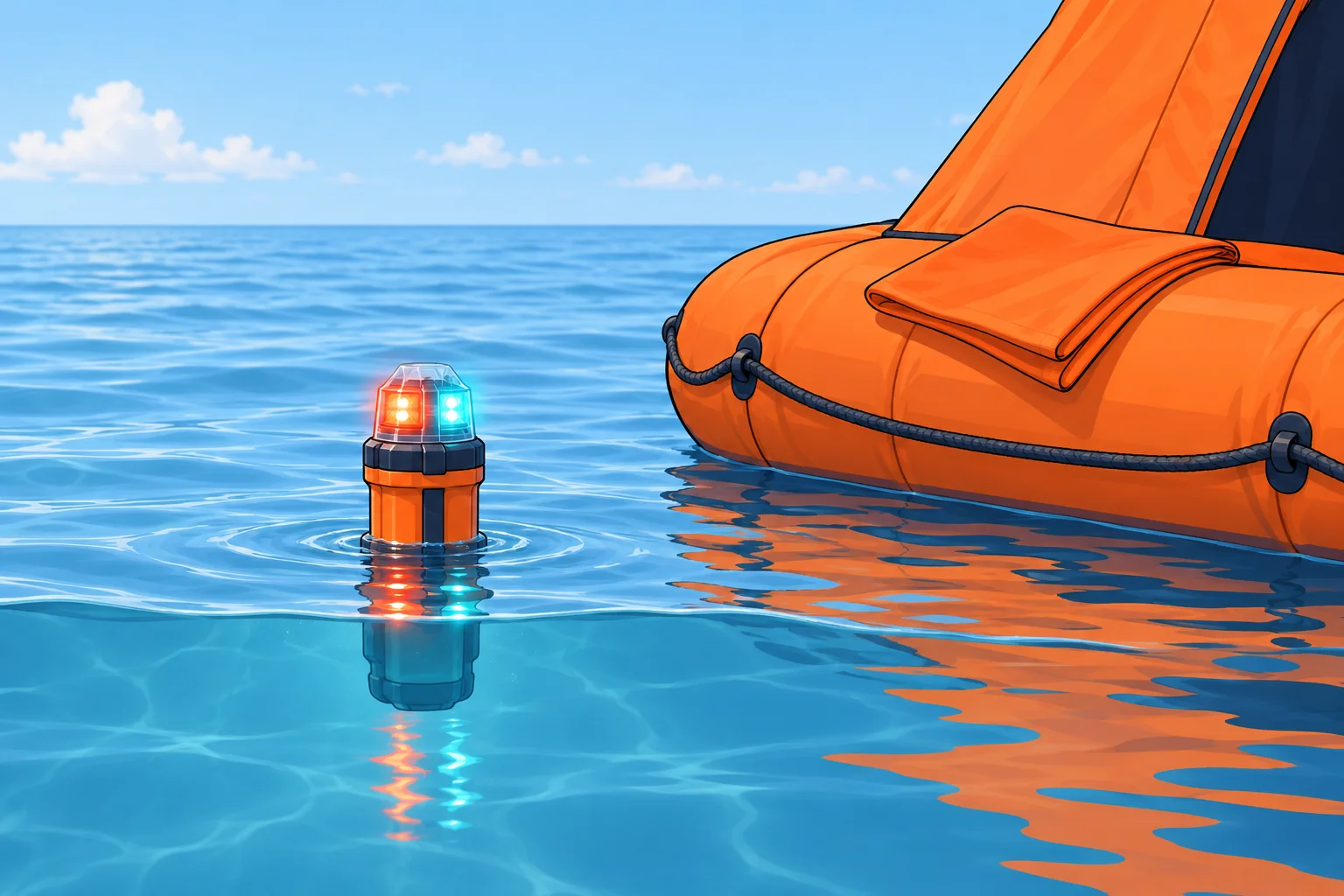
Electronic visual distress signals (EVDS)
1The lesson in plain words
An EVDS can signal for hours without a pyrotechnic flame. Check its batteries, condition and legal acceptance.
What they are
An EVDS (electronic visual distress signal) is a waterproof LED battery light that flashes a distress pattern for hours. It has no pyrotechnic flame or flare expiry date. Check batteries, seals and operation as the maker directs, including service or replacement dates. Dispose of failed units as electrical waste. It is generally less bright than a red hand flare and does not replace a required day signal.
The US rule
In the USA, the RTCM 13200 standard sets how these lights must perform, including a red-orange and cyan flash pattern. Since a US Coast Guard policy letter of December 2018, devices meeting it are accepted as night visual distress signals, in place of night flares, under the electric distress light rule in 46 CFR 161.013. You still need an approved day signal, such as an orange distress flag.
UK and the RYA
UK-flagged private pleasure craft under 13.7 m have no UK flare-carriage duty. The MCA advises that an EVDS should not replace required pyrotechnics, but sees it as an aid to visual location after an alert. The RYA notes that EVDS are not separately listed in COLREG Annex IV; acceptance depends on the signal and applicable rules. Send an electronic distress alert if possible, and use the light to attract attention and help rescuers locate you.
Spain and other flags
Spanish carriage rules for recreational boats set pyrotechnics by navigation zone; an EVDS does not replace them unless the rules change. Australia's AMSA likewise does not accept EVDS as a replacement for flares. SOLAS ships must carry pyrotechnics; an EVDS is not a SOLAS replacement. Check your flag state's current rules before you buy.
Using one well
Treat an EVDS as an extra, not your only signal. Send an electronic distress alert if possible, and use the EVDS to attract attention and help rescuers locate you. Keep it in the grab bag with spare batteries. Rescuers may mistake it for a navigation light: describe its flash pattern by radio if you can. An acknowledged alert does not mean your light has been identified.
2Key data
- Standard (USA)
- RTCM 13200: red-orange and cyan flash pattern
- USCG acceptance
- Night signal only since Dec 2018; still need a day signal
- US rule cited
- 46 CFR 161.013 (electric distress light)
- UK (MCA)
- Aid to visual location, not a substitute where flares required
- COLREG Annex IV
- EVDS not separately listed; check recognition and carriage rules
- Spanish term
- Bengala electrónica (señal luminosa electrónica)
3Key points
- 1
An EVDS has no pyrotechnic flame or flare expiry; check batteries, seals, operation and service life.
- 2
USA: RTCM 13200 devices accepted as night signals; a day signal is still needed.
- 3
UK MCA: an aid to location after alerting, not a substitute where flares are required.
- 4
EVDS are not separately listed in Annex IV; acceptance varies. They do not replace SOLAS pyrotechnics.
- 5
Send an electronic distress alert if possible, and use the EVDS to attract attention and help rescuers locate you.
4Frequent mistakes
Wrong: An LED flare replaces all flares everywhere.
Right: Acceptance depends on the flag state. In the USA it covers night only; elsewhere pyrotechnics may still be required.
Wrong: Switching on the EVDS is enough to start a rescue.
Right: Acceptance and visibility are limited. Send an electronic distress alert if possible, and use the light too.
5Practice case & exam keys
You are fitting out a US-registered private 9 m yacht in Florida for a cruise to the UK and Spain. An owner says that because small UK yachts need no flares, one LED light will cover the entire trip. Is that a sound plan?
Show the answer
No. Check rules for the yacht’s flag, private use and cruising areas. In US waters, use a USCG-accepted RTCM 13200 night device plus an approved day signal. The UK exemption for UK-flagged private pleasure craft under 13.7 m does not cancel US requirements. Spanish rules depend on navigation zone; EVDS do not replace required pyrotechnics there or under SOLAS. Check current rules before departure.
Exam keys
- EVDS: no pyrotechnic flame or flare expiry; check batteries, condition and service life. Generally dimmer; no required day signal replacement.
- USA: RTCM 13200, USCG policy Dec 2018, night signal under 46 CFR 161.013; day signal still needed.
- UK MCA: location aid after alert; RYA: EVDS not separately listed in Annex IV. Alert electronically if possible; use the light too.
- Not a SOLAS replacement; follow the flag state's carriage rules.
Finish this unit
When you've read it, answer three questions. Get all three right to finish the unit; opening the page alone doesn't count.
My notes for this unit
No notes