

Fire extinguishers, bilge pumps and bungs
1The lesson in plain words
Keep suitable extinguishers, pumps and bungs accessible and maintained so you can respond quickly to a small fire or leak.
Extinguishers
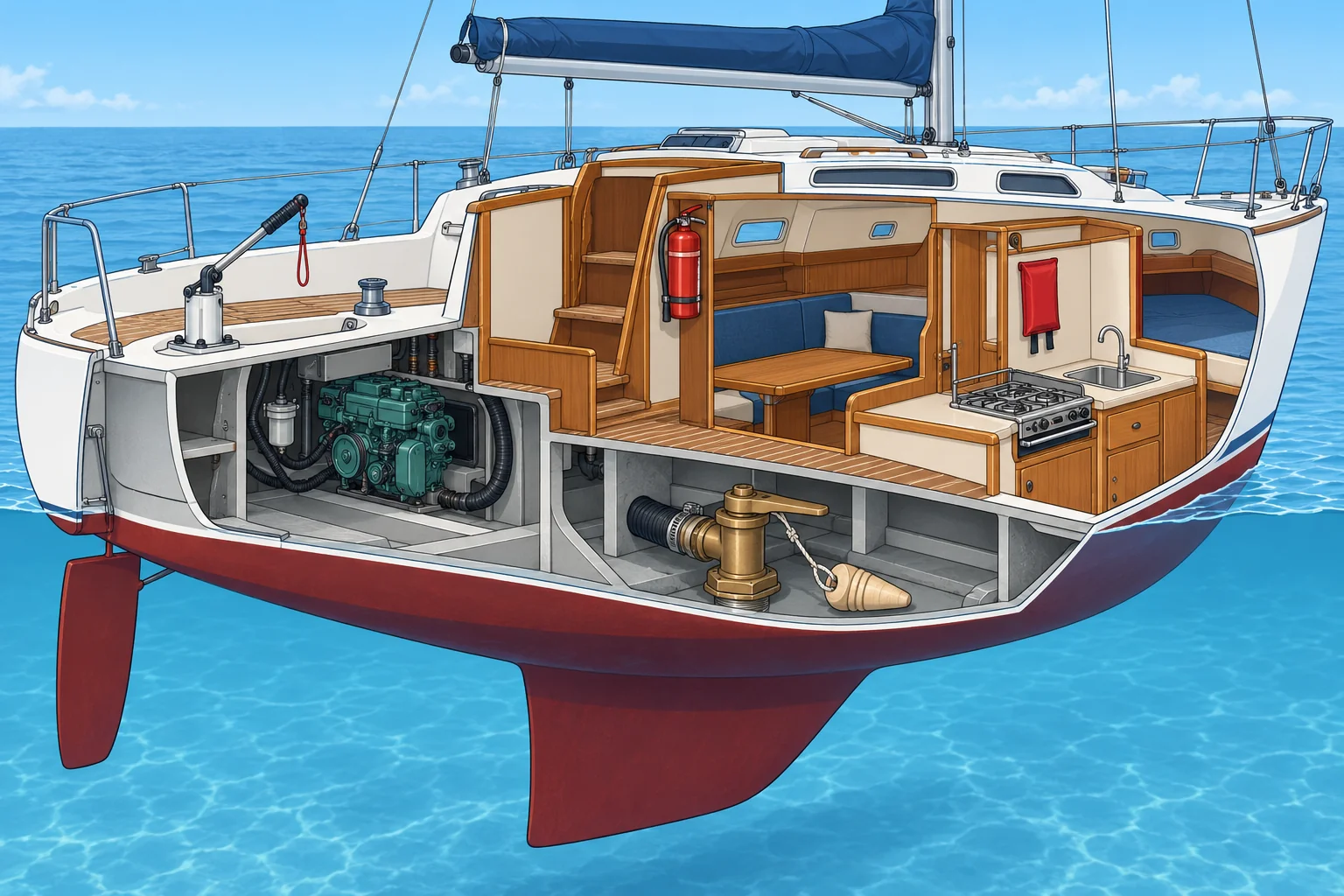
Small craft may carry dry powder, foam and carbon dioxide (CO₂) extinguishers, plus a fire blanket. Secure portable extinguishers near exits, where you can reach them without passing a fire. Keep portable engine-space extinguishers outside that space. Put the blanket near the exit from the galley, the boat’s kitchen, away from the hob. Choose numbers, ratings and locations for the boat and applicable rules. See Emergencies: fire for selection and use.
Keep them working
Check access, mounting, damage, pin, seal and the pressure gauge where fitted. CO₂ units normally have no gauge: check their charge by weight as the maker instructs. Follow the maker’s maintenance, service and replacement instructions; invert a powder unit only if instructed. Fit smoke and carbon monoxide (CO) alarms; CO is a poisonous gas from engines, heaters and cookers. Fit a gas alarm if you carry bottled gas.
Bilge pumps
The bilge is the lowest inside part of the hull. An electric bilge pump with a float switch removes small amounts of water automatically as the water rises. Have at least one manual pump that can be worked from the cockpit with hatches shut, its handle tied on, and a strainer that you can clear of debris. Carry two strong buckets with securing lines.
Bungs and seacocks
A through-hull fitting carries water through the hull. A seacock is a valve used to close an inlet or outlet. Tie a tapered softwood bung of the right size next to each fitting, ready if the fitting or hose fails. Open and close each seacock during seasonal checks to confirm it moves freely. Check hose clips follow the fitting maker’s instructions.
2Key points
- 1
Small-craft equipment includes dry powder, foam and CO₂ extinguishers, plus a fire blanket.
- 2
Mount portable extinguishers where you can reach them without passing a fire.
- 3
Check condition, pin, seal and any gauge; follow the maker’s checks and service dates; invert powder only if instructed.
- 4
A manual pump worked from the cockpit, plus two strong buckets.
- 5
Tie a softwood bung next to each through-hull; check seacocks open and close freely.
3Frequent mistakes
Wrong: One big extinguisher in the saloon covers the whole boat.
Right: You must reach one without passing the fire. Spread several around the boat.
Wrong: The electric bilge pump will cope with any leak.
Right: An electric pump depends on its power supply and a clear intake. Keep a working manual pump and buckets as backups.
Wrong: Seacocks are best left alone: turning them may break them.
Right: A seized seacock cannot be shut in an emergency. Check each one opens and closes freely, and service it as instructed.
4Practice case & exam keys
Taking over a used boat, you find a portable powder extinguisher in the engine compartment, nothing by the cooker, no bungs and a manual bilge pump in a locker below. What must you put right before sailing?
Show the answer
Before sailing, mount portable extinguishers securely near exits, with the portable engine-space extinguisher outside that space. Keep them reachable without passing a fire. Fit a fire blanket near the galley exit, away from the hob. Tie suitable softwood bungs beside the through-hulls. Provide a manual pump operable from the cockpit with hatches shut, so pumping does not open the boat to the sea.
Exam keys
- Small-craft equipment: dry-powder, foam and CO₂ extinguishers; fire blanket.
- Mount near exits; check pin, seal, condition and any gauge; CO₂ charge by weight; maintenance and dates per maker.
- Electric pump with float switch, manual pump worked from the cockpit, two buckets.
- Softwood bung tied at each through-hull; seacocks checked for free opening and closing.
Finish this unit
When you've read it, answer three questions. Get all three right to finish the unit; opening the page alone doesn't count.
My notes for this unit
No notes