

Resuscitation after drowning
1The lesson in plain words
After drowning, if an adult is unresponsive and not breathing normally, give 5 rescue breaths, then CPR at 30:2. Send someone to call for help.
Why drowning is different
Drowning means breathing problems from being under or in water. In most cardiac arrests the heart fails first. In drowning the lungs fail first: water blocks breathing, oxygen runs out, and only then does the heart stop. That is why getting oxygen in, through rescue breaths, matters more here than after a sudden collapse on deck.
Rescue without becoming a casualty
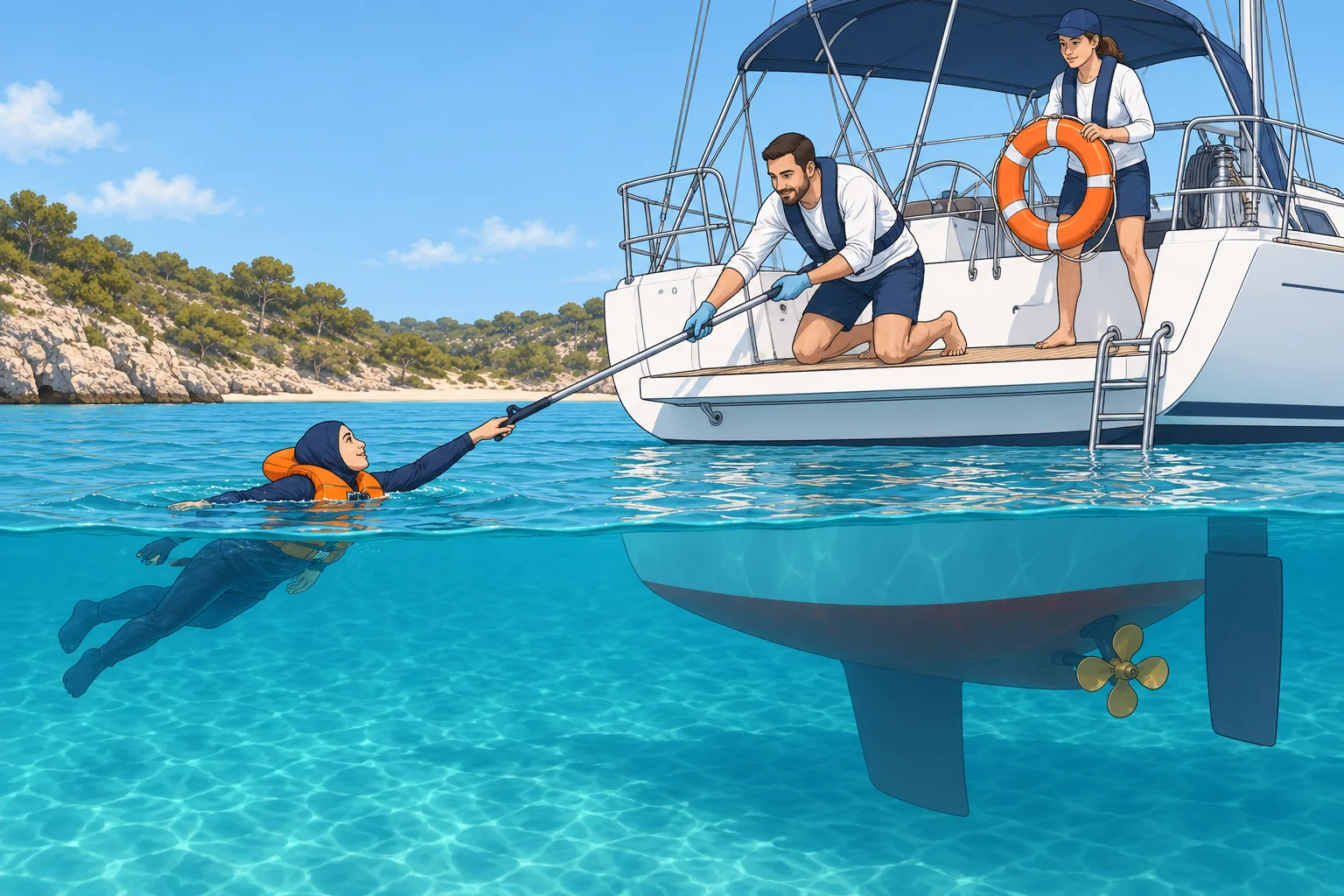
Do not jump in unless you are trained, equipped and it is safe. Reach with a boathook, throw a line or a lifebuoy, and keep pointing at the person. Recovery manoeuvres are taught in the Emergencies module.
Five breaths, then CPR
Once the casualty is aboard, check response. If they are unresponsive, open the airway and check breathing. If it is absent or abnormal, give 5 initial rescue breaths. Then start CPR at 30:2. Compressions alone help less in drowning because the problem is oxygen, but they are still better than nothing. Give breaths in the water only if trained in this technique and it is safe.
Water and vomit
Do not try to drain water from the lungs or press on the stomach: it wastes time and makes vomiting more likely. Vomiting during CPR is common. Turn the casualty onto their side, let the mouth drain, roll them back and carry on. Dry the chest before you attach AED pads, and move the casualty out of standing water if you can.
Everyone gets checked
Anyone who inhaled water needs medical assessment, even if they seem well. Get radio medical advice and keep watching their breathing. Persistent coughing, breathlessness, drowsiness or confusion needs urgent help. Anyone who needed rescue breaths or CPR needs hospital care.
2Key data
- Initial rescue breaths
- 5
- Then
- CPR at 30:2 and an AED
- AED pads
- Dry the chest first; keep out of standing water
- After rescue
- Medical check for anyone who inhaled water
3Key points
- 1
In drowning the lungs fail first, so oxygen is the priority.
- 2
Unresponsive and not breathing normally: 5 rescue breaths, then CPR at 30:2.
- 3
Never try to drain water from the lungs; manage vomit by turning to the side.
- 4
Dry the chest before attaching AED pads.
- 5
Anyone who inhaled water needs medical assessment, even if they seem well.
4Frequent mistakes
Wrong: Hold the casualty upside down or push on the stomach to get the water out.
Right: Trying to drain the lungs delays resuscitation and can cause vomiting. If unresponsive and not breathing normally, give 5 rescue breaths, then CPR at 30:2.
Wrong: Give compressions only, as for any collapse.
Right: In drowning, breaths matter most. If you are trained, give 5 initial breaths and then 30:2.
Wrong: Worry about ‘dry’ or ‘secondary’ drowning days later.
Right: Doctors no longer use those terms. Watch for coughing, breathlessness or drowsiness in the first hours and get them checked.
5Practice case & exam keys
You pull a swimmer onto your boarding ladder after several minutes face down near the anchorage. On the cockpit floor she does not respond and is not breathing. Your crew has the AED from the chart table.
Show the answer
Send a crew member to call for help by VHF. Open her airway and give 5 rescue breaths, then start CPR at 30:2. If she vomits, turn her on her side, let the mouth drain, roll her back and continue. Dry her chest, move her out of any standing water, attach the AED and follow the prompts. She needs hospital care even if she recovers.
Exam keys
- Drowning arrest is caused by lack of oxygen: 5 initial rescue breaths, then 30:2.
- Do not try to drain water from the lungs.
- Dry the chest before using an AED.
- Every casualty who inhaled water needs a medical check.
Finish this unit
When you've read it, answer three questions. Get all three right to finish the unit; opening the page alone doesn't count.
My notes for this unit
No notes