

Burns and scalds
1The lesson in plain words
Cool heat burns with cool running water for 20 minutes; keep them warm. Loose cling film for heat burns only, never face or chemical burns; use non-stick dressings there.
Burns on boats
A burn is skin damage from heat, friction, chemicals or electricity. A scald is a heat burn from hot liquid or steam. On boats they come from the galley stove in a seaway, a kettle sliding off, hot engine parts, exhaust, a rope running fast through your hands, and fire.
Cool a heat burn
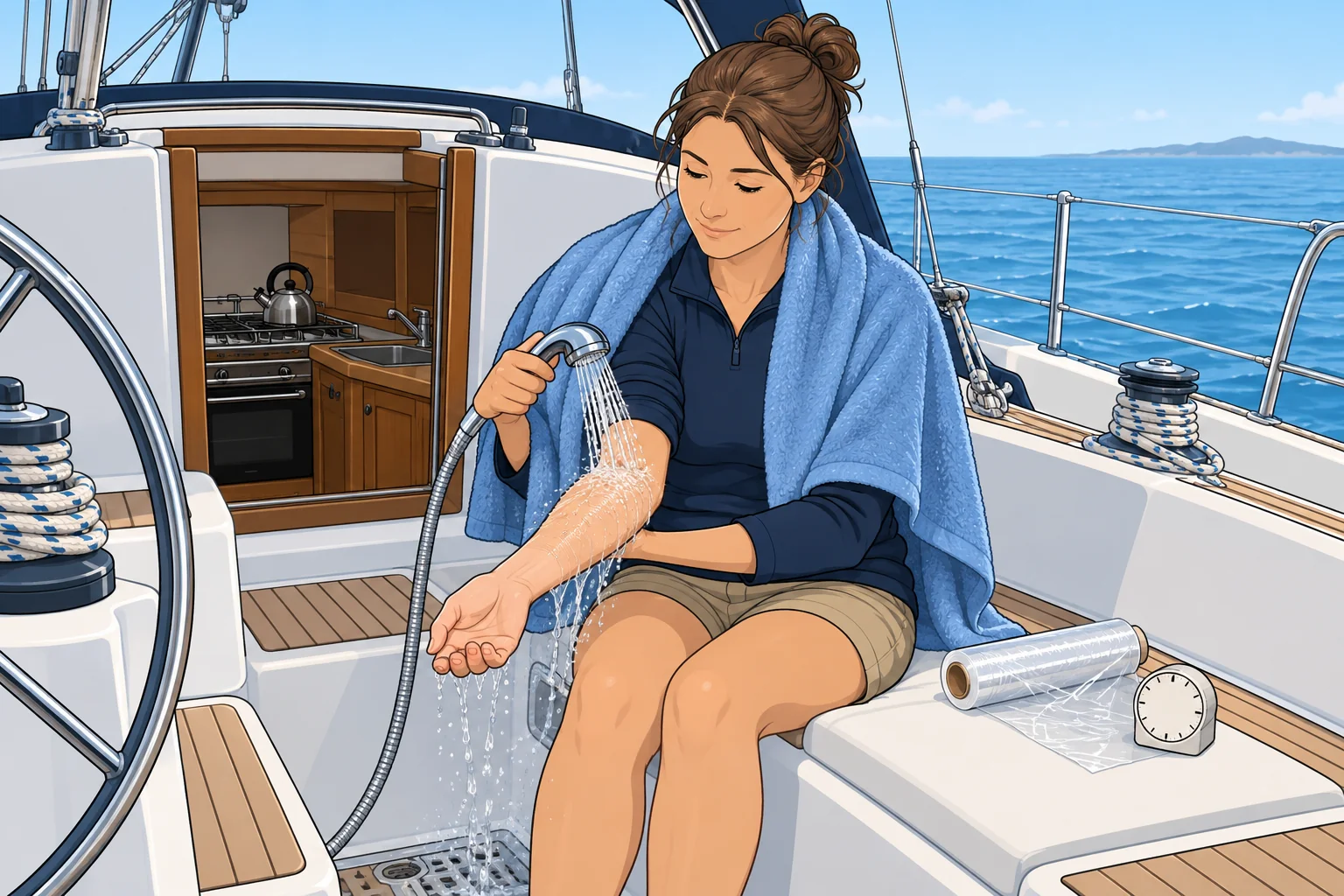
Cooling stops the burn going deeper and eases pain. Start as soon as possible and cool with cool running water for 20 minutes. Cooling still helps for up to 3 hours after the burn. Use fresh water from the tanks or a hose; if fresh water is short, clean cool seawater is better than no cooling. Never use ice or iced water.
Cool the burn, warm the casualty
Cooling a large area can make the casualty cold, especially a child or an older person. Cool only the burnt area and keep the rest of the body covered and out of the wind. For a large heat burn, pause cooling if shivering starts and warm the casualty.
Cover and protect
While cooling, remove rings, watches and loose clothing before swelling starts; leave anything stuck to the skin. After cooling, lay cling film loosely in strips over heat burns, never around a limb or over the face. Do not use it on chemical burns. Use a clean non-stick dressing where film is unsuitable; a clean plastic bag suits a burnt hand. No butter, oil, toothpaste or creams; do not burst blisters.
When to get advice
Get radio medical advice for burns larger than the casualty’s hand, on the face, hands, feet, joints or groin, deep, white or leathery burns, burns encircling a limb, and burns in children or older people. Smoke exposure with hoarseness or breathing trouble needs emergency help. Chemical/electrical burns need urgent advice: protect yourself, brush off dry chemicals, remove soaked clothes and rinse for at least 20 minutes; isolate electricity before touching.
2Step by step
First aid for a heat burn
- 1
Stop the burning safely.
Heat can injure you as well as the casualty.
- 2
Remove rings, watches and loose clothes; leave stuck clothing.
Burnt skin swells and tight items cut off blood flow.
- 3
Cool the heat burn under cool running water for 20 minutes.
Cooling limits the depth of the burn and relieves pain.
- 4
Keep the rest of the casualty warm and out of the wind.
Cooling a large area can cause hypothermia.
- 5
Lay cling film loosely on heat burns, never the face or chemical burns. Use a non-stick dressing there; a clean bag suits a burnt hand.
It protects the burn from germs and air, which eases pain.
- 6
Get advice for serious, chemical or electrical burns; emergency help for smoke with hoarseness or breathing trouble.
Large, deep or face burns need medical care.
3Key data
- Heat burn cooling
- Cool running water, 20 minutes
- Still worth cooling
- Up to 3 hours after the burn
- Never
- Ice, butter, creams or bursting blisters
- Dressing
- Loose film: heat burns, never face/chemical; non-stick elsewhere
4Key points
- 1
Cool heat burns with cool running water for 20 minutes, as soon as possible.
- 2
Cool the burn, warm the casualty.
- 3
Remove rings and loose clothing; leave anything stuck to the skin.
- 4
Loose cling film for heat burns only, never the face or chemical burns; use a clean non-stick dressing there.
- 5
Serious, chemical or electrical burns: advice. Smoke with hoarseness or breathing trouble: emergency help.
5Frequent mistakes
Wrong: Put ice on a burn to cool it fast.
Right: Ice damages the skin further. Use cool running water.
Wrong: Cool a heat burn for a minute or two until it stops hurting.
Right: Cool for 20 minutes; pain relief comes before the cooling has done its work.
Wrong: Wrap cling film tightly round a burnt arm.
Right: Lay it loosely in strips. The arm will swell and a tight wrap becomes a tourniquet.
6Practice case & exam keys
Heeled over in a gust, a pan of boiling water slides off the galley stove onto the cook’s forearm. The skin is red and starting to blister over an area about twice the size of her hand. The sea temperature is 16 °C.
Show the answer
Make the galley safe. Cool her forearm with cool running water for 20 minutes in a sheltered place. Remove her watch and rings while cooling; leave stuck clothing. Keep the rest of her covered. Have another crew member seek radio medical advice while you cool: the burn is larger than her hand. Afterwards, lay cling film loosely over it.
Exam keys
- Heat burn: cool running water for 20 minutes, as soon as possible (useful up to 3 hours).
- Cool the burn, keep the casualty warm.
- Remove jewellery; do not remove stuck clothing; no ice, creams or burst blisters.
- Loose film for heat burns, never face or chemical burns; non-stick dressing instead. Serious, chemical or electrical burns need advice.
Finish this unit
When you've read it, answer three questions. Get all three right to finish the unit; opening the page alone doesn't count.
My notes for this unit
No notes