

Head injuries and suspected spinal injury
1The lesson in plain words
After a blow to the head, watch for warning signs and get advice. If a neck or back injury is possible, keep the casualty still; airway always comes first.
Head injuries on boats
A boom, hatch or fall on the steps into the cabin can cause head injuries. A concussion is a brain injury that can cause headache, dizziness, confusion, sickness or a blackout; symptoms may persist. Have a responsible adult stay with the casualty for at least 24 hours. Stop helming (steering), climbing and deck work; return to risky duties only after recovery and medical advice.
Warning signs
Get urgent radio medical advice after any loss of consciousness or a seizure (for example, uncontrolled jerking). Other warning signs include drowsiness, difficulty waking, worsening headache, repeated vomiting, confusion, unusual behaviour, weakness, numbness, unequal pupils, or blood or clear fluid from the nose or ears. These may signal bleeding inside the skull. Record the signs and times.
When to suspect a spinal injury
Suspect a neck or back injury after a fall into the cabin or from the mast, a heavy blow from the boom, a dive into shallow water, or a crush. Neck or back pain, tingling, numbness or weakness in the limbs make it more likely. An unconscious casualty after such a fall may also have one.
Keep them still
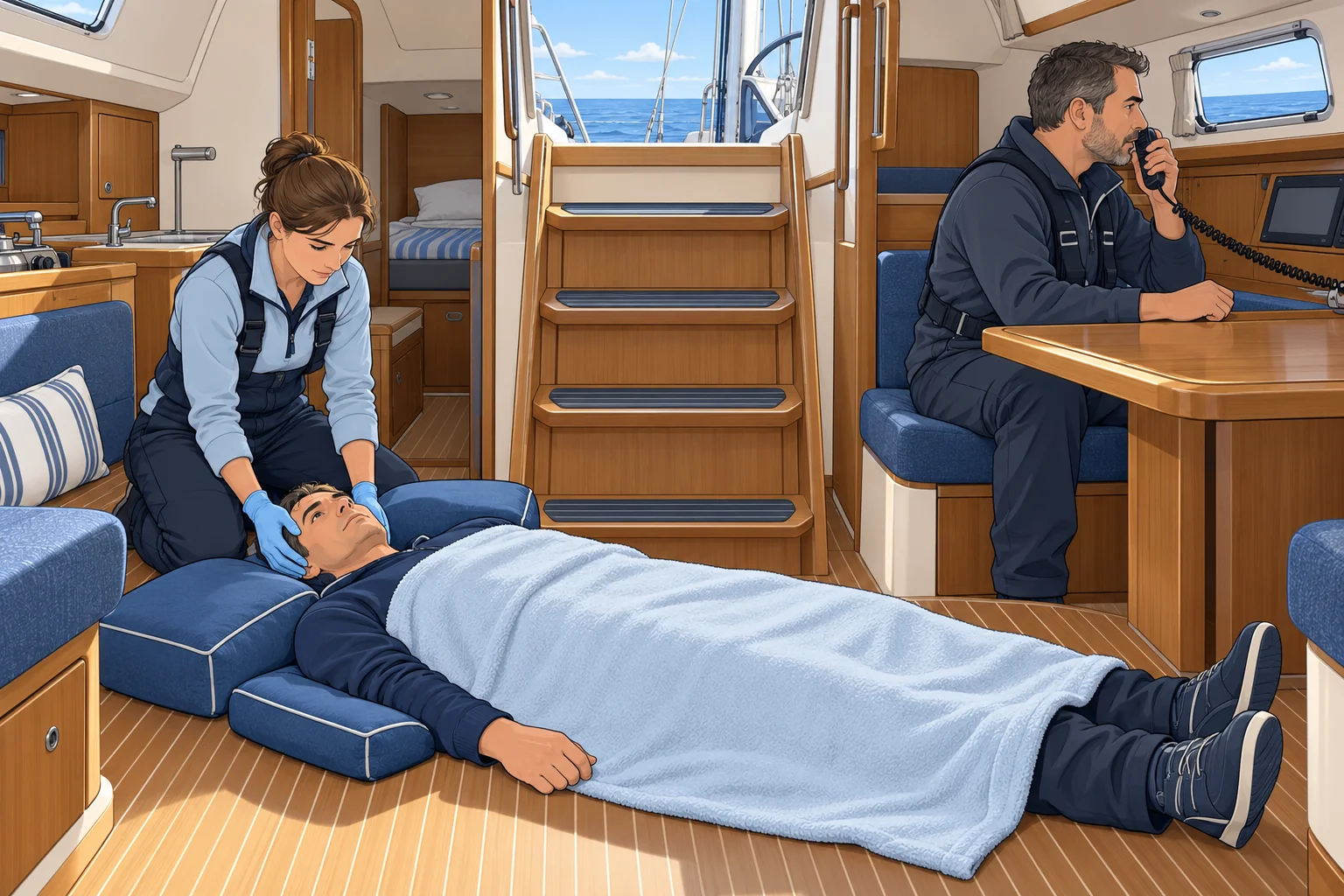
Ask an alert casualty to keep their head and neck still in a comfortable position, and help them do it. Never force them into a position. Lay first aiders do not fit cervical collars (rigid neck braces): they can do harm and are used only by trained rescuers under their own protocols. Kneel at the head and hold it still if needed, and pad the casualty against the boat’s motion.
Airway first
Opening the airway takes priority over neck movement. If trained, try a jaw thrust: place your fingers behind the corners of the lower jaw and lift it forward. If you cannot open the airway this way, gently tilt the head back and lift the chin (head tilt–chin lift). If vomit or blood blocks the airway, turn the casualty onto their side. With helpers, keep head, neck and body in line (log roll); if alone, turn them as carefully as you can rather than wait.
2Key data
- After a head injury
- Observe ≥24 h; risky duties only after recovery and medical advice
- Collars
- Not for first aiders (ERC 2025)
- Airway in suspected spinal injury
- Jaw thrust if trained; if ineffective, head tilt–chin lift
- Turning
- Turn for airway danger; align with helpers, do not wait if alone
3Key points
- 1
Have an adult stay for at least 24 hours. No helming, climbing or deck work until recovery and medical advice.
- 2
Drowsiness, vomiting, worsening headache, confusion or a seizure: urgent advice.
- 3
Suspected spinal injury: keep the casualty still; never force a position.
- 4
First aiders do not fit cervical collars.
- 5
Airway first: jaw thrust if trained; if ineffective, head tilt–chin lift. Turn for blood or vomit; do not wait for helpers.
4Frequent mistakes
Wrong: He is talking normally now, so the head injury is fine.
Right: Bleeding inside the skull can show hours later. Have an adult stay for at least 24 hours; get medical advice.
Wrong: Fit a collar made from a rolled towel to protect the neck.
Right: Collars are not for first aiders. Ask the casualty to keep still, or hold the head steady.
Wrong: Never move a possible spinal casualty, whatever happens.
Right: Airway first: jaw thrust if trained; head tilt–chin lift if it fails. Turn onto their side for blood or vomit; do not wait for helpers.
5Practice case & exam keys
A crew member falls through an open hatch onto the cabin floor. She is awake, complaining of neck pain and tingling in her hands. The boat is rolling at anchor.
Show the answer
Suspect a spinal injury. Tell her to keep still and not to try to get up. Kneel at her head and help her keep her head and neck still in a comfortable position; use padding to reduce movement from the boat. Do not fit a collar. Call for radio medical advice and an evacuation, keep her warm, and watch her breathing.
Exam keys
- Head injury warning signs: drowsiness, vomiting, worsening headache, confusion, seizure, unequal pupils, fluid from nose or ears.
- Observe with an adult for at least 24 hours; return to helming, climbing or deck work only after recovery and medical advice.
- Suspected spinal injury: minimise movement; no collars for first aiders.
- Airway first: jaw thrust if trained; head tilt–chin lift if ineffective. Turn only for airway danger; do not wait for helpers.
Finish this unit
When you've read it, answer three questions. Get all three right to finish the unit; opening the page alone doesn't count.
My notes for this unit
No notes