

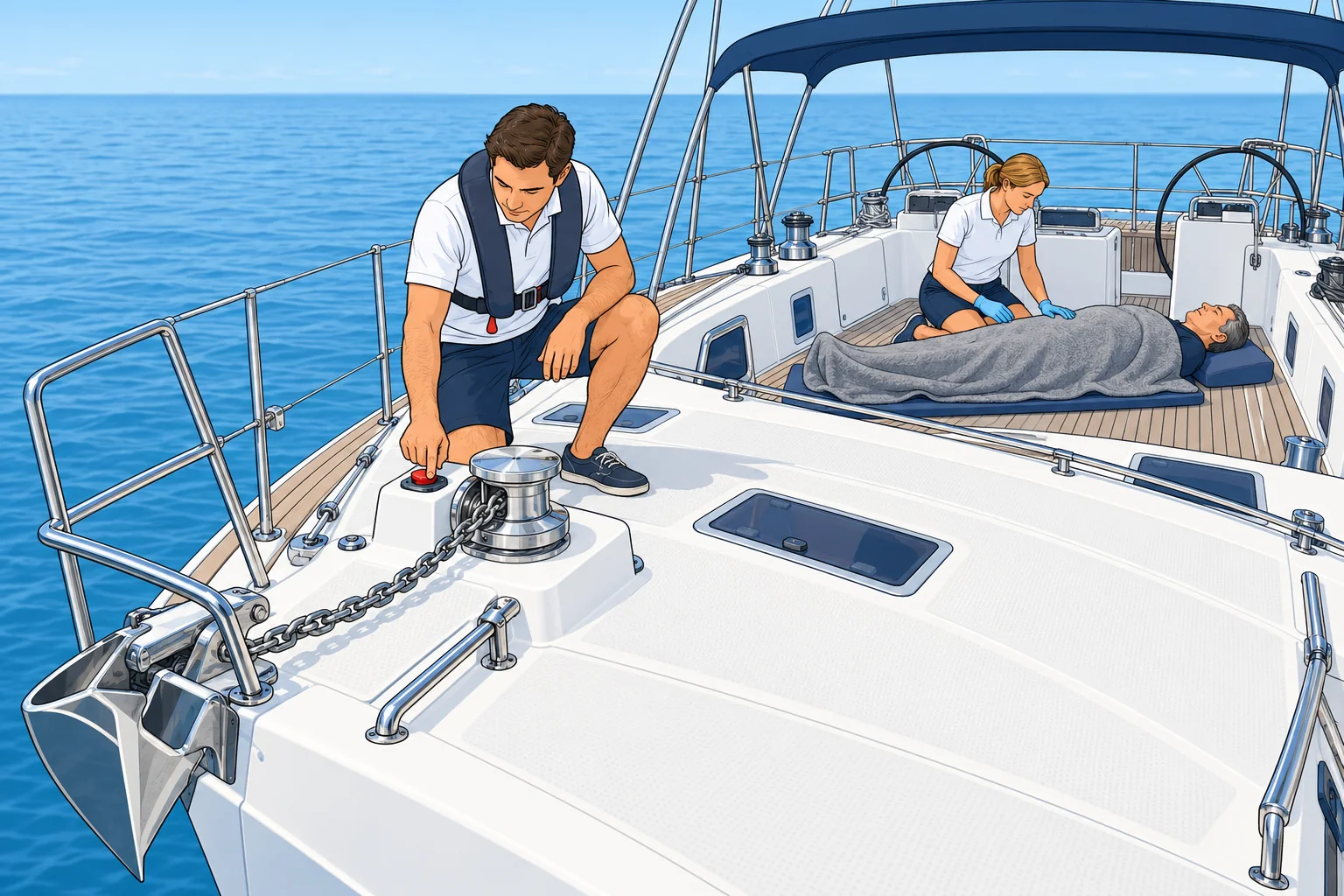
Rope, winch and crush injuries, and shock
1The lesson in plain words
Stop machinery and disconnect its power; have competent crew secure the load before release. Treat the injury and watch for shock.
Ropes, winches and windlasses
Fingers caught in a winch (rope drum), block (pulley) or windlass (anchor hauler) can suffer crushing, cuts or amputation. A rope running through hands causes rope burns. Stop powered machinery and disconnect its power so it cannot restart. A stopped winch or windlass may still hold a heavy load. Have competent crew secure that load before attempting release; never pull the casualty against it. Call for urgent rescue help if release is unsafe.
Crushed fingers and limbs
Once free, control bleeding, remove rings early if they slide off easily, cool with a cold pack wrapped in cloth and raise the hand. A crush may hide a fracture: support the hand as found rather than forcing a bent finger against its neighbour. Get prompt radio medical advice for significant crush injuries. Large crush injuries or anyone trapped for more than a few minutes need urgent radio medical advice.
Amputated parts
If a fingertip or finger is cut off, control the bleeding first. Then wrap the part in a clean, damp dressing, put it in a sealed plastic bag and place the bag in water with ice. Never put the part directly on ice or in water. Label it with the time and keep it with the casualty.
Recognise shock
Shock means the circulation cannot supply the body’s organs with enough blood, often after heavy bleeding, burns or a crush injury. Signs are pale, cold and sweaty skin, a fast and weak pulse, fast breathing, thirst, anxiety, confusion and later drowsiness. Shock can kill: it needs medical help.
First aid for shock
Treat the cause, especially bleeding. Lay them flat if alert and breathing comfortably; otherwise prioritise the airway and a position that permits breathing. Keep them warm with blankets above and insulation below, and protect them from wind and spray. Do not give food or drink; moisten the lips if they are thirsty. Reassure them, monitor breathing and response, and get radio medical advice early.
2Key data
- First action
- Stop and isolate; competent crew secure load before release
- Rings
- Remove early, only if they slide off easily
- Amputated part
- Damp dressing, sealed bag, bag in iced water
- Shock signs
- Pale, cold, sweaty, fast weak pulse, confused
- Shock care
- Flat if alert, breathing easily; airway first; warm; no food/drink
3Key points
- 1
Stop and isolate machinery and have competent crew secure the load before release; never pull against it.
- 2
Remove rings only if easy; cool, raise and support a crushed hand as found. Get prompt advice for significant crush injuries.
- 3
Amputated part: damp dressing, sealed bag, bag in iced water, never direct ice.
- 4
Shock: pale, cold, sweaty, fast pulse, confused; it can kill.
- 5
Flat if alert and breathing comfortably; otherwise airway and breathing position first. Keep warm, no food or drink; get advice.
4Frequent mistakes
Wrong: Pull the trapped hand out of the windlass while it is still running.
Right: Stop and isolate it. A load may remain: competent crew must secure it before release. Never pull against it.
Wrong: Put the cut-off fingertip straight onto ice.
Right: Direct ice damages the tissue. Wrap it, bag it and put the bag in iced water.
Wrong: Give a shocked casualty a hot drink to warm him up.
Right: Nothing by mouth: he may need surgery and may vomit. Keep him warm with blankets.
5Practice case & exam keys
A hand is caught in a windlass. You stop and isolate it, but the anchor chain is still loaded. The casualty is pale, cold and sweaty. She is alert, breathes comfortably and asks for water.
Show the answer
Keep clear until competent crew secure the load; never pull against it. Call for urgent rescue help if release is unsafe. After release, control bleeding and support the hand as found. Suspect shock: lay her flat, insulate underneath and cover her. Give no food or drink; moisten her lips. Have someone call for urgent radio medical advice while you treat her. Monitor breathing and response.
Exam keys
- Stop and isolate machinery; competent crew secure the load before release. Never pull the casualty against it.
- Remove rings only if easy; cool, raise and support crushed hands as found; get advice for significant injuries.
- Amputated part: wrapped, bagged, in iced water, with the casualty.
- Shock: pale, cold, sweaty, fast pulse; flat if alert and breathing easily, otherwise airway first. Warm, no food/drink, get help.
Finish this unit
When you've read it, answer three questions. Get all three right to finish the unit; opening the page alone doesn't count.
My notes for this unit
No notes