

Medical evacuation: deciding, preparing and following up
1The lesson in plain words
The doctor and the rescue centre decide whether to evacuate, and how. Your job is to prepare the patient, the paperwork and the boat, and keep a clear record.
Who decides
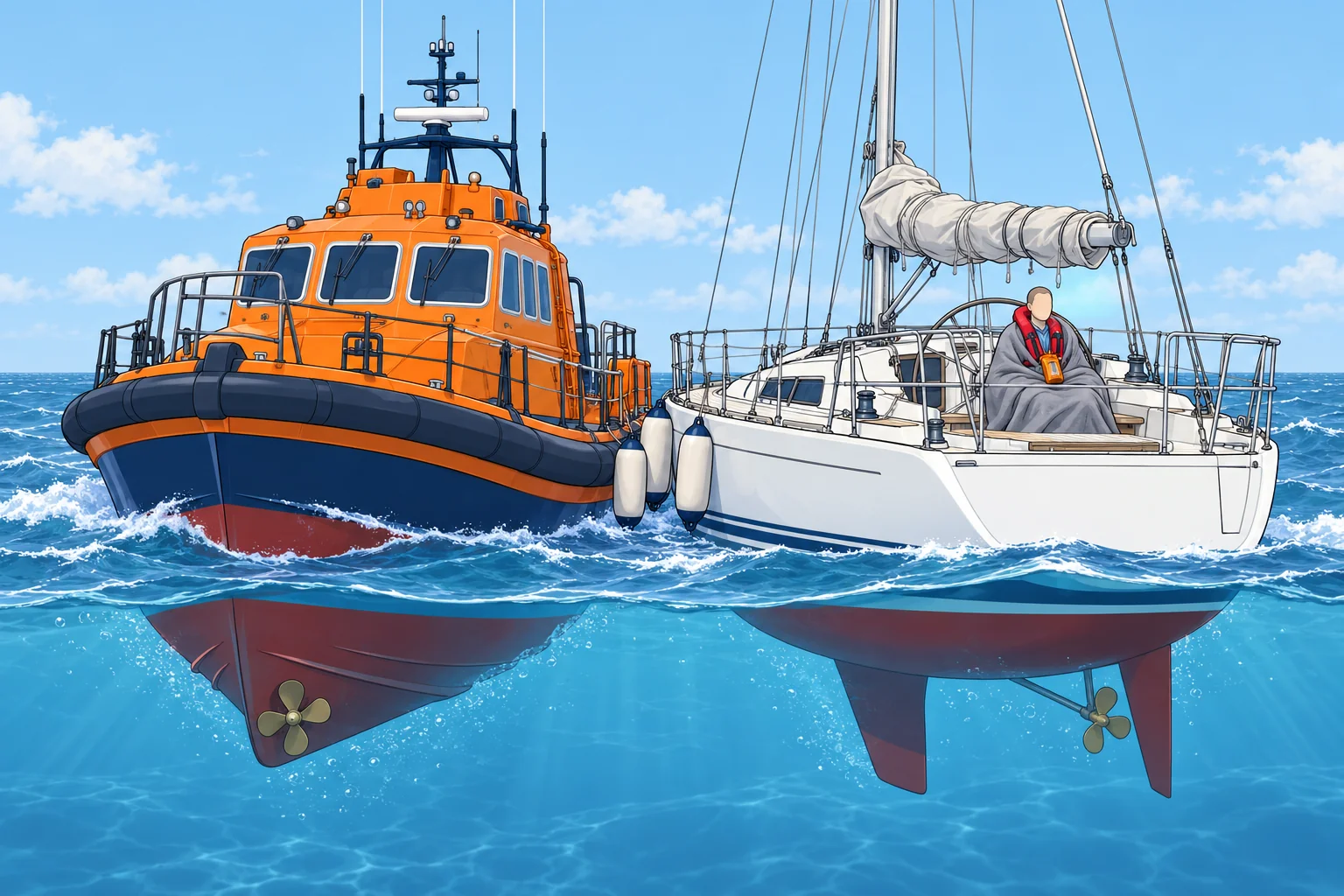
A MEDEVAC (medical evacuation) is decided by the TMAS doctor together with the MRCC. They weigh the patient's condition against the risks and delays of the rescue itself. Options include continuing with advice, diverting to a port, meeting a lifeboat or another vessel, or a helicopter lift. Give them honest facts, including your crew's limits and the weather.
Range and timing
Helicopters have limited range and may need daylight or better weather for some operations. Far offshore the MRCC may ask you to steer towards the coast, or to meet a ship that carries medical help. Tell them your speed and the time to the nearest port. Keep treating the patient as the doctor advises while help comes.
Prepare the patient
Dress the patient warmly and protect them from spray. Put on a lifejacket unless the rescuers say otherwise. Put a written summary in a waterproof bag fixed to the patient: the problem, vital signs with times, medicines given with doses and times, allergies, and their own medicines. Add their passport or identity card.
Prepare the boat
Follow the rescuers’ instructions; see Emergencies: helicopter rescue and pyrotechnics for helicopter preparation. Ask whether a crew member may accompany the patient and how you will receive updates.
Follow-up
Keep the treatment record going until the hand-over: what was given, when, and the latest vital signs. Note the time and method of the evacuation and who took the patient. Afterwards, write up the event in the log, restock the medicine chest and review what you would do differently.
2Key data
- MEDEVAC decision
- TMAS doctor with the MRCC, weighing benefit and risk
- Options
- Advice only, divert, lifeboat, other vessel, helicopter
- Patient bag
- Summary, vital signs, medicines given, allergies, own medicines, ID
- Helicopter prep
- See Emergencies: helicopter rescue and pyrotechnics
- Afterwards
- Complete the log, restock, review
3Key points
- 1
The TMAS doctor and MRCC decide on evacuation and the method.
- 2
Tell them your speed, time to port, weather and crew limits honestly.
- 3
Fix a waterproof bag to the patient: summary, vital signs, medicines, ID.
- 4
Prepare the boat for the lifeboat or helicopter as the rescuers ask.
- 5
Keep the treatment record until hand-over; restock and review afterwards.
4Frequent mistakes
Wrong: Insist on a helicopter for every serious illness.
Right: An evacuation has its own risks. The doctor and the MRCC choose the safest option; give them the facts.
Wrong: Send the patient off and tell the rescuers what was given from memory.
Right: Fix a written summary to the patient: medicines, doses, times and vital signs. Memory fails under stress.
Wrong: A crew member always goes with the patient.
Right: The rescuers decide who goes, depending on space and safety. Agree how you will get news.
5Practice case & exam keys
Forty miles offshore, a patient awaiting evacuation is getting worse. Fog delays the helicopter; a port is two hours away. You have given pain relief twice. What do you tell the doctor and MRCC, and what do you prepare?
Show the answer
Report the deterioration, latest timed vital signs, fog and time to port. Ask the doctor and MRCC to reassess the plan. Continue the agreed care. Prepare a waterproof summary with symptoms, vital signs, allergies, regular medicines and both pain-relief doses and times, plus ID. Keep the record until hand-over. Prepare the boat as rescuers direct; see Emergencies: helicopter rescue and pyrotechnics.
Exam keys
- MEDEVAC decided by TMAS doctor and MRCC, weighing risk.
- Options: advice, divert, lifeboat, other vessel, helicopter (range, weather).
- Patient bag: summary, vital signs, medicines with doses and times, allergies, ID.
- Keep records until hand-over; restock and review afterwards.
Finish this unit
When you've read it, answer three questions. Get all three right to finish the unit; opening the page alone doesn't count.
My notes for this unit
No notes