

Sewage: MARPOL Annex IV and the rules for small boats
1The lesson in plain words
MARPOL Annex IV mostly covers bigger ships. Small boats fall under national and regional rules, which often ban toilet discharge near the coast.
Who Annex IV covers
MARPOL Annex IV covers international voyages by ships of 400 GT or more, or certified for more than 15 people. GT means gross tonnage: enclosed volume, not weight. Approved grinding and disinfection equipment permits discharge beyond 3 nautical miles (nm) from the nearest land. Untreated sewage needs more than 12 nm. Under these permissions, stored sewage must be released at an approved moderate rate while en route at 4 knots or more. Local bans still apply. Small yachts usually follow national rules instead.
National and regional rules
Small boats are covered instead by the coastal state, and the rules differ widely. Many ban toilet discharge in ports, marinas, bays and protected areas, and some ban it everywhere in their waters. Before a cruise, look up the rules for each country and area: pilot books, the harbour office and national boating websites carry them.
Examples
Sweden has banned toilet discharge from all recreational boats, foreign ones included, in its waters out to 12 nautical miles since 1 April 2015. In the United States, a boat with an installed toilet needs a certified marine sanitation device, and in a No Discharge Zone even treated sewage may not go overboard. In the Baltic special area, passenger ships must retain sewage or use an approved treatment plant meeting its additional nutrient-removal standards.
Holding tanks
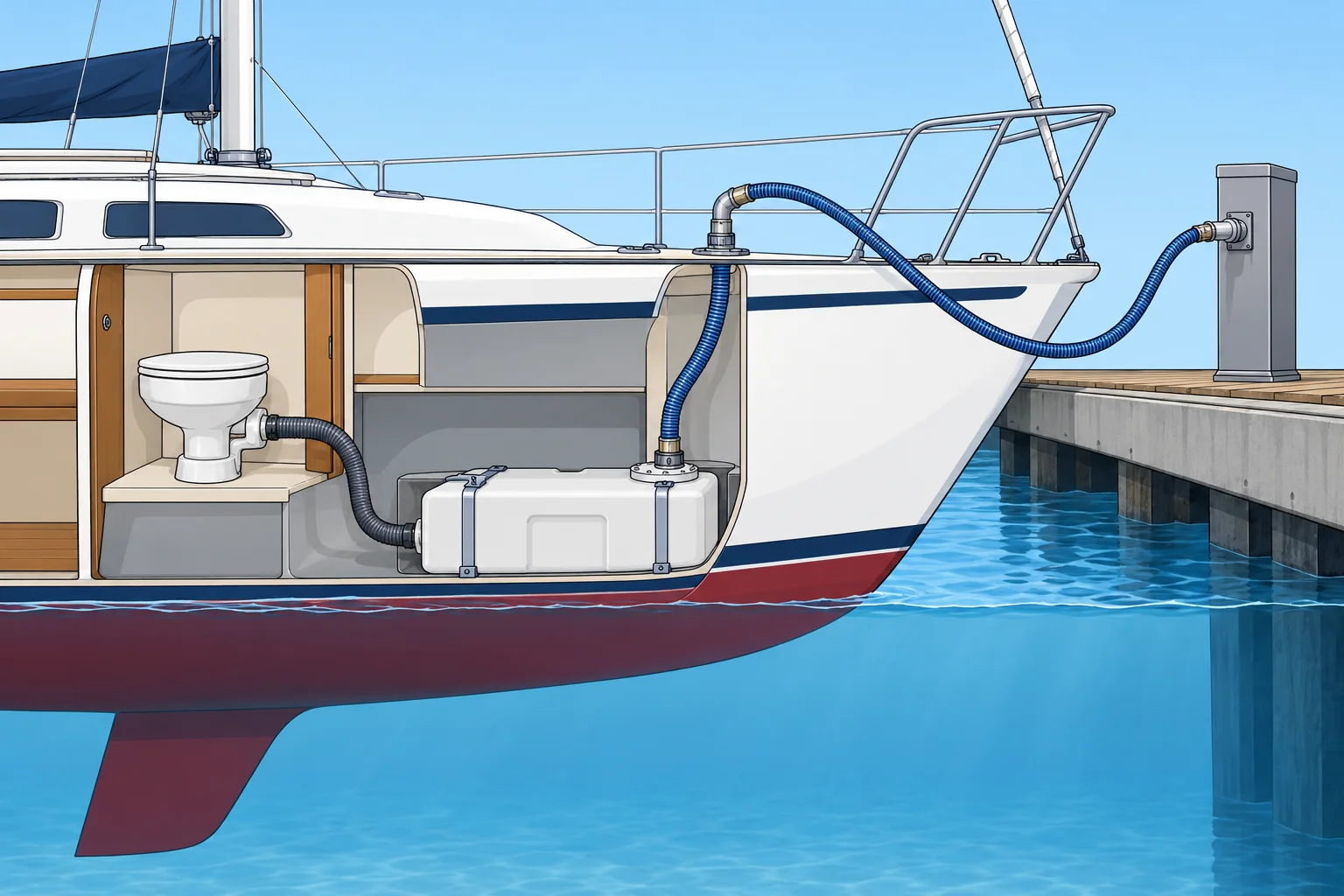
A holding tank keeps toilet waste on board until you reach a pump-out station. Boats built under the current EU Recreational Craft Directive with a toilet must have a holding tank or a treatment system. Where discharge is banned, secure the Y-valve, the selector for tank or sea, to the tank. See Ship for the plumbing.
Grey water
Grey water comes from sinks and showers. Kept separate from sewage, it normally falls outside Annex IV. Mixed with sewage, it follows sewage rules. Local restrictions may also apply. Keep oil and food scraps out: mixing them in does not bypass pollution rules. Use little soap and scrape food into the bin; biodegradable soap can still harm marine life.
2Key data
- Annex IV scope
- International voyages, 400 GT or more, or certified for over 15 people
- Annex IV distances
- Ground + disinfected: >3 nm; untreated: >12 nm; conditions apply
- Sweden
- No toilet discharge from leisure boats since 1 April 2015
- US No Discharge Zone
- No sewage overboard, treated or untreated
3Key points
- 1
Annex IV covers ships of 400 GT or more, or certified for over 15 people, on international voyages.
- 2
Small boats follow national and regional sewage rules, which vary from country to country.
- 3
Many areas ban toilet discharge in ports, bays and protected areas; some ban it completely.
- 4
A holding tank keeps waste aboard until a pump-out station.
4Frequent mistakes
Wrong: My yacht is under 400 GT, so I may discharge sewage anywhere.
Right: Annex IV may not apply, but national rules do. Many ban discharge near the coast or completely.
Wrong: Treated sewage can always go overboard.
Right: In a US No Discharge Zone, no sewage may go overboard, whether treated or untreated. Other areas may impose the same ban.
5Practice case & exam keys
You plan a summer cruise from Denmark to the Stockholm archipelago in a 10 m yacht with a toilet, a holding tank and a Y-valve to an overboard outlet.
Show the answer
Sweden bans toilet discharge from all recreational boats in its waters out to 12 nautical miles, foreign boats included. Before you enter Swedish waters, set the Y-valve to the holding tank and secure it there. Confirm working pump-out facilities at your planned stops before departure, and plan your route around tank capacity.
Exam keys
- Annex IV: international voyages, 400 GT or more, or certified for over 15 people. Approved grinding and disinfection: >3 nm from nearest land; untreated: >12 nm. Stored sewage: approved moderate rate, en route at 4 knots or more. Local bans still apply.
- Small boats: national rules apply; check each country and area before you go.
- Holding tank and pump-out; in banned areas the Y-valve stays set to the tank.
Finish this unit
When you've read it, answer three questions. Get all three right to finish the unit; opening the page alone doesn't count.
My notes for this unit
No notes