

 See units
Ship mooring and anchoring stations: mooring and tug lines, safe working loads, the windlass and buoy mooring (STCW A-II/5)
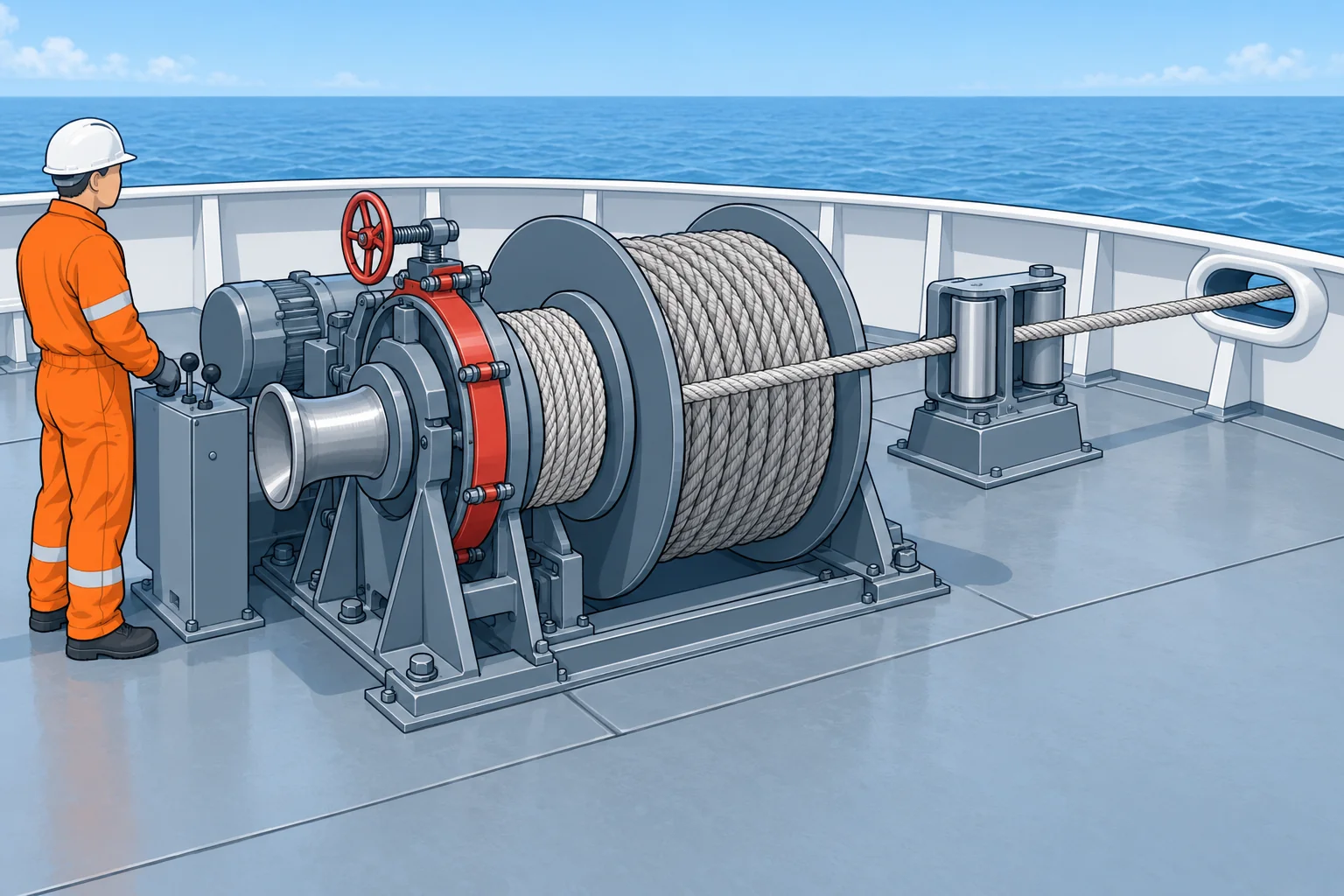
Mooring winches: drums, brakes and the line on the brake
1The lesson in plain words
A moored line is held on the winch brake, not the gear. Apply the tested setting, report any payout and stay clear.
Drums
A mooring winch has a powered drum for each line. On a split drum a flange divides it into a tension section, where the line works, and a storage section for the rest of the line. Keep only one layer on the tension section: each extra layer reduces how much the brake can hold. A warping end (drum end) is a smooth barrel for heaving ropes that are not stored on the winch.
On the brake, out of gear
When the line is tight, stop heaving. Apply the band brake to its tested, marked setting, following the ship's procedure. Take the drum out of gear by disengaging the clutch. Now the brake holds the line. The gear and motor are not meant to hold a moored ship: a line left in gear cannot slip and can be overloaded until something breaks. During the stay, check the brakes and tend the lines as the tide and cargo change the ship's height.
Brake rendering
The brake is set to render, to slip and pay out, at a set load. OCIMF's Mooring Equipment Guidelines (MEG4) set it at 60 % of the ship design MBL, the breaking load the mooring system was designed around (next lesson). The brake is intended to render before an intact, correctly selected line breaks. A rendering winch is a warning. Report it; the officer decides when to heave back.
Reeling direction and tests
A band brake holds much better when the line pulls the drum in the direction marked on the winch, so reel the line on the correct way. Brakes wear and lose grip when oil or water reaches the lining. The ship tests the holding load as its maintenance plan sets, typically at least yearly and after any brake repair. Keep linings dry and report oil leaks.
Self-tensioning winches
Some winches have an automatic tension mode that heaves and pays out by itself. Do not leave it on once the ship is moored alongside: winches at both ends can pay out and let the ship walk along the berth. Use the brake. Winch construction and maintenance are in Ship: deck machinery.
2Step by step
Putting a mooring line on the brake
- 1
Heave the line tight on the tension section, reeled in the marked direction, one layer only.
The brake reaches its rated hold only with the right direction and one layer.
- 2
On the officer's signal, stop heaving. Apply the brake to its tested, marked setting, following the ship's procedure.
The brake, not the motor, must take the load.
- 3
Disengage the clutch to take the drum out of gear.
A line left in gear cannot render and can overload the gear or the line.
- 4
Leave the winch in manual mode, never auto-tension.
On auto, the ship can walk along the berth.
- 5
Step clear of the line and report the line on the brake.
The officer keeps track of every line, and you leave the danger area.
- 6
During the stay, check brakes and line tension as the watch routine sets.
Tide and cargo change the loads; a slack or rendering line needs action.
3Key data
- Brake rendering (MEG4)
- 60 % of the ship design MBL (SDMBL)
- Tension section
- One layer only; extra layers reduce the brake's hold
- Moored line
- Brake on, clutch out (out of gear)
- Auto-tension
- Not used once the ship is moored alongside
4Key points
- 1
Moored lines sit on the band brake with the drum out of gear.
- 2
Rendering at 60 % of SDMBL (MEG4) is intended to protect an intact, correctly selected line.
- 3
One layer on the tension section and the marked reeling direction keep the brake's full holding power.
- 4
Brakes are tested to the maintenance plan, typically yearly and after repair; report oil on the linings.
5Frequent mistakes
Wrong: Leave the winch in gear so the motor helps hold the ship.
Right: Put the brake on and take the drum out of gear. The brake can render; the gear can only hold until something breaks.
Wrong: A rendering winch is faulty, so heave the line back at once.
Right: Payout may mean excessive load or reduced brake holding power. Stay clear and report it; the officer decides what action is safe.
Wrong: Leave the winches on auto-tension alongside to save tending.
Right: Use the brake. On auto, winches at both ends can pay out and the ship can walk along the berth.
6Practice case & exam keys
During night cargo work you see the aft breast line paying out slowly from its drum, which is on the brake and out of gear. The ship is moving off the berth a little.
Show the answer
The brake is slipping: the load may have reached its setting, or its holding power may be reduced. Stay clear and report the payout and ship movement to the officer of the watch immediately. The officer may call more crew, heave back in gear, put out extra lines or ask for a tug. Do not tighten the brake beyond its tested, marked setting or stand beside the drum to investigate.
Exam keys
- Split drum: tension section (one layer) plus storage section.
- Moored: brake on, out of gear. Never leave auto-tension on alongside.
- Brake setting: 60 % of SDMBL (MEG4), intended to render before an intact, correctly selected line breaks.
- Reel in the marked direction; test brakes to the maintenance plan and after repair.
Finish this unit
When you've read it, match the terms, then answer three questions. Get them all right to finish the unit; opening the page alone doesn't count.
My notes for this unit
No notes