

Checking standing and running rigging
1The lesson in plain words
The standing rigging holds the mast up; the running rigging moves the sails. Check both regularly for wear, cracks, missing pins and chafe.
Standing rigging
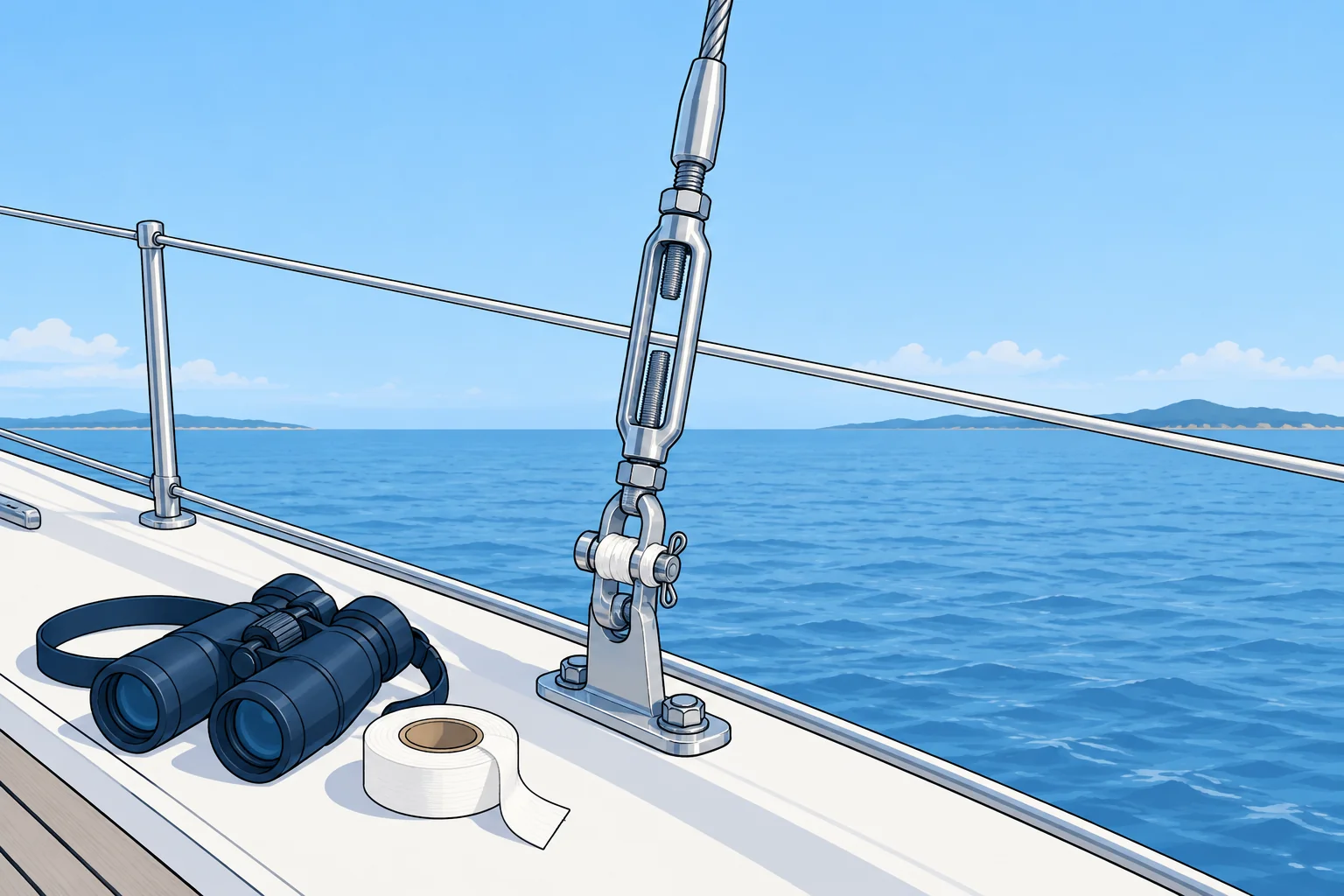
Standing rigging holds the mast up and stays fixed. Shrouds support the mast sideways; the forestay and backstay hold it fore and aft. They end in terminals, often swaged fittings pressed onto the wire, joined to bottlescrews (turnbuckles) and then to chainplates, strong fittings bolted to the hull. One failed part can bring the mast down.
What to look for
Look for broken strands, called meathooks because they snag skin, rust stains or cracks at swaged terminals, bent or worn pins, and movement or leaks around chainplates. Secure each clevis pin, the pin joining the fitting, with the correct retainer. Spread split-pin legs as the fitting maker specifies. Fully thread and seat retaining rings; do not bend them open. Tape sharp ends against snagging. Bottlescrews must be locked so they cannot unwind.
Running rigging
Running rigging is the lines you pull: halyards raise sails, sheets trim them, and control lines adjust shape. Check for chafe, wear from rubbing, at sheaves (pulley wheels), clutches (rope-holding devices), fairleads (line guides) and spreaders. Check screw-pin shackles are tight and moused: secure the pin's eye to the shackle body with suitable wire or a sound cable tie so it cannot unscrew.
When and how often
Look over the rig before each passage and after heavy weather. Walk the deck and look up. Arrange regular professional inspections. Follow the rigger's advice, the equipment maker's guidance and your insurer's requirements for inspection and replacement.
2Step by step
Deck-level rig check before a passage
- 1
Check each chainplate and bottlescrew: pins, split pins or rings, locking, no cracks.
These carry all the rig loads; a missing pin can drop the mast.
- 2
Run your eye up each wire for broken strands, kinks and rust at the terminals.
Broken strands and rust at terminals warn of failure.
- 3
Check the gooseneck, kicker and boom end fittings.
They take shock loads in gybes and in a seaway.
- 4
Check halyards, sheets and reef lines for chafe at sheaves, clutches and fairleads.
Chafe can weaken a line until it parts.
- 5
Check shackles are tight and moused, each block's sheave turns freely, and the furler turns freely.
Undone shackles and seized blocks fail at the worst moment.
- 6
Look aloft with binoculars at the spreaders, mast fittings and masthead.
You can spot many problems from deck without climbing.
3Key data
- Standing rigging
- Shrouds, forestay, backstay: hold the mast up
- Running rigging
- Halyards, sheets, control lines: move the sails
- Pin retainers
- Split pins spread as specified; rings fully seated; tape sharp ends
- Shackles
- Tight and moused with wire or a cable tie
- Check
- Before each passage and after heavy weather
4Key points
- 1
Standing rigging holds the mast up; running rigging controls the sails.
- 2
Look for broken strands, cracked or rusty terminals and missing split pins.
- 3
Spread split pins as specified; fully seat retaining rings without bending them open. Tape sharp ends; lock bottlescrews.
- 4
Check lines for chafe at sheaves, clutches and fairleads; mouse shackles.
- 5
Check before every passage and after heavy weather; follow the rigger's replacement interval.
5Frequent mistakes
Wrong: Tape alone will keep a clevis pin in place.
Right: Use the specified retainer. Spread split-pin legs as instructed or fully thread and seat a retaining ring. Tape only covers sharp ends; it does not replace the retainer.
Wrong: If the wire looks shiny, the rigging is fine.
Right: Stainless-steel wire can crack inside a terminal without visible warning. Check for visible cracks and rust stains, and follow professional inspection and replacement advice.
6Practice case & exam keys
Before a weekend passage, you find a rust stain and a fine crack at the bottom swaged terminal of a lower shroud. Everything else looks good.
Show the answer
Do not sail. A cracked swage can fail without warning and the mast could come down. Have a rigger replace the terminal, or the whole shroud, before going out. Ask them to check the other terminals of the same age, as they may be close behind.
Exam keys
- Standing rigging: shrouds and stays; running rigging: halyards, sheets, control lines.
- Look for broken strands, cracked swages, missing split pins, unlocked bottlescrews.
- Chafe at sheaves, clutches and fairleads; mouse shackles.
- A cracked terminal means do not sail until repaired.
Finish this unit
When you've read it, answer three questions. Get all three right to finish the unit; opening the page alone doesn't count.
My notes for this unit
No notes