

 See units
Deck equipment and machinery: winches, cranes, hatches, watertight doors, pilot ladders and gangways
Hatch covers: types, seals, cleats and the dangers of moving panels
1The lesson in plain words
Hatch covers keep the sea out of the holds. Look after seals, cleats and drains, and treat moving panels and open holds as deadly.
Types
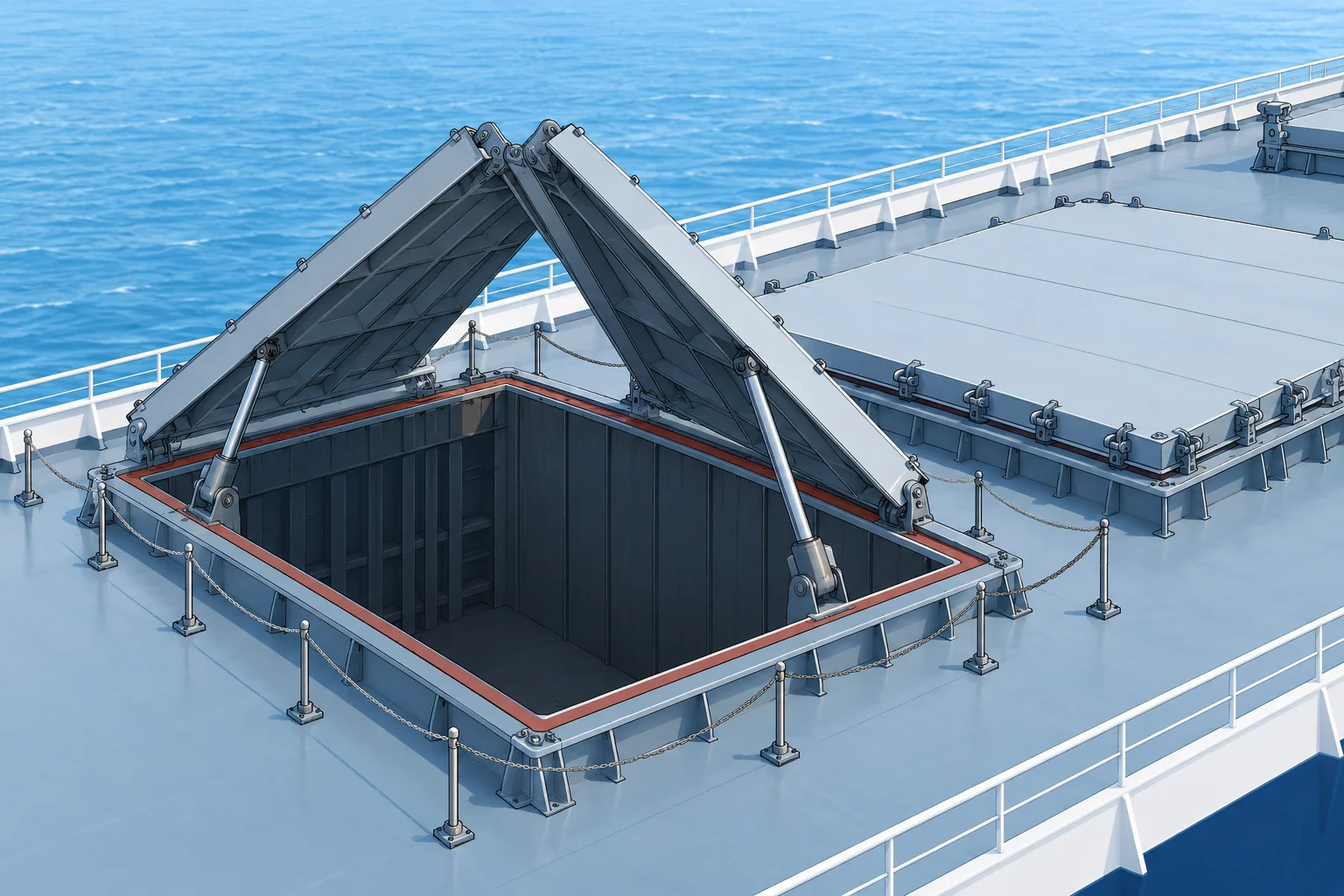
Folding covers are hinged panels that fold up at the hatch end, moved by hydraulic cylinders or, on older ships, by wire from a winch. Side-rolling covers are lifted on jacks and roll sideways on wheels along rails. Pontoon covers are lifted off by a crane and stacked. Stacking covers move panel by panel into a stack at the hatch end using the ship’s mechanism.
Keeping water out
The hatch coaming is the raised steel frame round the opening. Rubber seals, or gaskets, on the cover edges press down onto a steel compression bar. Cleats, by hand or hydraulic, hold the covers down and squeeze the seals. Water that gets past drains away through drain channels with non-return valves. Report cut, hard or permanently flattened seals, bent compression bars and blocked drains.
Hydraulic power
Hatch hydraulics run at high pressure. A pinhole jet can inject oil through your skin. Get urgent medical help after suspected injection, even if the wound looks small. Keep clear of leaks. Stop the machinery, report the defect and have the system isolated before inspection or repair.
Crush points and open holds
Moving panels, hinges, wheels and rails can crush a hand or a body. Clear the area. Keep a full view of the panels, or use a lookout who can see them and stay in clear contact. Once covers are open, fit the securing pins or hooks that stop them moving. An open hold is a fall from height: keep barriers in place and never walk on the coaming top.
2Step by step
Opening hatch covers
- 1
Get permission, identify the cover type and follow the maker’s opening sequence.
Different cover types need different drives, restraints and release sequences.
- 2
Clear people and loose gear. Fit any required check wire (restraining wire) or other restraint before releasing securing devices as instructed.
Unrestrained panels may move early; a panel driven against an unreleased cleat can jump or break.
- 3
Prepare the drive as instructed; on hydraulic systems, check for leaks from a safe position before moving panels.
A burst hose can drop a panel and inject oil into skin.
- 4
Warn everyone nearby. Keep a full view or use a lookout in clear contact. Stop if the view or contact is lost.
You must be able to stop the moment someone strays in.
- 5
When fully open, fit the securing pins or hooks.
They stop an open panel moving if hydraulic pressure is lost or the ship rolls.
- 6
Put barriers round the open hold and switch off and secure the controls.
This prevents falls into the hold and stops anyone moving the covers by mistake.
3Key points
- 1
Common types are folding, side-rolling, pontoon and stacking covers.
- 2
Seals press on the compression bar; cleats hold covers down; drains carry water away.
- 3
A hydraulic pinhole jet can inject oil into skin: get medical help at once.
- 4
Clear the area, keep a full view or use a lookout, and fit securing pins once covers are open.
- 5
An open hold is a fall from height: barriers on, never walk along the coaming top.
4Frequent mistakes
Wrong: Run a finger along the hydraulic hose to find where the mist is coming from.
Right: Keep clear. Stop and report the leak; have the system isolated before inspection. Suspected injection needs urgent medical care.
Wrong: With folding covers open, the hydraulic pressure is enough to hold them up.
Right: Fit the securing pins or hooks. Pressure can be lost and panels can fall.
5Practice case & exam keys
A side-rolling hatch cover is ready to open. The ship has a list, a sideways lean, to port, so the rails across the ship slope to port. No restraining wire is fitted, and a crew member proposes releasing the locking pins before the wire is attached.
Show the answer
Stop the opening sequence. On sloping tracks, the panel may roll as soon as its pins are released. Keep people clear and have the required restraining wire fitted before releasing the pins, following the maker’s sequence. After opening, secure the panel and guard the open hold.
Exam keys
- Types: folding (hydraulic or wire), side-rolling (jacks and wheels), pontoon (crane-lifted), stacking (ship’s mechanism).
- Seals on cover edges press on the compression bar; cleats hold down; drain channels with non-return valves.
- Hydraulic injection injury: medical emergency; never feel for leaks by hand.
- Clear area, full view, securing pins on when open, barriers round open holds.
Finish this unit
When you've read it, answer three questions. Get all three right to finish the unit; opening the page alone doesn't count.
My notes for this unit
No notes