

 See units
Deck equipment and machinery: winches, cranes, hatches, watertight doors, pilot ladders and gangways
Winches, windlasses and capstans: drives, clutches and brakes
1The lesson in plain words
Know how winches, windlasses and capstans work. Check their drives, clutches, brakes and controls before use.
Machines on deck
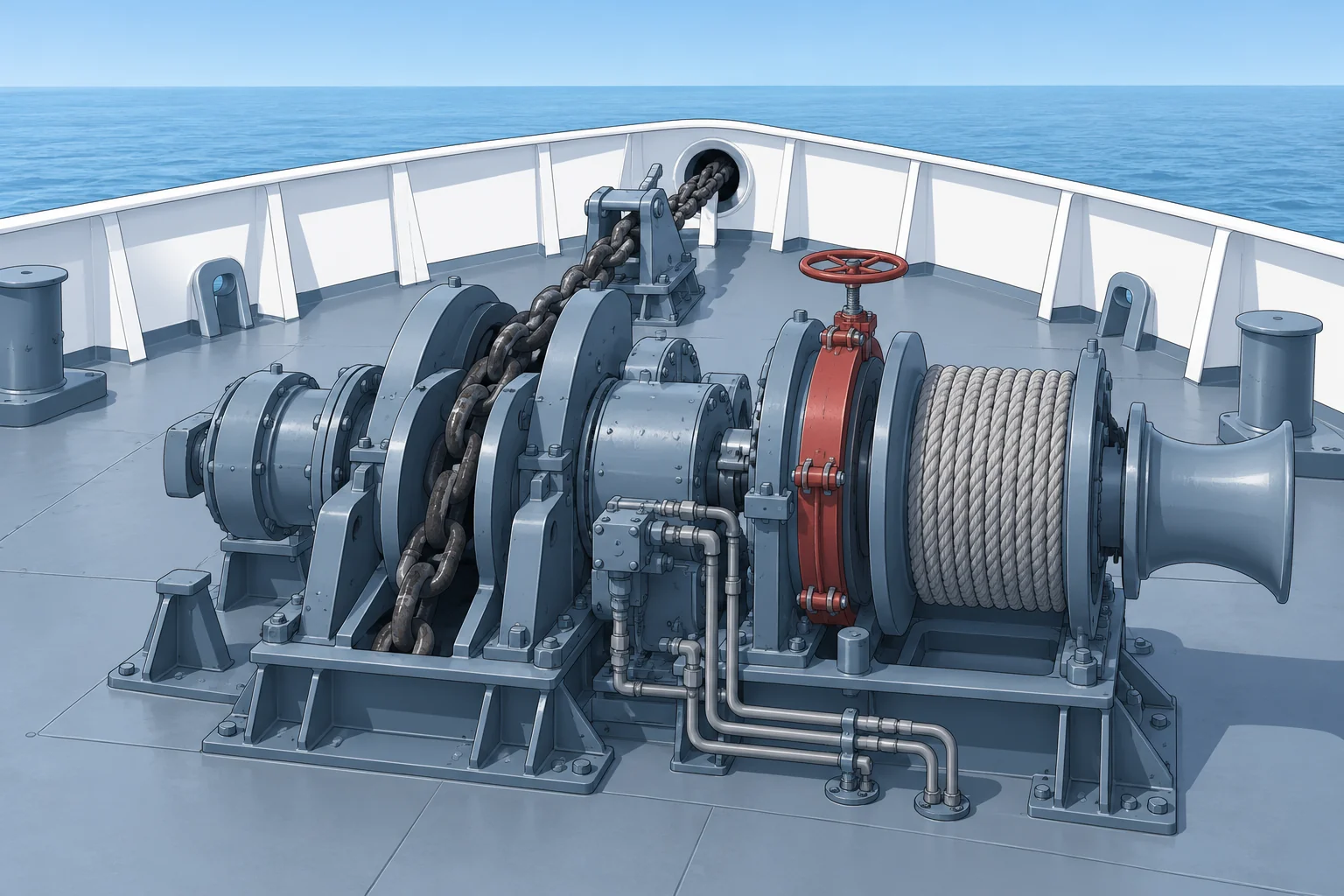
A winch has a drum that hauls in or pays out rope or wire. A windlass lifts the anchor: its gypsy, or cable lifter, is a wheel with pockets that grip the chain links. A capstan is a drum on a vertical shaft. Warping ends are smooth, waisted drums on the end of a winch shaft. They provide a surface for hauling rope without storing it.
Drives
Electric drives use a motor and reduction gearing, which slows the drum and increases turning force. Speed control may be stepped or variable; braking arrangements depend on the machine. Hydraulic drives use a motor supplied by a pump and often give smooth speed control. Watch hoses for leaks and chafe. Warm the hydraulic oil as the maker instructs in cold weather before loading the machine.
Clutch and brake
A dog clutch uses interlocking teeth to connect the drum or gypsy to the drive. With the clutch out, the drum turns freely and is held only by its band brake: a steel band lined with friction material, tightened round a brake drum, usually by a screw handwheel. Engage or disengage the clutch only with the drum stopped and the brake on. A worn, oily or wet lining holds much less.
Pull and holding
Winch pull is the powered hauling force. Brake holding capacity is the load the brake can restrain with the drive disengaged; the ratings differ. Wear changes the brake’s travel and grip. Report worn or contaminated linings. Only authorised crew should adjust or test the brake, following the maker’s instructions and the ship’s specified setting. Never tighten it simply to prevent all slipping.
Hands and drums
Keep hands, gloves and clothing clear of drums, gypsies and nip points, where moving parts can trap or crush you. Mooring and anchor station work is in Ropes: ship mooring.
2Step by step
Before you run deck machinery
- 1
Get the officer’s go-ahead and check the area is clear of people and loose gear.
Machines start in seconds; nobody should be near the drum or other moving parts.
- 2
Check oil levels in the gearbox or hydraulic tank, and look for leaks and damaged hoses.
Low oil or a split hose can stop the machine under load.
- 3
Check the brake band and lining, and that the brake is fully on.
The brake holds the load when the clutch is out or power fails.
- 4
With the drum stopped and brake on, engage and secure the clutch for the unloaded trial as the maker instructs.
Engaging a turning drum breaks dogs and can release the load.
- 5
With controls neutral and everyone clear, start power. Release the drum brake as instructed, then run slowly both ways unloaded.
This checks the drive and controls without forcing the machine against its brake.
- 6
Test the emergency stop. Stop and return controls, brake and clutch to the maker’s specified safe position; report defects before use.
You must be able to stop the machine at once if something goes wrong.
3Key points
- 1
Gypsy grips the anchor chain; warping ends heave a rope by turns; a drum stores the line.
- 2
Electric speed control may be stepped or variable; hydraulic drives need sound hoses and the correct oil temperature.
- 3
Use the dog clutch only with the drum stopped and the band brake on.
- 4
Winch pull is powered hauling force; brake holding restrains a load. Check the separate ratings.
- 5
Check oil, brake, clutch, controls and emergency stop before each use.
4Frequent mistakes
Wrong: Knock the clutch in while the drum is turning slowly; it saves time.
Right: Stop the drum and put the brake on first. Engaging a turning drum damages the dogs and can drop the load.
Wrong: The brake holds ten tonnes, so the winch can haul ten tonnes.
Right: Holding and hauling have different ratings. Check the winch’s rated pull; only authorised crew adjust brakes to the specified setting.
5Practice case & exam keys
On a cold morning you are sent forward to prepare the hydraulic mooring winches. One hose to the forward winch is wet with oil near a fitting, and the brake lining on the same winch looks dark and oily.
Show the answer
Do not run that winch. Report the leaking hose and oily brake lining to the officer. Keep people clear; never feel for leaks by hand. Do not start any winch on the same hydraulic supply until authorised crew have safely isolated the defective branch. Prepare independently supplied winches only as the officer and maker instruct, including cold-weather warm-up.
Exam keys
- Winch: drum. Windlass: gypsy (cable lifter). Capstan: vertical drum. Warping end: heaving by turns.
- Dog clutch engaged or disengaged only with the drum stopped and the brake on.
- Band brake holds the load; oil or water on the lining reduces holding power.
- Brake holding and powered pull have separate ratings; authorised brake adjustment only. Check oil, brake, clutch, controls and emergency stop.
Finish this unit
When you've read it, answer three questions. Get all three right to finish the unit; opening the page alone doesn't count.
My notes for this unit
No notes