

The fuel system and bleeding air
1The lesson in plain words
Clean fuel and no air: that is most of keeping a diesel running. Know your filters and how to bleed the system.
The fuel path
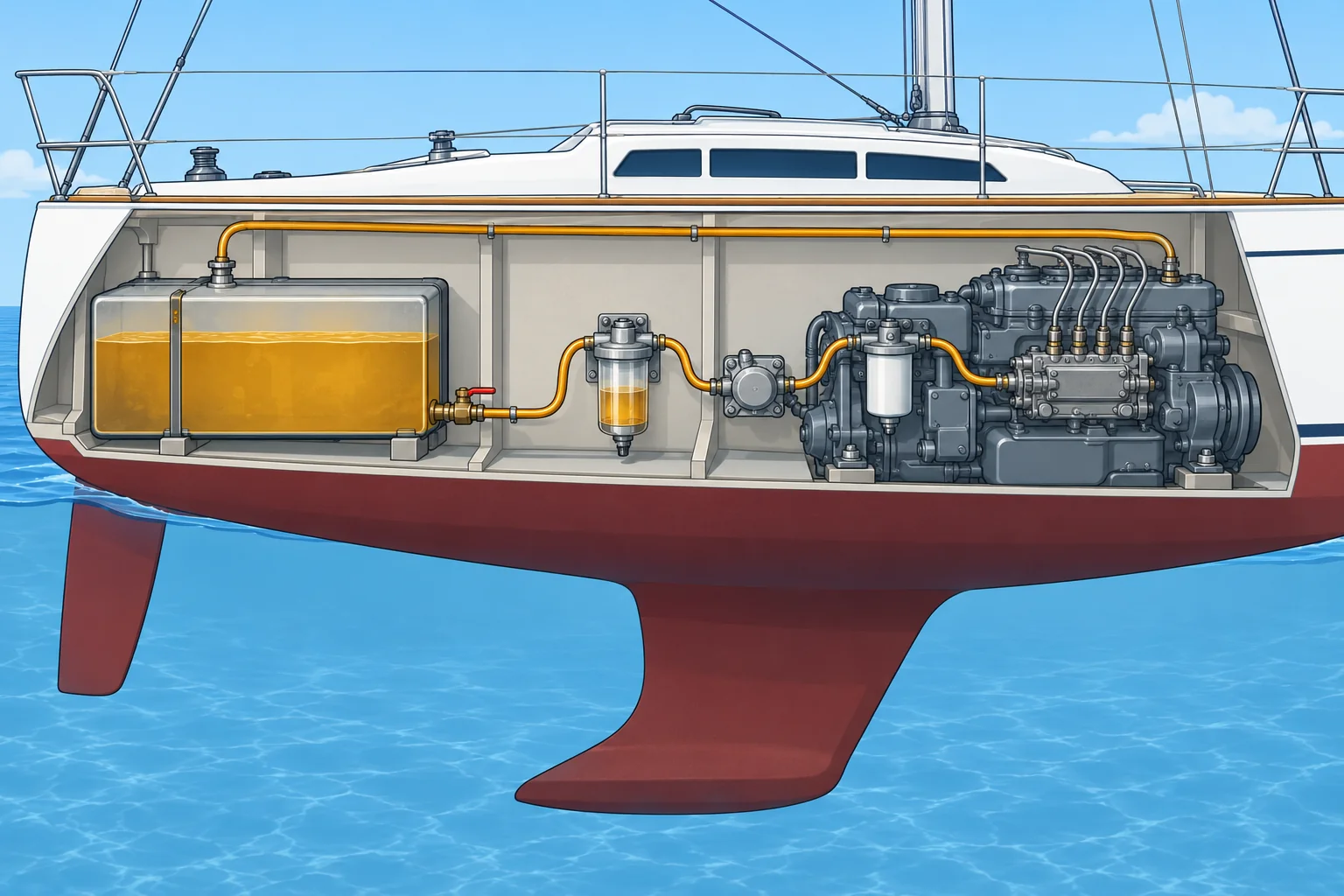
Fuel flows from the tank through a shut-off valve and the primary filter / water separator, which removes dirt and water. The lift pump moves it at low pressure through the finer secondary filter. The injection pump raises the pressure; injectors spray fuel into the cylinders. Surplus fuel returns to the tank.
Dirt and water
Water collects in tanks from condensation and bad fuel. Microbes, called diesel bug, grow where fuel meets water and make black slime that clogs filters. Drain the separator bowl regularly, store near full, leaving the maker’s specified expansion space, buy clean fuel and carry spare filters.
Air in the fuel
Air can interrupt fuel delivery and prevent injection pressure building. Running out of fuel, changing a filter or having a loose connection can let air in. Bleeding removes trapped air; priming fills the low-pressure circuit with fuel. Follow the maker’s low-pressure bleed points and priming method, working from the tank towards the engine. Many modern engines with an electric lift pump bleed themselves; follow the manual.
High-pressure danger
Injector pipes carry fuel at very high pressure. Some engines use common rail, a shared high-pressure pipe feeding the injectors. A jet from a leak can pierce skin and cause serious injury. Never feel for leaks or loosen common-rail pipes. Suspected fuel injection through skin needs emergency hospital treatment, even if the wound looks small.
2Step by step
Bleeding a diesel fuel system
- 1
Check there is fuel in the tank and the fuel valve is open. Have rags and a container ready.
Bleeding from an empty tank only pumps more air.
- 2
Identify the maker’s low-pressure bleed points and priming method. Prime the primary separator using its fitted primer or specified method; close its vent as instructed.
An engine lift pump cannot generally push fuel out of a bleed screw on its suction side; it may draw air in.
- 3
At the designated low-pressure bleed point on the secondary filter, use the specified primer until bubble-free fuel appears; close the bleed screw.
Removing air here helps restore fuel delivery to the injection pump.
- 4
Repeat at the injection pump’s low-pressure bleed point only if the manual specifies one.
Some pumps need their own bleed; others self-vent.
- 5
Close all bleed screws and clean up spilled fuel before starting. Start as the manual directs. Never loosen common-rail or other high-pressure fittings for bleeding. If low-pressure bleeding fails, stop and get qualified help.
High-pressure fuel can penetrate skin; high-pressure bleeding is not a general skipper procedure.
- 6
Once running, inspect visually for leaks from a safe distance. Stop before correcting any leak.
Keep clear of moving parts and high-pressure fuel. Spilled diesel is a slip and pollution risk.
3Key points
- 1
Path: tank → primary filter / separator → lift pump → secondary filter → injection pump → injectors.
- 2
Drain the water separator and carry spare filters.
- 3
Air can stop fuel delivery: bleed low-pressure points as the maker directs, from tank towards engine.
- 4
Never feel for high-pressure leaks or loosen common-rail pipes. Injection through skin needs emergency care.
4Frequent mistakes
Wrong: Start bleeding at the injectors because that is where the air ends up.
Right: Follow the maker’s low-pressure bleed points from the tank towards the engine. Never open high-pressure fittings for bleeding.
Wrong: A little water in the separator bowl can wait until the end of the season.
Right: Drain it as soon as you see it. If it fills fast, the tank is contaminated.
5Practice case & exam keys
Motoring in a rough sea, the engine falters, picks up, then stops. It cranks well but will not fire. You find black sludge in the primary filter bowl.
Show the answer
Rough water has stirred sludge (likely diesel bug) from the tank bottom into the fuel line and clogged the filter. Make the boat safe first: sail, anchor or call for help. Then change the primary filter, drain the separator, bleed the system from the filter onwards and restart. Expect it to clog again; carry spare filters and plan to clean the tank.
Exam keys
- Fuel path: tank, primary filter/water separator, lift pump, secondary filter, injection pump, injectors.
- Diesel bug: microbes at the fuel–water interface; clogs filters.
- Use the maker’s low-pressure bleed points and priming method; many modern engines self-bleed.
- High-pressure fuel can penetrate skin.
Finish this unit
When you've read it, answer three questions. Get all three right to finish the unit; opening the page alone doesn't count.
My notes for this unit
No notes