

Gauges, alarms and exhaust smoke
1The lesson in plain words
The panel and the exhaust tell you how the engine feels. Know what each alarm means and what each smoke colour says.
At switch-on
Check the lamps and buzzer using the maker’s test procedure. Oil-pressure and charge lamps normally light before starting. Oil pressure should establish promptly after starting; if its warning stays on, stop immediately. The charge lamp should go out at the maker’s specified engine speed. If it stays on, follow the charge-warning checks below.
Oil pressure alarm
Low oil pressure can leave bearings without enough lubrication. Stop the engine at once, then check the oil level once it has stopped. A few more minutes can destroy the engine.
Temperature alarm
Reduce load immediately. If exhaust water is absent or the wet-exhaust alarm sounds, stop at once. For coolant overheating with water still flowing, follow the maker’s procedure; stop if temperature stays high. Stop before inspecting cooling components. Open the coolant cap only when cold.
Charge warning
The charge light warns of a charging fault. A failed belt may also stop the coolant pump while exhaust water still flows. Reduce load and stop as soon as safe, disable starting and inspect the belt. Do not restart with a failed cooling-pump drive. Follow the maker’s procedure and conserve battery power.
Smoke colours
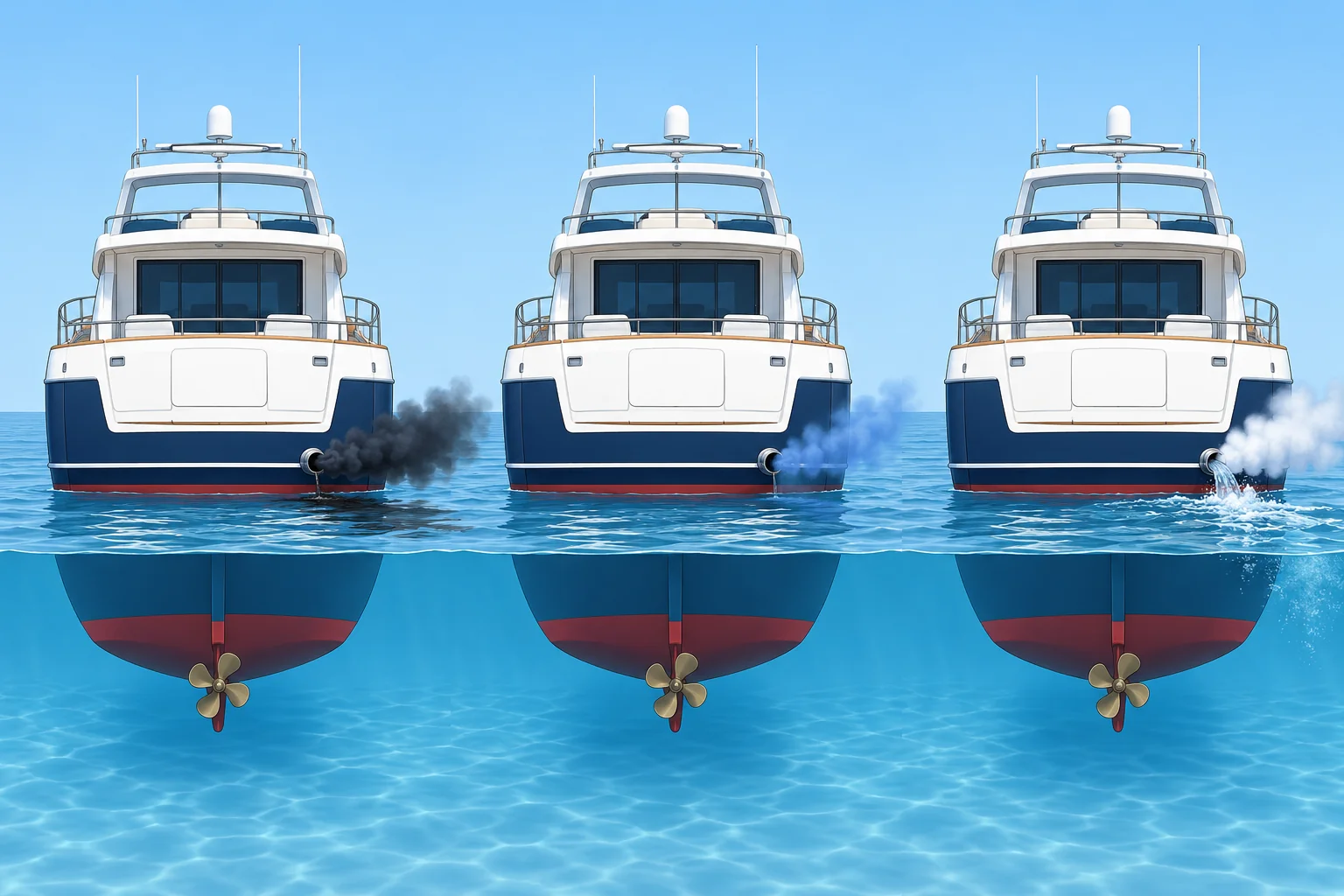
Black smoke suggests overload or insufficient air, for example from a fouled hull or propeller, a blocked air filter or faulty injectors. Blue suggests oil burning, from wear or excess oil. Brief white water vapour can be normal in cold air. White smoke can also be unburnt fuel, especially during cold starting. Persistent white smoke or steam, coolant loss or reduced exhaust-water flow needs investigation.
2Key data
- Black smoke
- Overload, fouled hull/propeller, air filter, injectors
- Blue smoke
- Burning lubricating oil
- White smoke
- White smoke may be unburnt fuel; brief vapour can be condensation
- Oil pressure alarm
- Stop the engine at once
- Temperature alarm
- No exhaust water/exhaust alarm: stop; coolant: follow manual.
3Key points
- 1
Check lamps and buzzer using the maker’s test procedure; know the normal start sequence.
- 2
Low oil pressure: stop at once.
- 3
High temperature: reduce load. No exhaust water or a wet-exhaust alarm: stop immediately.
- 4
Black = overload or air; blue = oil; lasting white = water or unburnt fuel.
4Frequent mistakes
Wrong: Keep going on a low oil pressure alarm to reach harbour.
Right: Stop at once. Use sails, anchor or call for help; the engine can seize in minutes.
Wrong: White smoke at every cold start means a blown head gasket.
Right: Brief white water vapour can be normal in cold air. White smoke may be unburnt fuel; persistent smoke or coolant loss needs investigation.
5Practice case & exam keys
At your usual cruising setting, the boat is slower and makes thick black smoke. Temperature is normal. A crew member suggests more throttle to regain speed. What do you do?
Show the answer
Reduce power until the smoke clears; do not add throttle to force the usual speed. Black smoke suggests overload or insufficient air, but does not identify the cause. Check the air intake and arrange a safe hull and propeller inspection. Normal temperature does not rule out a problem.
Exam keys
- Use the maker’s lamp and buzzer test; oil pressure must establish promptly, charge lamp out at specified revs.
- Oil pressure alarm: stop immediately.
- Temperature: reduce load. No exhaust water or wet-exhaust alarm: stop immediately. Coolant overheating: follow manual; stop if still hot.
- Smoke: black overload/air, blue oil, persistent white water/unburnt fuel.
Finish this unit
When you've read it, answer three questions. Get all three right to finish the unit; opening the page alone doesn't count.
My notes for this unit
No notes