

Starting, warming up and stopping
1The lesson in plain words
Start in neutral, check the cooling water and the warning lights, warm up gently, and stop the engine the way its maker says.
Inboard diesel
Select neutral (no drive to the propeller). Turn the key: oil-pressure and charge warning lamps light; the buzzer sounds. If there are glow plugs (heaters for cold starts), use their control for the time in the manual. Crank (turn the engine with its electric starter motor) in short bursts. Use the manual’s cranking limit and rest time. Stop after its allowed attempts: repeated unsuccessful cranking can fill a wet exhaust (an exhaust cooled by injected seawater) and flood the engine.
Just after starting
On a wet-exhaust installation, check that cooling water emerges with the exhaust at its outlet. On other installations, use the cooling-flow check specified in the manual. Check that the oil-pressure lamp goes out at once and the charge lamp goes out soon after. No expected cooling-water flow, or a lamp that stays on: stop the engine and find out why.
Outboard
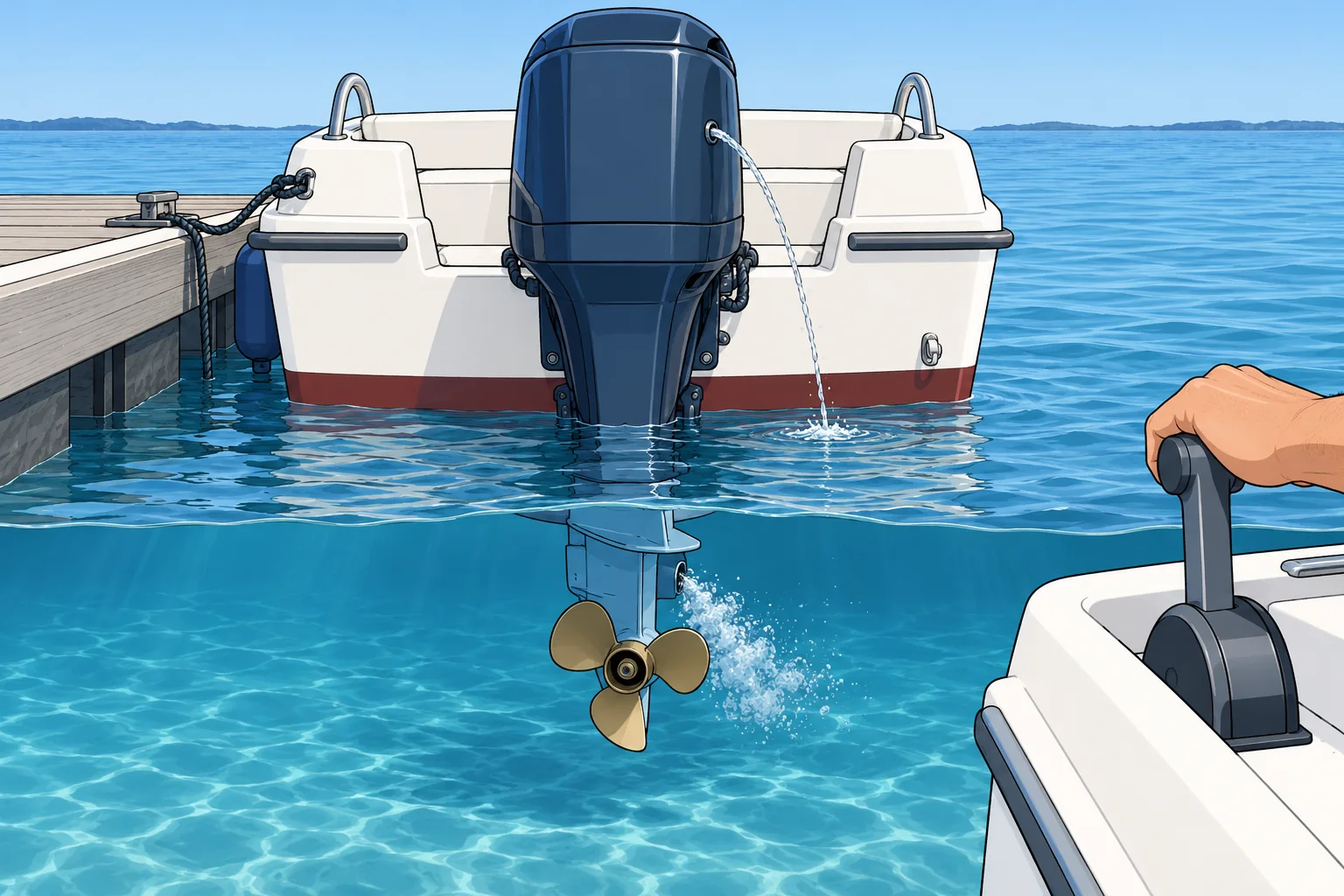
Lower the engine to its running position. If fitted, open the manual tank vent and squeeze the primer bulb (fuel-line hand pump) until firm. Attach the kill cord to the engine and yourself as instructed. Select neutral. Use the choke (a cold-start control that enriches the fuel mixture), if fitted, as the manual directs. Start, then ease the choke off as instructed. Check the tell-tale, a small outlet jet that lets you check cooling-water flow.
Warming up
Run at idle (the lowest steady engine speed) briefly, as the manual directs. Then use the throttle (engine-speed control) to run gently in gear: this puts a light load on the engine and warms it faster than prolonged idling. Do not race a cold engine.
Stopping
Idle briefly in neutral, then use the normal stop control or key as the manual directs. The kill cord also stops an outboard. If leaving the boat, follow its electrical shutdown checklist; automatic bilge pumps must retain their required power. Close the fuel valve if instructed. Log the engine hours for servicing.
2Key data
- Start in
- Neutral, throttle as the manual says
- Just after start
- Expected cooling-water flow; warning lamps out
- Primer bulb
- Squeeze until firm (outboard)
3Key points
- 1
Start in neutral; crank in short bursts with rests. Stop after the manual's allowed attempts.
- 2
Check cooling-water flow after starting, at the outlet specified for your installation.
- 3
Oil-pressure lamp out at once; charge lamp out soon after.
- 4
Warm up gently; never race a cold engine. Log the engine hours.
4Frequent mistakes
Wrong: Keep cranking until the diesel fires.
Right: Use the manual’s cranking limit and rest time. Stop after its allowed attempts: repeated unsuccessful cranking can flood an exhaust system that uses cooling water, and then the engine.
Wrong: No tell-tale jet is normal on a cold outboard.
Right: If the expected tell-tale jet is absent, stop. The outlet may be blocked or cooling may have failed. Follow the manual or get help before restarting.
5Practice case & exam keys
Your diesel with a wet exhaust starts first time. You look over the stern and see exhaust smoke but no water coming out. The engine sounds normal. What do you do?
Show the answer
Stop the engine immediately, even though it sounds normal. Do not restart until the cooling-water supply is confirmed safe. Follow the checks in Ship: engine trouble at sea, or get qualified help.
Exam keys
- Start in neutral; crank in short bursts. Stop after the manual's allowed attempts.
- Check cooling-water flow after starting, at the outlet specified for your installation.
- Oil-pressure lamp stays on after starting: stop the engine.
- Primer bulb squeezed until firm on an outboard.
Finish this unit
When you've read it, answer three questions. Get all three right to finish the unit; opening the page alone doesn't count.
My notes for this unit
No notes