

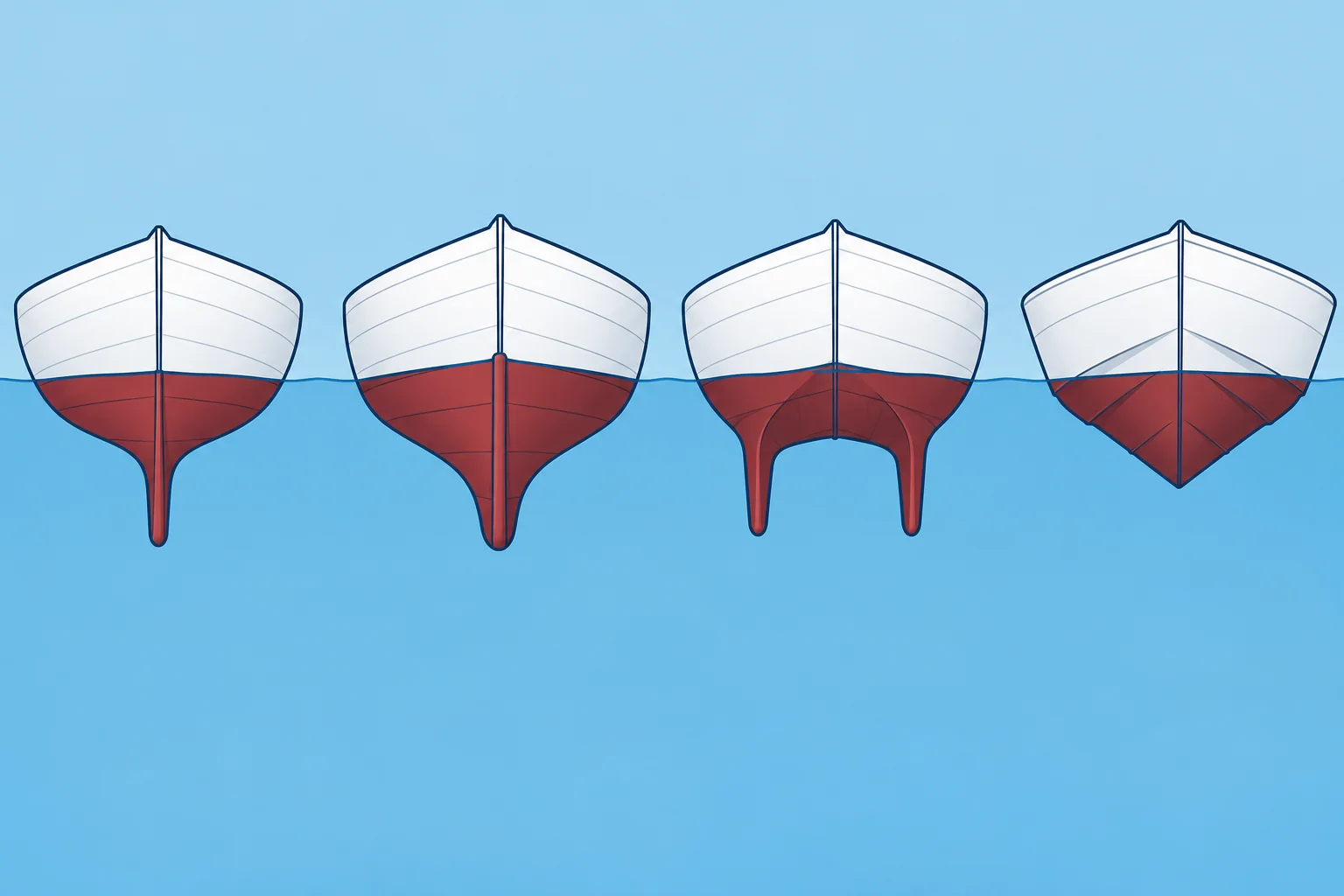
Hull forms and keel types
1The lesson in plain words
Recognise displacement, semi-displacement and planing hulls. Count the hulls, compare keel types and know what to check after grounding.
Displacement hulls
A displacement hull moves through the water, pushing it aside. Most sailing yachts and many ships use this form.
Semi-displacement and planing
A planing hull is designed to ride higher in the water at speed. A semi-displacement hull combines features of displacement and planing forms.
Monohulls and multihulls
A monohull has one hull. A catamaran has two. A trimaran has one main hull and two smaller side hulls. Multihulls often need a wider marina berth.
Keels
A long keel extends along much of the hull: steady on course, slow to turn and harder to steer in reverse. A fin keel is shorter and deeper; it usually turns more readily. A bulb is weight at its tip. Twin keels suit drying out only on approved boats and firm, level ground. Lifting and swing keels reduce draught, the depth below the waterline. A centreboard is a retractable foil, a shaped plate, usually unballasted, that reduces sideways slip.
Keel attachment
An external bolted ballast keel relies on bolts and strong internal structure. Other boats have ballast enclosed within the keel. After grounding, check for leaks, cracks or movement at the joint, bolts and floors, the crosswise stiffeners inside the hull bottom. If water is entering, seek help immediately and follow the Flooding lesson. After a hard grounding or signs of damage, arrange professional assessment before sailing again.
2Key points
- 1
Displacement hulls move through the water; planing hulls are designed to ride higher at speed.
- 2
Semi-displacement hulls combine features of displacement and planing forms.
- 3
Long keel: steady, slow to turn. Fin keel: shorter, deeper, usually turns more readily.
- 4
Twin keels: only approved boats on firm, level ground can dry upright. Lifting keels reduce draught.
- 5
After grounding, check the keel attachment and structure for leaks, cracks or movement.
3Frequent mistakes
Wrong: Every motorboat has a planing hull.
Right: Motorboats can have displacement, semi-displacement or planing hulls.
Wrong: A grounding that left no visible damage outside needs no check.
Right: Check for leaks, cracks or movement at the keel attachment and internal supports. Water entering needs immediate help and flooding action. A hard impact or damage needs professional assessment before sailing again.
4Practice case & exam keys
You have chosen a twin-keel yacht for a drying berth, but the mud is soft and uneven. Is the keel type enough to approve the berth?
Show the answer
No. Check that the boat is approved for drying out and that the berth meets the maker’s limits. Both keels need suitable support on firm, level ground. Soft or uneven ground can let one keel sink. A lifting keel alone does not make a boat suitable for drying out.
Exam keys
- Displacement / semi-displacement / planing hulls.
- Mono, catamaran, trimaran.
- Ballast keels: long, fin (bulb), twin, lifting/swing. A centreboard is usually unballasted and reduces sideways slip.
- After grounding: leaks, cracks or movement at keel attachments and internal supports; professional assessment after a hard impact.
Finish this unit
When you've read it, answer three questions. Get all three right to finish the unit; opening the page alone doesn't count.
My notes for this unit
No notes