

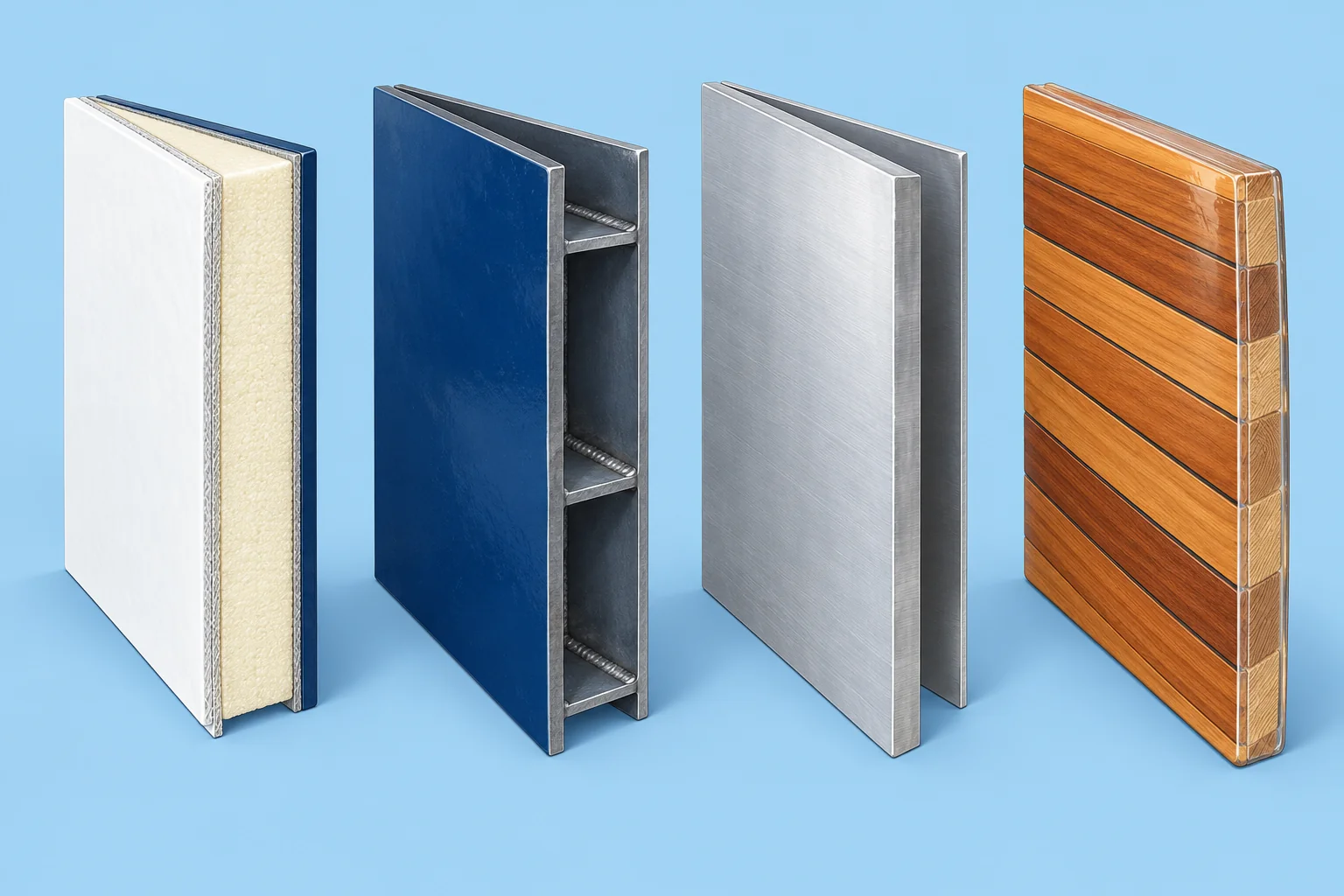
Building materials: GRP, steel, aluminium and wood
1The lesson in plain words
Each hull material has its own strengths and its own enemy: osmosis, rust, galvanic corrosion or rot. Know what to look for on yours.
GRP
GRP means glass-reinforced plastic: glass fibres bonded with resin. A solid laminate has no lightweight core. Sandwich construction has two skins around foam or balsa. Water ingress can rot balsa or weaken the skin-to-core bond. Osmosis draws water towards soluble substances in the laminate and can cause blisters beneath the gelcoat, the smooth outer coating.
Steel
Steel is strong and survives impacts well. It is heavy, so it suits larger cruising boats and ships. Its enemy is rust: keep the paint system intact and watch for corrosion inside and outside.
Aluminium
Aluminium is light and strong. Galvanic corrosion is metal loss when unlike conductive materials are electrically connected in seawater. Isolate aluminium from stainless steel and bronze fittings. Antifouling is a coating that discourages marine growth. Choose a copper-free antifouling specifically approved for aluminium.
Wood
Traditional plank-on-frame uses planks over ribs. Strip-plank uses narrow wood strips; plywood uses bonded layers. Wood is warm and quiet. Its enemy is rot, especially where fresh water stands. Keep it ventilated and sealed.
Composites
Carbon fibre gives high stiffness at low weight. Aramid fibres add toughness and impact resistance. Both are expensive. Carbon conducts electricity; isolate it from aluminium and other vulnerable metals to prevent corrosion of the metal.
2Key points
- 1
GRP: solid laminate or sandwich; blisters may suggest osmosis, and water can damage cores or bonds.
- 2
Steel: strong and heavy; protect against rust with an intact paint system.
- 3
Aluminium: light; isolate unlike materials. Choose a copper-free antifouling specifically approved for aluminium.
- 4
Wood: keep it dry inside and ventilated to stop rot.
3Frequent mistakes
Wrong: GRP boats need no maintenance.
Right: GRP still needs checks. Blisters may suggest osmosis; water ingress can damage sandwich cores or their bonds.
Wrong: Any antifouling will do on an aluminium hull.
Right: Conventional cuprous-oxide antifouling can cause severe corrosion. Choose a copper-free antifouling specifically approved for aluminium.
4Practice case & exam keys
You notice blisters below the waterline of a GRP boat and a soft patch in its sandwich-cored deck near a stanchion, a guardrail post. What could these indicate?
Show the answer
The blisters may indicate osmotic blistering. The soft deck suggests core damage or separation between skin and core; neither symptom alone proves the cause. These are different defects. Do not rely on the affected guardrail attachment until it has been assessed.
Exam keys
- GRP: glass fibre and resin. Solid: no core. Sandwich: skins around a core. Osmosis may cause blisters.
- Steel: strong, heavy; rust is the enemy.
- Aluminium: light; galvanic corrosion. Choose a copper-free antifouling specifically approved for aluminium.
- Wood: rot where fresh water stands; ventilation.
Finish this unit
When you've read it, answer three questions. Get all three right to finish the unit; opening the page alone doesn't count.
My notes for this unit
No notes