

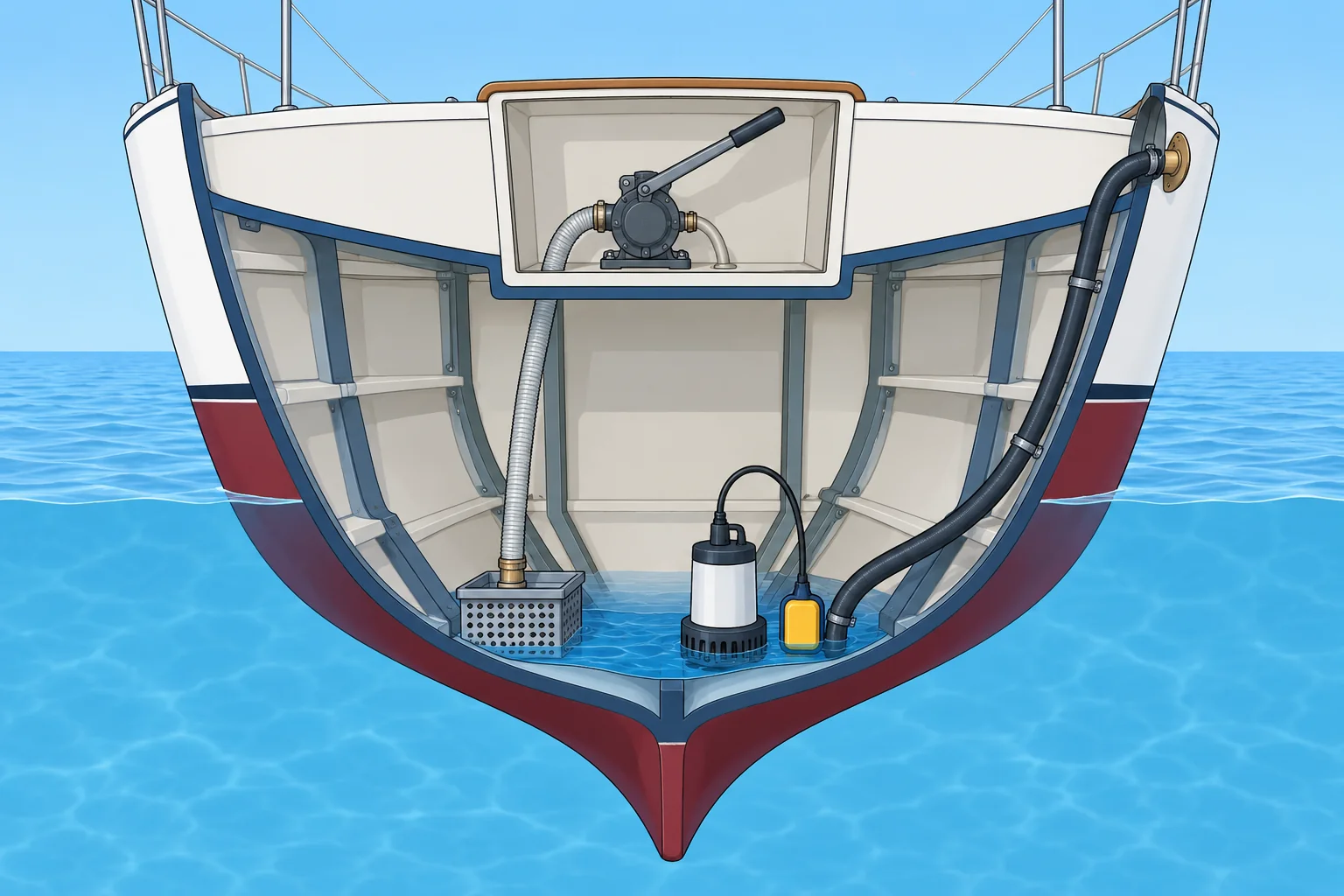
Bilge system and pumps
1The lesson in plain words
Bilge pumps remove collected water. A float switch starts the electric pump; a separate high-water alarm warns you when the water rises.
The bilge
Water collects at the lowest point: the bilge or sump. Limber holes in the frames let it run there; keep them clear. A strum box (strainer) on each pump intake stops debris blocking the pump.
Manual pump
A manual bilge pump works without electricity. On a yacht it should be operable from the cockpit with hatches and lockers closed, with its handle stowed nearby. Many boats also have a second one below decks.
Electric pump
An electric pump sits in the sump with a float switch that starts it automatically, plus a manual switch at the panel. The automatic circuit needs a correctly rated fuse and must remain powered when the main battery switch is off. Advertised maximum flow often assumes zero lift: no height gained by the water. Actual flow falls with discharge height, resistance in the hose and low supply voltage. Use the maker’s flow curve, a chart of flow at different heights.
Alarms and checks
A high-water alarm warns of rising water independently of pump operation. A pump-cycle counter records pump starts; it does not replace the alarm. Test pumps, floats and alarms monthly: lift the float by hand, add clean water and confirm discharge. Where the outlet can become submerged, follow the maker’s discharge layout and use suitable anti-siphon protection (to stop seawater flowing back) above the heeled waterline. A non-return valve alone is not protection.
Oil and pollution
Never pump oily or fuel-stained bilge water overboard; it is illegal and harmful. Use absorbent pads, keep the engine drip tray clean and take oily waste ashore.
2Key points
- 1
Keep limber holes and strum boxes clear.
- 2
A manual pump works without power; operate it from the cockpit.
- 3
Keep the fused automatic bilge-pump supply powered when the main battery switch is off.
- 4
High-water alarm: test pumps and alarms monthly.
- 5
Never pump oily water overboard.
3Frequent mistakes
Wrong: Our electric pump is rated at 2,000 litres an hour, so it will cope with any leak.
Right: Installed flow depends on lift, hose losses and supply voltage. Use the maker’s flow curve for your installation. A broken hose below the waterline can let in far more.
Wrong: A pump that runs often is doing its job.
Right: Frequent cycling needs investigation: it may mean more water entering, discharge water returning, or a switching fault.
4Practice case & exam keys
During a routine test at the berth, the electric bilge pump runs but delivers little water. Its advertised flow is much higher. What should you check?
Show the answer
Switch off the pump before inspecting its intake strainer. Check for debris, hose restrictions, discharge height and low supply voltage against the maker’s instructions. Retest with clean water and confirm flow at the outlet: a running motor does not prove water is moving. Test the float switch and separate high-water alarm. Confirm the manual pump works from the cockpit with hatches closed. Never taste bilge water.
Exam keys
- Bilge: sump, limber holes, strum box.
- Manual pump from cockpit, hatches closed; electric pump with float and panel switch.
- High-water alarm; test monthly.
- Check rated flow at the stated head (lift); installation losses reduce delivery. No oily water overboard.
Finish this unit
When you've read it, answer three questions. Get all three right to finish the unit; opening the page alone doesn't count.
My notes for this unit
No notes