

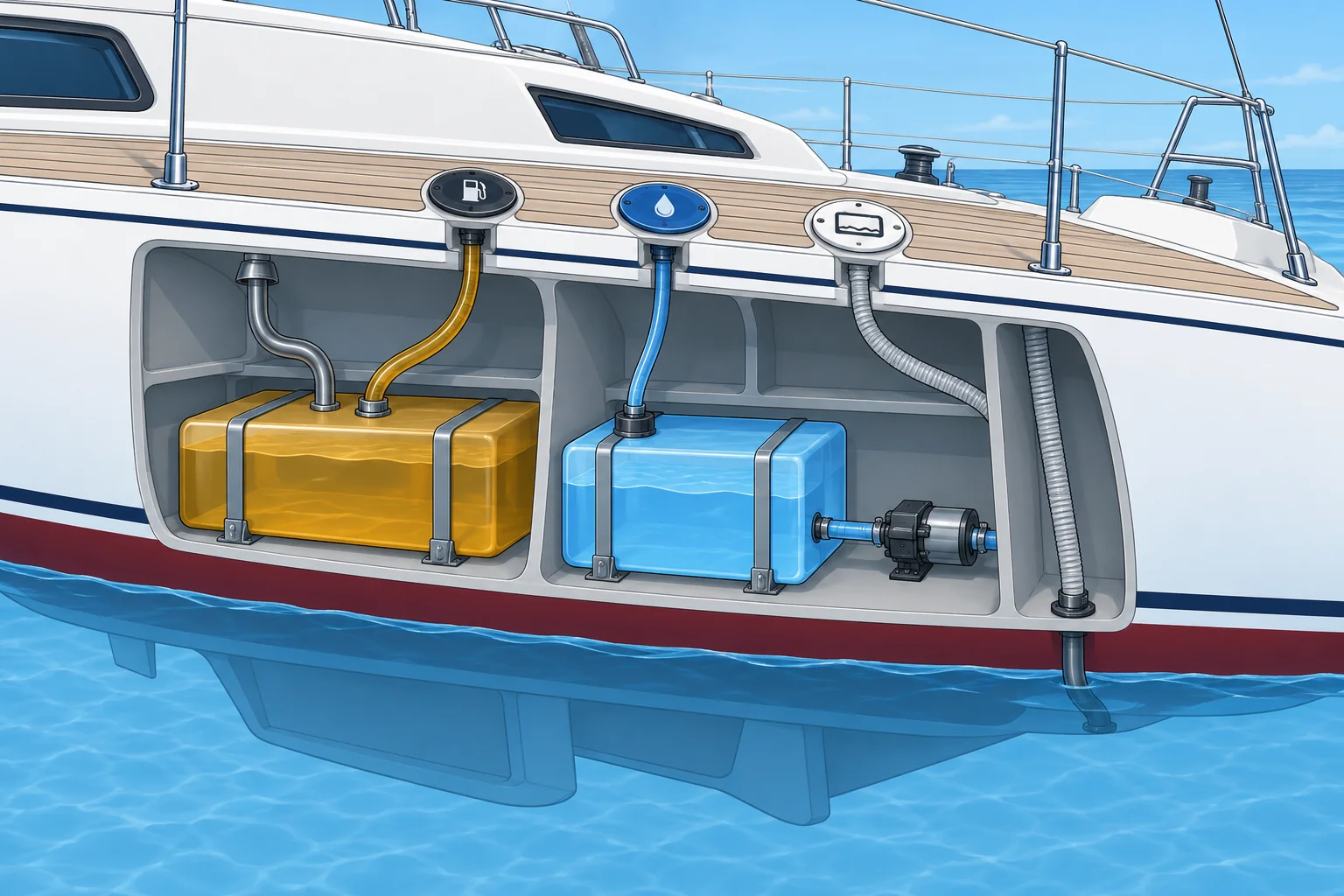
Fuel system safety and fresh water
1The lesson in plain words
A safe fuel system keeps fuel in and fire out. A fresh-water system keeps you supplied, if you look after the pump and tanks.
Fuel tank and fittings
Identify the labelled deck filler, vent, fuel outlet and shut-off valve. The vent lets the tank breathe and must stay clear and resist water entry. Flame-arresting screens, fitted where required, stop an outside flame travelling into the tank. Many diesel systems also return unused fuel to the tank. Know how to operate the shut-off from outside the engine space.
Hoses and joints
Fuel hoses must be marine fuel hose to the right standard; in the engine space, a fire-resistant type. Check hoses for cracks and soft spots, and clips for corrosion. Any smell of fuel inside the boat needs finding.
Clean fuel
Use the fuel grade specified by the engine maker. Water and dirt can block filters. Check the water separator (which collects water from the fuel) and drain collected water as instructed. Follow the maker’s storage advice and leave expansion space in the tank. The refuelling procedure is in Gas and petrol safety.
Fresh water
Water tanks feed a pressure pump that switches on when you open a tap. An accumulator stores water under pressure to smooth the flow. A calorifier stores domestic hot water heated by engine coolant or a shore-power element. Switch the pump off when leaving the boat: a burst pipe can empty the tank into the bilge.
Fillers and hygiene
Deck fittings are marked FUEL (or DIESEL/PETROL), WATER or WASTE. FUEL and WATER are fillers; WASTE is the sewage pump-out. Check twice before filling; diesel in the water tank is a costly mistake. Flush and sanitise water tanks each season, and drain or winterise the system in frost.
2Key points
- 1
Fuel tank: filler, vent, shut-off valve reachable from outside the engine space.
- 2
Fire-resistant fuel hose in the engine space.
- 3
Check the water separator; follow the maker’s fuel-storage advice.
- 4
Switch off the water pump when leaving the boat.
- 5
Read the deck filler label twice.
3Frequent mistakes
Wrong: The fuel shut-off is under the engine; that is fine.
Right: You must be able to close it without entering a burning engine space. Know where it is.
Wrong: Leave the water pump on when you go ashore.
Right: If a pipe fails, the pump empties the tank into the bilge and runs dry. Switch it off.
4Practice case & exam keys
Back from a day ashore, you hear the water pump running in short bursts, and the bilge pump has been cycling. The water tank is half empty although nobody was aboard.
Show the answer
Switch off the water pump. The falling tank level and repeated pump starts suggest a leak after the pressure pump. Inspect the pressurised pipes and fittings to confirm the source, and check for other sources of bilge water. Never taste bilge water: it may contain fuel, sewage or chemicals. Switch the water pump off when leaving the boat.
Exam keys
- Fuel: labelled filler, clear vent, accessible shut-off and suitable marine hose.
- Water: tank, pressure pump, accumulator, calorifier.
- Pump off when leaving; FUEL and WATER are fillers; WASTE is pump-out.
- Trace leaks by inspection, tank-level changes and pump cycling; never taste bilge water.
Finish this unit
When you've read it, answer three questions. Get all three right to finish the unit; opening the page alone doesn't count.
My notes for this unit
No notes