

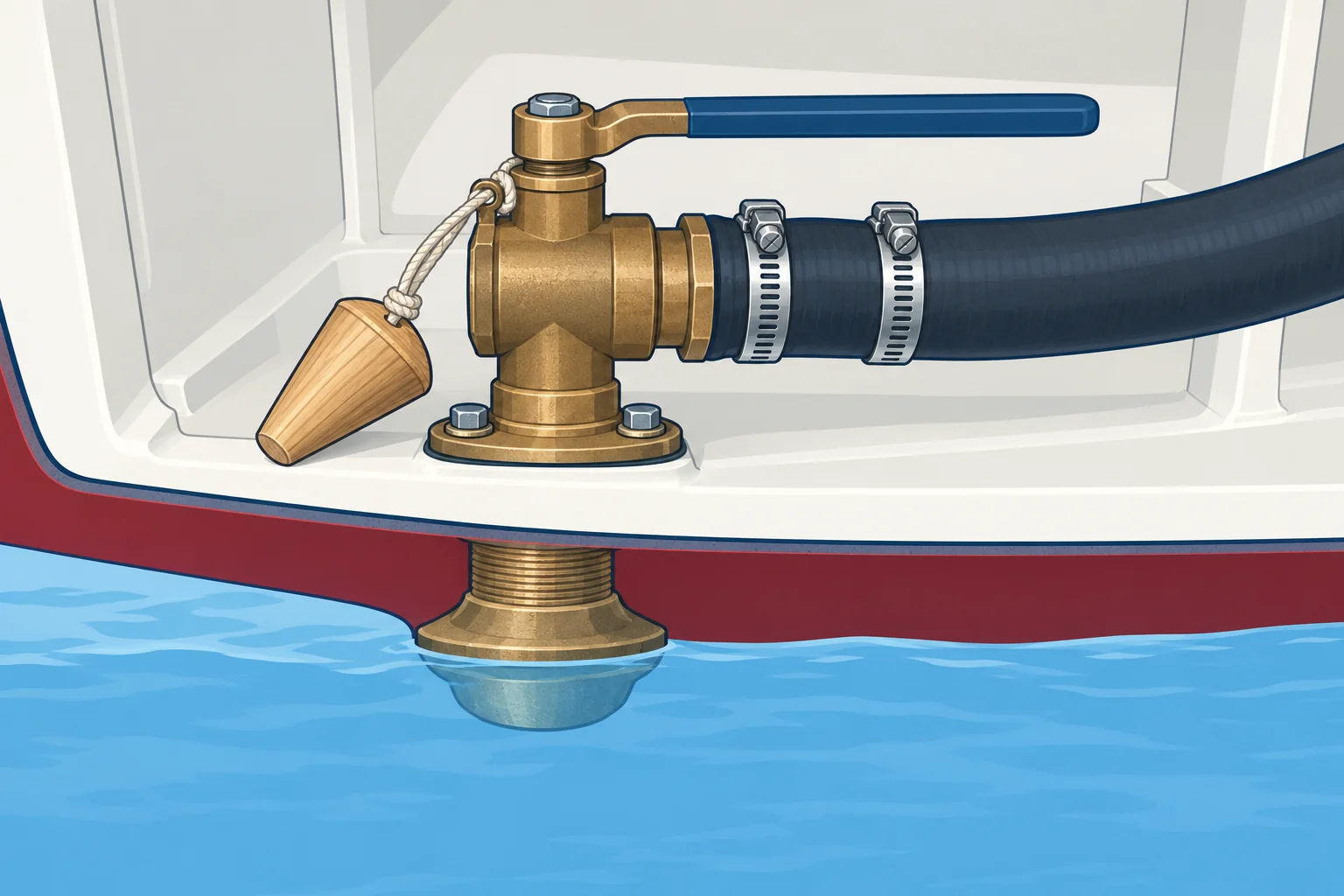
Seacocks and through-hull fittings
1The lesson in plain words
Every hole below the waterline is a way for the sea to get in. Know where each seacock is, keep them working and follow the boat’s safe leaving checklist.
What they are
A through-hull fitting passes through the hull. A seacock closes a sea-water plumbing connection, such as an engine intake or sink outlet, where flooding is possible. Sealed transducers (sensors) and instrument housings use different arrangements; follow the maker’s instructions.
Types
Most modern seacocks are ball valves: a lever turned a quarter turn. In line with the pipe = open; across = closed. Older boats may have tapered plug seacocks that need greasing. Gate valves are not suitable: you cannot see if they are closed, and they jam or break.
Materials
Use bronze, DZR (dezincification-resistant) brass or approved composite. Ordinary brass loses its zinc in sea water, turns pink and crumbles: this is dezincification. A fitting that looks fine can snap when you lean on it.
Hoses and bungs
Use two marine-grade, all-stainless hose clips where the ribbed connector (hose tail) supports both fully. Never fit a clip beyond the supported tail; use suitable fittings and follow the maker’s instructions. Check for corrosion. Tie a correctly sized softwood bung (a tapered wooden plug for a failed opening) beside each seacock.
Exercise them
Open and close every seacock regularly, for example monthly, so it does not seize. Make a plan showing each one. Close unused sea connections when leaving. Keep valves needed for cockpit drainage and automatic bilge pumping open, following the boat’s instructions. Check them at every lift-out.
2Step by step
Seacock check at lift-out
- 1
Work each seacock fully open and closed.
A seized seacock cannot be closed in an emergency.
- 2
Inspect metal fittings for pink colouring, flaking or cracks; replace suspect fittings before relaunch.
Corrosion can weaken a fitting even when its outside looks sound.
- 3
Check hoses for cracks and softness; check clips for corrosion and full support on the hose tail.
Both clips must sit fully on the tail; an unsupported clip can damage the hose.
- 4
Check the bung is tied on and the right size.
You need it in seconds if a fitting fails.
- 5
Grease or service as the maker says; renew anything doubtful.
Seacocks are cheap compared with a sinking.
3Key points
- 1
Ball valve: lever in line = open, across = closed.
- 2
No gate valves below the waterline.
- 3
Watch for dezincification in brass fittings.
- 4
Two fully supported clips where suitable; a softwood bung at each seacock.
- 5
Exercise seacocks regularly; keep a seacock plan.
4Frequent mistakes
Wrong: Leave seacocks open all season so they never seize.
Right: Exercise them regularly and close unused sea connections when leaving. Keep valves needed for cockpit drainage and automatic bilge pumping open, following the boat’s instructions. Open valves do seize.
Wrong: A household brass ball valve is fine as a seacock.
Right: Ordinary brass dezincifies in sea water. Use bronze, DZR brass or approved composite.
5Practice case & exam keys
At lift-out, a sink hose is cracked and its seacock is stiff. What must you check before relaunch?
Show the answer
Service or replace the stiff seacock as the maker directs; do not force it. Replace the damaged hose and inspect the fitting for corrosion and secure mounting. Check that both clips are fully supported by the hose tail. Confirm access and the correct bung size, then check for leaks after relaunch.
Exam keys
- Know each sea-water plumbing connection, its seacock and any instrument-housing exceptions.
- Ball valve: in line open, across closed. No gate valves.
- Bronze, DZR brass or approved composite; beware dezincification.
- Two clips where the hose tail fully supports both; softwood bung at each; exercise regularly.
Finish this unit
When you've read it, answer three questions. Get all three right to finish the unit; opening the page alone doesn't count.
My notes for this unit
No notes