

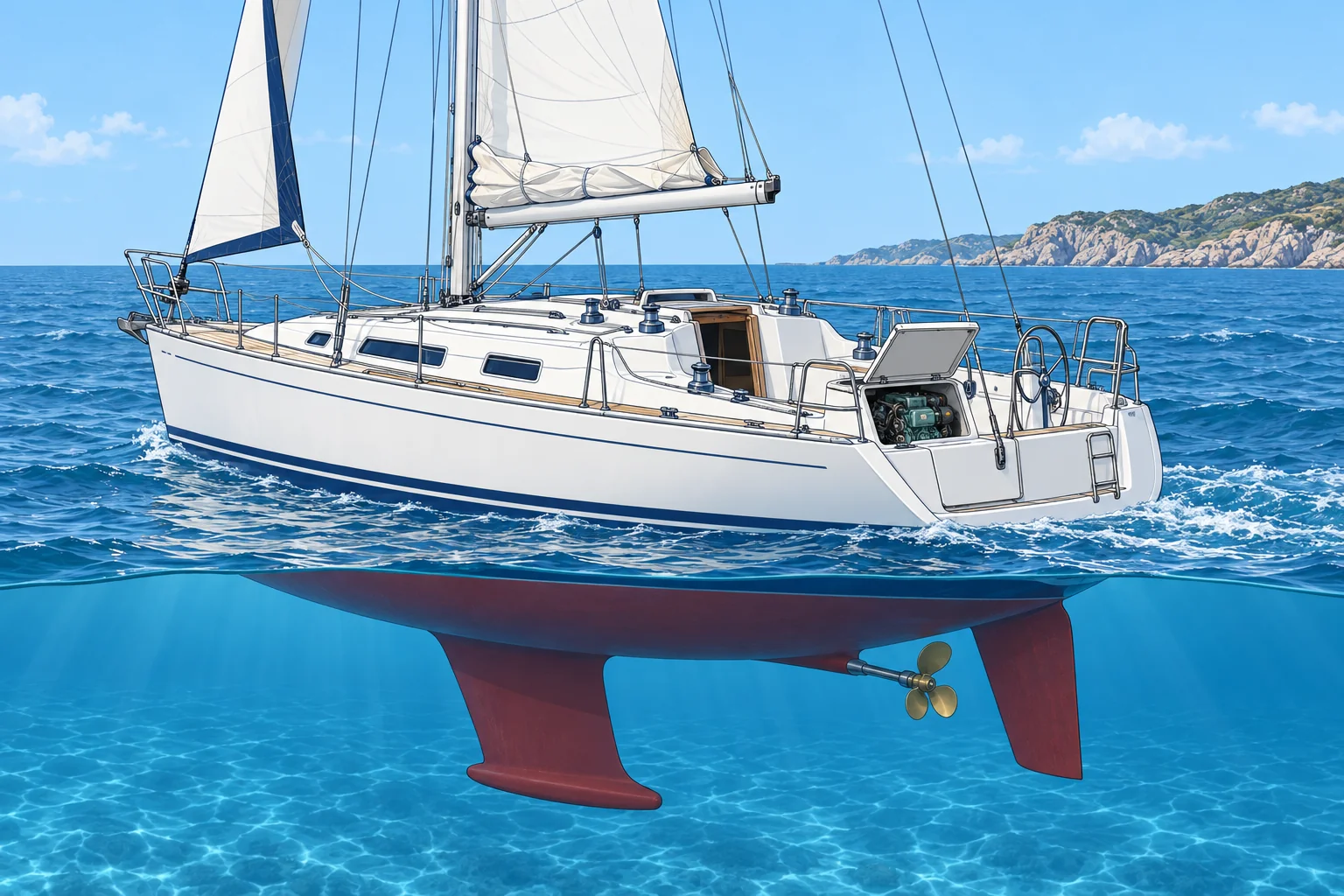
When the engine fails: the boat first, then the engine
1The lesson in plain words
An engine failure is a seamanship problem before it is a mechanical one. Make the boat safe, then find the fault calmly and in order.
The boat first
When the engine stops or must be stopped, ask: where will wind and tide take you, and how fast? A lee shore is land towards which the wind drives you. Near a lee shore, channel or rocks, act at once: sail if you can, or anchor if suitable. Offshore with sea room, you have time to think.
Tell people
Warn the crew and keep a lookout: someone watching traffic and drift. Call the coastguard early if you may need help. Use PAN-PAN for an urgent safety concern without distress. Use MAYDAY for grave and imminent danger requiring immediate assistance. Routine assistance can use an ordinary call. An early call gives rescuers time.
Diagnose in order
Check four areas: fuel supply, intake air, cooling and electrics. Under fuel supply, check for unwanted air as well as water, dirt and restrictions. Ask what changed just before: rough sea, a refill, a new filter, a noise, an alarm. Read the gauges and alarms, then check the simplest causes first.
Work safely
Stop the engine and prevent restarting before reaching near belts. Water flow can turn the propeller shaft even with the engine stopped; secure it against rotation before working near it. Let hot parts cool; never open a hot coolant cap. Brace yourself securely, use a torch, secure loose tools, and watch for fumes. Share the work if you are tired or seasick.
Write it down
Note the time, symptoms, checks, changes and results. This fault log helps you, the next crew member, the mechanic and any rescuer continue without repeating failed checks.
2Step by step
Engine failure at sea
- 1
Judge the drift: lee shore, traffic, rocks? Sail, or anchor if suitable.
Keeping the boat out of danger matters more than the engine.
- 2
Brief the crew and post a lookout to watch traffic and drift.
Someone must manage the boat while others investigate.
- 3
Call the coastguard early. Use PAN-PAN for an urgent safety concern; MAYDAY for grave and imminent danger requiring immediate assistance.
Rescuers need time. Routine assistance can use an ordinary call.
- 4
Log the time, symptoms, alarms, checks, changes and results. Note what happened just before.
The clue to the fault is usually in the minutes before.
- 5
Stop the engine and prevent restarting. Keep clear of any turning shaft; secure it against rotation before working near it. Check fuel, air, cooling and electrics, simplest first.
Simple faults are the common ones; safety first near moving parts.
- 6
Fix only what you understand; otherwise get a tow.
A wrong repair can turn a small fault into a wrecked engine.
3Key data
- Four usual causes
- Fuel, air, cooling, electrics
- Urgency call
- PAN-PAN: urgent safety concern without distress
4Key points
- 1
Make the boat safe first: sail, anchor or keep sea room.
- 2
Call early: PAN-PAN for urgent safety concerns; MAYDAY for grave, imminent danger requiring immediate assistance.
- 3
Check fuel, air, cooling, electrics, simplest causes first.
- 4
Stop and prevent restarting before work near belts; secure the shaft against water-driven rotation before working near it.
5Frequent mistakes
Wrong: Everyone goes below to look at the engine.
Right: Someone stays on deck to keep a lookout, watch the drift and steer or sail.
Wrong: Wait until you are sure you cannot fix it before calling.
Right: Call the coastguard early. Use PAN-PAN for an urgent safety concern; MAYDAY for grave and imminent danger requiring immediate assistance. Routine assistance can use an ordinary call.
6Practice case & exam keys
Your motorboat stops off a rocky lee shore. Wind and tide will carry you onto the rocks in ten minutes. You cannot sail or anchor effectively. What comes first?
Show the answer
Send MAYDAY now: grounding is imminent and you need immediate help. Keep someone on deck watching drift and traffic. Brief the crew and prepare for rescue. Attempt simple engine checks only if someone can do them safely without delaying the distress call or the boat’s safety.
Exam keys
- Boat first: assess drift, sail or anchor, then the engine.
- PAN-PAN: urgent safety concern without distress. MAYDAY: grave and imminent danger requiring immediate assistance.
- Diagnose fuel, air, cooling, electrics in order.
- Keep a lookout and log the time, symptoms, checks, changes and results.
Finish this unit
When you've read it, answer three questions. Get all three right to finish the unit; opening the page alone doesn't count.
My notes for this unit
No notes