

Smoke, vibration and a fouled propeller
1The lesson in plain words
Sudden black smoke, falling revs or new vibration are clues. Suspect a fouled propeller, but check other causes. Stop and secure the shaft before working near it.
Smoke as a clue
The colours are in Ship: diesel. At sea, what matters is the change. Sudden black smoke with falling revs can indicate overload, including a fouled propeller, or restricted intake air. White steam with a rising temperature means cooling trouble. Blue smoke that appears suddenly, with oil loss, needs the engine stopped.
Vibration and noise
For violent vibration or heavy knocking, stop the engine and prevent restarting; do not run a comparison test. For mild vibration without other warning signs, reduce revs and select neutral. If vibration eases in neutral at comparable safe revs, suspect the propeller, shaft or another load-related fault; engine mounts can also be involved. Neutral does not guarantee a stationary shaft: water flow can make it turn. If vibration continues, stop the engine and check the mounts and engine.
A fouled propeller
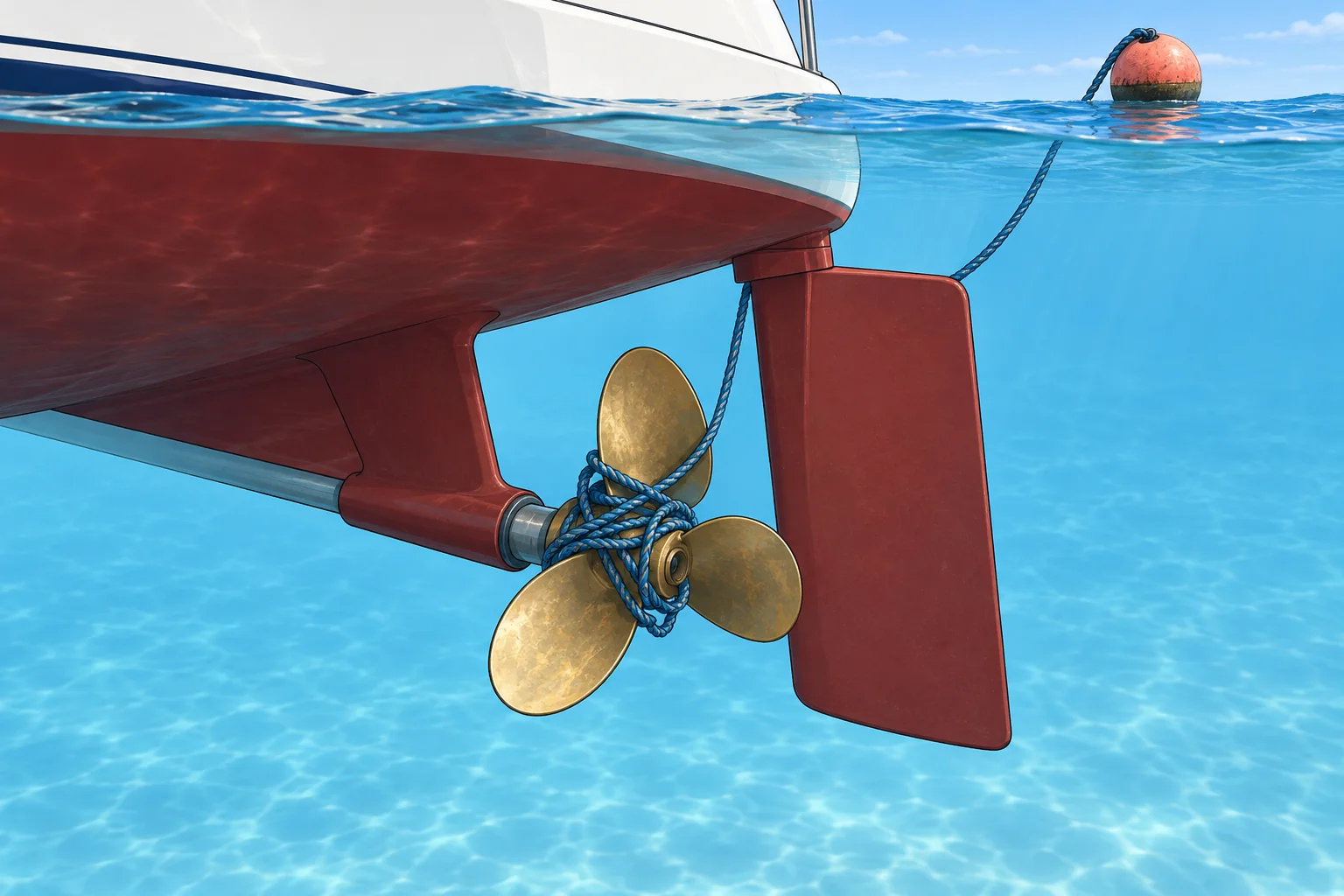
Rope, nets and plastic often wrap the propeller, especially near fishing gear. Signs include a bang, falling revs, vibration or stalling. Go to neutral at once, stop the engine and prevent restarting. A turning shaft can tighten the wrap and damage the drive or its seals, letting water in. Check for leaks.
Clearing it
Do not try to power an unidentified wrap clear: reversing can tighten it. Stop the engine and prevent restarting; secure the shaft against turning. Clear from deck only if you can reach safely with a boathook or pole cutter, keeping clear of tensioned line. Enter the water only as a last resort, in calm seas and warm water with no current. Prevent restarting and secure the shaft. Have someone watch you and provide a safe way back aboard.
Get help instead
A pitching stern can strike a swimmer's head. If the wrap is tight, the sea rough or the water cold, sail, anchor or call for a tow. Mark the fishing gear's position for others.
2Key data
- Black smoke + falling revs
- Possible overload or restricted intake air; check for fouling
- White steam + high temp
- Cooling problem
- Vibration stops in neutral
- Suggests a drive-line or load-related fault; check mounts too
3Key points
- 1
A sudden change of smoke, revs or sound is the clue.
- 2
Fouled propeller: neutral at once, stop, prevent restarting and check for leaks.
- 3
Keep the engine stopped while clearing a wrap; reversing can tighten it.
- 4
Water entry: last resort, calm, warm, no current, restart prevented, shaft secured, lookout and safe recovery.
4Frequent mistakes
Wrong: Give it full throttle to cut through the rope.
Right: It only wraps tighter and can damage the shaft, bearing or seal. Go to neutral and stop.
Wrong: Dive straight in to clear it, whatever the sea.
Right: A pitching hull can knock out a swimmer. Clear it from deck, or get a tow.
5Practice case & exam keys
Motoring at 6 knots past lobster pots, you hear a thump. The revs fall, black smoke appears and the boat vibrates. The sea is moderate, the water 15 °C.
Show the answer
Go to neutral, stop the engine and prevent restarting. Check the bilge and shaft seal or saildrive for leaks. A pot line is likely round the propeller; reversing may tighten it. Secure the shaft against turning. If you can reach safely, clear it from deck with a boathook or pole cutter, keeping clear of tensioned line. In moderate seas and 15 °C water, stay aboard. Sail, anchor if suitable, or call for a tow.
Exam keys
- Sudden black smoke with falling revs: possible overload or restricted intake air.
- The neutral test suggests load-related trouble; the shaft may still turn. Check the drive and mounts.
- Fouled propeller: neutral, stop, prevent restarting and check for leaks.
- Tight wrap, rough sea or cold water: stay aboard and arrange help.
Finish this unit
When you've read it, answer three questions. Get all three right to finish the unit; opening the page alone doesn't count.
My notes for this unit
No notes