

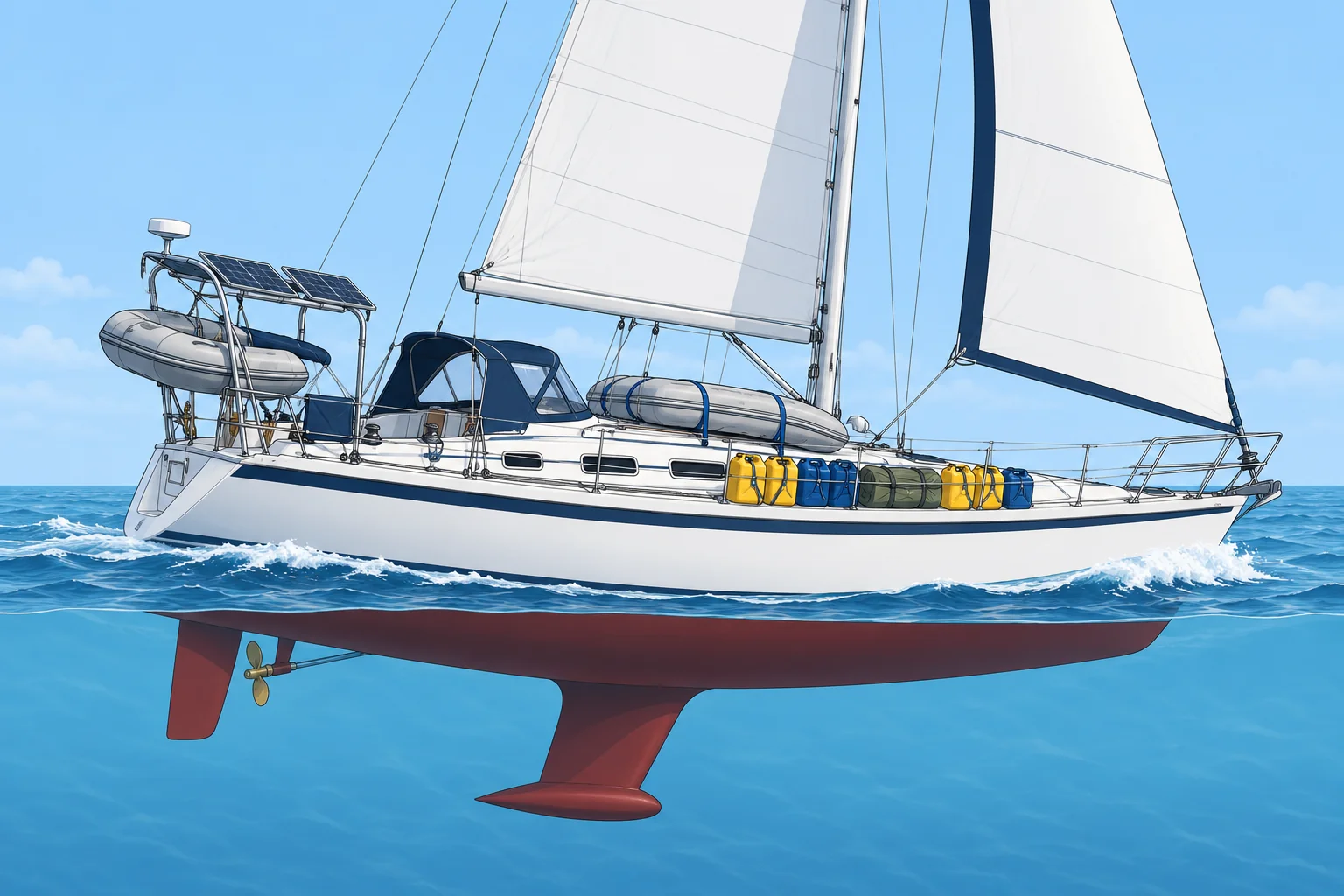
Reefing, ballast, furling and weight on deck
1The lesson in plain words
Stability is decided at sea by how you load and rig the boat. Reef early, keep weight low and think before adding gear aloft.
Reefing
Wind on the sails creates a heeling moment, a turning effect that heels your boat. Reefing, reducing sail area, usually lowers the centre of effort, where the sail force effectively acts. This reduces the heeling moment and leaves more reserve for gusts.
Ballast
Ballast is weight carried to improve stability. Lowering existing ballast lowers G and generally improves righting ability. On the same yacht, raising a ballasted lifting keel raises G and can reduce AVS; follow its keel-position stability data. Different designs need their own data. Windward water ballast can add righting moment, but slack tanks introduce free-surface loss. Use only the loading configurations specified by the maker.
Furling and gear aloft
In-mast and roller furling store sail around a spar or stay. They put sail weight high; a furled genoa adds windage, area exposed to wind, at the bow. Radar, wind generators, a solar arch, extra poles and heavy rigging above the existing G raise KG. Together these additions can reduce stability; the size of any AVS change needs yacht-specific data.
Deck loads
A dinghy on the coachroof, a liferaft on the pushpit, cans on the rail and water tanks on deck add windage. Any load above the existing G raises KG; a load below G lowers it. Secure suitable heavy stores low, on the centreline and amidships, near the boat’s middle. Bow chain also affects pitching, but its KG effect depends on its height relative to G.
Heavy weather
Before bad weather, lower suitable gear where the layout allows. Deflate only an inflatable dinghy. Use designated, secure, ventilated stowage for fuel cans and outboards, isolated from accommodation. Pump the bilge dry, close hatches and fit washboards, the boards closing the companionway entrance. Keep crew low and reef early. Breaking waves can capsize your yacht; strong gusts or excessive sail can also overwhelm her righting moment.
2Key points
- 1
Reefing reduces heeling moment and keeps a reserve for gusts.
- 2
Low ballast improves righting ability; raising a ballasted keel can reduce AVS. Check the yacht’s data.
- 3
Furling gear, arches and other weight above G raise KG; check the effect on AVS.
- 4
Stow heavy items low, central and amidships.
- 5
Before heavy weather: weight down, bilge dry, hatches shut.
3Frequent mistakes
Wrong: If she sails well at 25° heel, she has plenty of stability left.
Right: Normal heel says little about reserve. Gusts and waves need margin: reef early.
Wrong: Upgrades like an arch and davits do not affect stability.
Right: Additions above the existing G raise KG. Several additions can reduce stability; check their combined effect using yacht-specific data.
4Practice case & exam keys
Before a forecast Force 7, your yacht carries an inflatable dinghy on the coachroof, four water jerry cans on the rail and an outboard on the pushpit. The bilge has 20 litres of water. What do you do?
Show the answer
Deflate and secure the dinghy below if space permits. Secure the water cans low and central. Put the outboard in suitable secure, ventilated stowage that prevents fuel leakage or vapour entering accommodation. Pump the bilge dry, close hatches and fit washboards. Reef before the wind rises and keep the crew low and clipped on.
Exam keys
- Reefing reduces sail area and heeling moment; it usually lowers the centre of effort.
- Weight above G (furling, arch, radar) raises KG; use yacht-specific data for AVS changes.
- Loads above G raise KG; deck loads add windage. Secure suitable stores low and central.
- Heavy weather: lower weights, dry bilge, close openings.
Finish this unit
When you've read it, answer three questions. Get all three right to finish the unit; opening the page alone doesn't count.
My notes for this unit
No notes