
Decide
Four situations at sea. Decide first, then read why.
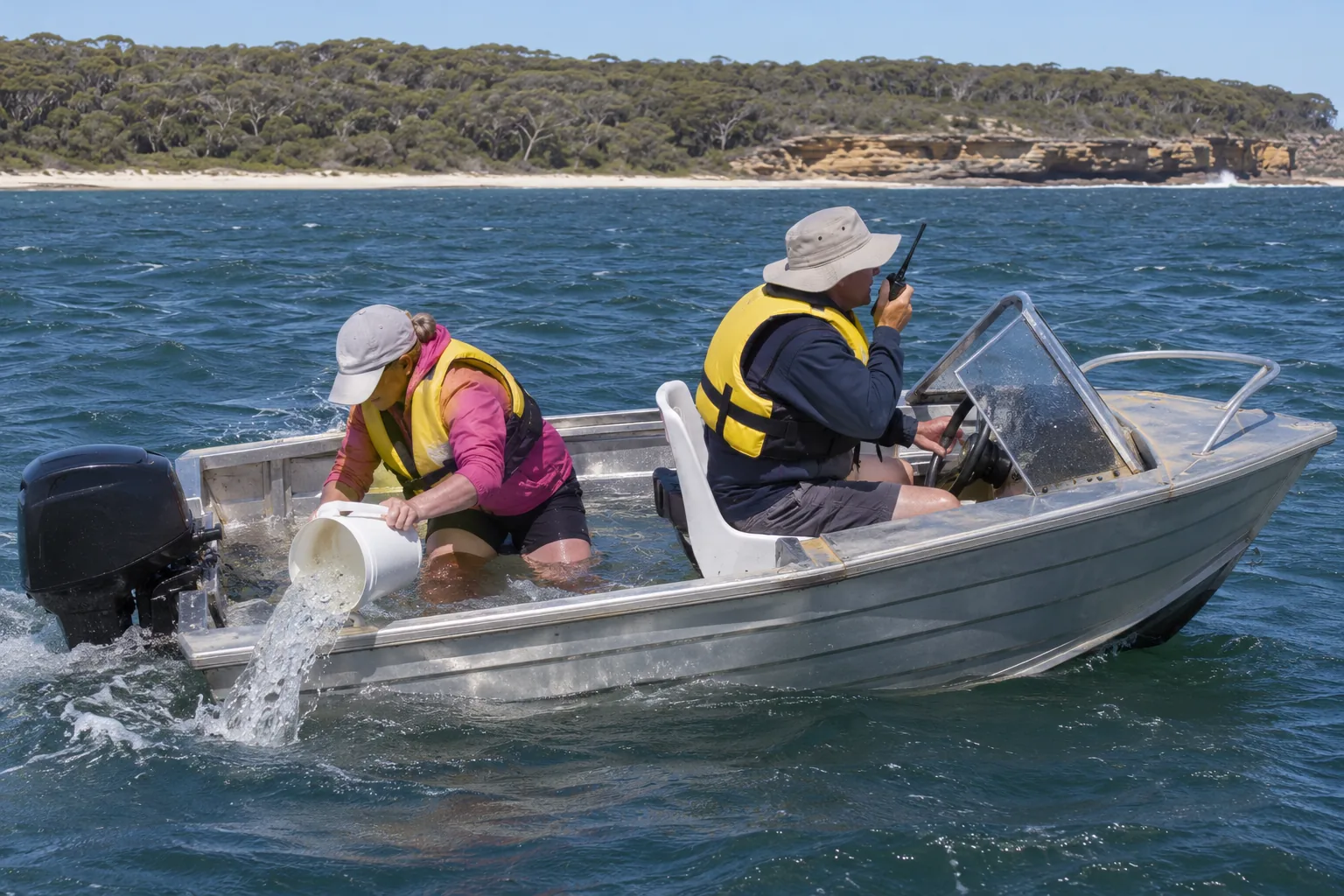
Off Jervis Bay, your boat is taking water rapidly and people are in imminent danger. Which call do you make?
Key points
- Use the right callVHF 16 or 27 MHz 88: tell rescuers where you are and what is wrong.
- Mayday: imminent danger. Pan pan: urgent trouble without imminent danger. Securite: navigational safety information.
- An EPIRB alerts by satellite; flares and a V sheet help rescuers see you. Orange smoke is for day; red hand flares for day or night.
- Call 000 by phone where reception is available. A phone does not replace a required marine radio.
- Listen to a Mayday; if no shore station answers, try to relay it and help.
- Stop and help; report when requiredAfter an incident, stop, help and give the required details.
- A report is required for death or injury, more than $5000 damage to vessels or other property, or environmental damage or risk.
- Submit within 24 hours unless you gave the required details to authorised officers at the incident.
- Fire and toxic gas need prompt actionWarn people, control the source if safe and call for help.
- Fire: shut fuel and gas lines, use the appropriate extinguisher if safe and reduce oxygen by closing hatches and vents.
- For fire abandonment, wear lifejackets and leave on the windward side.
- Carbon monoxide has no smell. Headache, dizziness or nausea can mean poisoning.
- Suspected gas: stop engines and appliances, shut cylinder valves, move to fresh air and ventilate. Avoid electrical switches until clear; call for rescue and medical help. Watch casualties and give CPR if they are not breathing.
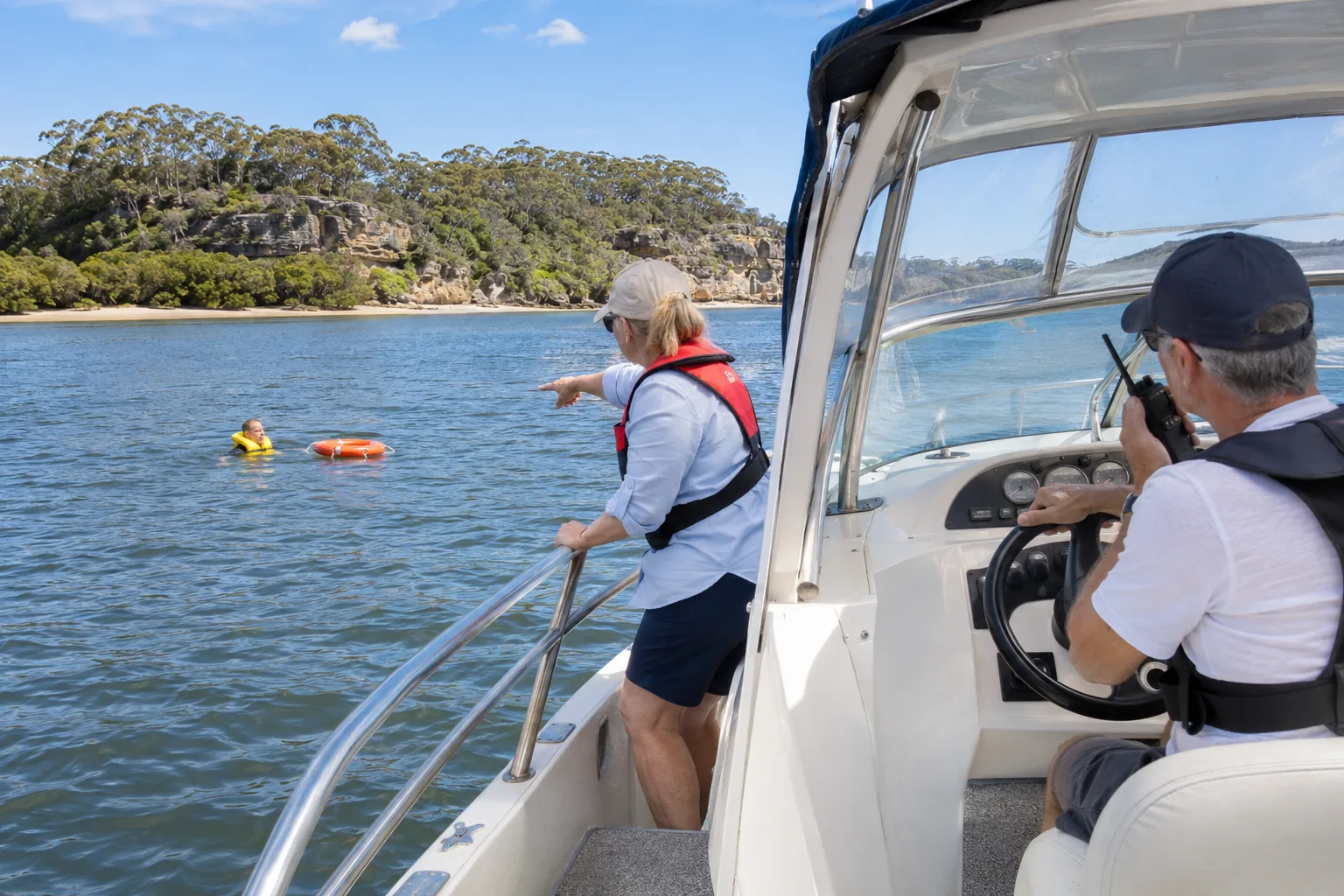
- See them, stop the propeller, recover safelyKeep the person in sight and stop the engine near them.
- Slow immediately, throw flotation or a marker, and appoint a lookout.
- Approach from downwind or against the current; balance the boat for recovery.
- Neutral may leave a propeller spinning. Wear the kill switch lanyard when driving.
- Do not jump in after the person and become a second casualty.
- Stay with the boat and conserve warmthA lifejacket and a visible boat give rescuers a better chance of finding you.
- After capsize or swamping, make sure everyone is wearing a lifejacket, use distress equipment and stay with the boat; abandon only as a last resort.
- Avoid unnecessary swimming in cold water. Use HELP when alone or huddle with others.
- For suspected hypothermia, handle gently, keep still, replace wet clothing and warm slowly while seeking help.
- Keep waste out and habitats intactBring rubbish ashore and keep anchors and propellers out of seagrass.
- Do not discharge rubbish, oil, chemicals or sewage into NSW waterways. Use appropriate shore disposal and pumpout facilities.
- Report marine oil or chemical spills. Keep bilges clean and contain wash water.
- Clean boats, trailers and gear to avoid spreading pests; reduce wash near vulnerable banks.
- Observe local wildlife restrictions, including little penguin habitat restrictions around Spring Cove.
- Leave wildlife room and neighbours quietMinimum distances change with the animal, its young and your vessel.
- Powerboats, sailing boats and paddlecraft: whales 100 metres, or 300 with calves (500 for predominantly white whales); dolphins and dugongs 50 metres, or 150 with calves. Use constant slow speed and minimal wash within 300 metres of whales and 150 metres of dolphins or dugongs.
- PWC: 300 metres from whales, dolphins and dugongs. All vessels: 500 metres from predominantly white whales.
- All vessels: seals and sea lions 10 metres, or 80 with pups. Do not chase animals or block their path.
- Keep engine noise, voices and music from offending or disturbing others. Do not modify engine noise controls.
Check what you have read
Your crew has both a VHF radio and a 27 MHz set. Which channels are used for distress calls?
Worked case: A passenger falls overboard in Pittwater
On a cool spring morning, your small powerboat is moving through Pittwater. A passenger loses their footing and falls in. They are wearing a lifejacket, but are gasping and cannot climb back aboard. Another adult is with you.
Before you read the solution: what would you do?
True or false?
Decide each statement before you see the answer.
VHF 16 or 27 MHz 88: tell rescuers where you are and what is wrong.
After an incident, stop, help and give the required details.
After a capsize, everyone should swim for the shore we can see.
A PWC can use the same dolphin-watching distance as a powerboat.
A lifejacket and a visible boat give rescuers a better chance of finding you.
Warn people, control the source if safe and call for help.
If I cannot smell fumes, it cannot be carbon monoxide.
An engine failure always needs a Mayday.
Food scraps and sewage are natural, so they can go overboard.
Bring rubbish ashore and keep anchors and propellers out of seagrass.
Neutral makes the propeller safe for someone climbing aboard.
Minimum distances change with the animal, its young and your vessel.
Exercise: Choose the response before trouble grows
You are the skipper on Lake Macquarie. Work through each situation using the danger to people as your guide.
Step by step
Your engine has failed. You are safely anchored, clear of traffic, but need an urgent tow. Nobody is in imminent danger. Which call fits?
Show the solution
Pan pan is for urgent trouble without imminent danger. If circumstances become life-threatening, use Mayday.
Which VHF channel do you use for the initial emergency call?
Show the solution
VHF channel 16 is the distress channel. The equivalent distress channel for a 27 MHz radio is 88.
While you wait, two people in the cabin feel dizzy. The generator has been running. What should you do?
Show the solution
Carbon monoxide is odourless. Dizziness near a running generator needs urgent action, ventilation and medical help.
A friend suggests emptying a portable toilet into the lake before the tow arrives. What do you do?
Show the solution
Do not discharge sewage into NSW waterways. Use a suitable pumpout facility or toilet.
Now on your own
Now imagine a winter trip on the Hawkesbury River. Choose your response without the guided hints.
A passenger is alongside in the water. The engine is in neutral. What do you do before lifting them aboard?
You recover a shivering, confused passenger. Which care is appropriate?
The incident caused an injury. You have not given the required details to authorised officers at the scene. Within how many hours must you submit a Vessel Incident Report?
At your next anchorage, your wash is breaking against a soft riverbank. What should you do?
Check: 10 questions
Questions from this subject, explained after each answer.
Free: lesson + 10 questions · Exam Pass: all 29 questions, unlimited practice tests, your mistakes retrained
The full explanation and the lessons for each programme item
Topic 1 of 6
Get help early and say what is happening
Use VHF channel 16 or 27 MHz channel 88 to call other vessels or a shore station, such as Marine Rescue NSW.
Mayday means imminent danger to the vessel and people. Pan pan means an urgent problem without imminent danger. Securite introduces navigational safety information, such as a hazard or weather warning. The handbook recommends repeating the emergency word three times. Then identify your boat, give your position, explain the trouble and say how many people are involved. Boating Handbook, pp. 149–150.
If a Mayday comes over the radio, listen and let a shore station respond. If no shore station answers, try to relay the message and help. If your own call gets no answer, repeat the call and message on other available frequencies.
An EPIRB sends a distress alert via satellite. In an emergency, use it to alert search and rescue; use flares and an orange V sheet to help rescuers locate you when they are in sight. Orange smoke flares are for daytime; red hand flares work by day or night. Raising and lowering your arms is also an international distress signal. Use distress signals only in an emergency. Boating Handbook, pp. 53 and 149.
A mobile phone can call Triple Zero (000), or JRCC Australia on 1800 641 792, where reception is available. It supplements your safety equipment; it does not replace a required marine radio.
- VHF 16; 27 MHz 88.
- Mayday: imminent danger. Pan pan: urgent trouble. Securite: safety information.
- Give a useful position: GPS coordinates or clear shore references.
Topic 2 of 6
After an incident, or when fire or gas threatens
If you are involved in a marine incident, stop and give as much help as possible.
Give your details to the others involved and show any required licence or certificate. Incidents include collisions, people falling overboard, close-quarters situations, fire and environmental damage. If Maritime authorised officers or police attend, give your name and address, vessel identity, incident details, names and addresses of people involved and witnesses, the extent of injuries or damage, and any required licence or certificate. Boating Handbook, p. 151.
The skipper of each vessel involved must submit a Vessel Incident Report within 24 hours if someone is killed or injured, damage to vessels or other property exceeds $5000, or there is damage or a risk of damage to the environment. You do not need to submit that report if you gave the required details to authorised officers at the incident. Boating Handbook, p. 152.
For a fire, warn everyone, make a distress call and shut off fuel and gas lines immediately. Use an extinguisher suitable for the fire if you can safely tackle it. Close hatches, vents and ports to reduce oxygen to the fire. Move LPG cylinders away from heat if safe, or spray them with water to keep them cool. If flames threaten to engulf a gas cylinder, abandon the vessel. If you must abandon because of fire, wear lifejackets and leave on the windward side, where the wind comes from. Do not move a burning vessel towards another vessel. When helping a burning vessel, keep to windward and protect your own passengers and boat. To prevent fires, check electrical systems and fuel lines, keep combustible materials out of the bilge and engine compartment, ventilate before starting engines, and fill fuel caddies on shore. Boating Handbook, pp. 153–154.
Carbon monoxide has no colour or smell. Engines, generators and fuel-burning cooking equipment can produce it. Headache, nausea, dizziness or irritated eyes may be poisoning, even if they look like seasickness. LPG has a strong smell and is heavier than air, so it can gather in the bilge. If you suspect carbon monoxide build-up or a gas leak, stop the engine, turn off cylinder valves and appliances, move everyone into fresh air and ventilate. Avoid operating electrical switches until the air is clear. Watch anyone affected, give oxygen if possible and perform CPR if they are not breathing. Make a distress call and obtain urgent medical help. Boating Handbook, p. 155.
Keep cabins and cockpits ventilated, maintain exhaust systems and fit a carbon monoxide detector. Never sit on a marlin board or swim platform while a boat with a rear-vented exhaust is underway or idling. If possible, avoid these areas for at least 15 minutes after the engine or generator is switched off. Generators still produce carbon monoxide when a boat is anchored. Never swim under houseboat swim platforms. Avoid leaving engines or generators running while moored, and stay at least 6 metres from other vessels with engines or generators running. Have LPG equipment installed, serviced and inspected by trained technicians. Boating Handbook, p. 156.
- Keep the right extinguisher accessible, away from the stove or engine compartment.
- Practise your fire response before you need it.
- Fresh air and medical help matter even when you cannot smell a gas.
Topic 3 of 6
Keep a person in the water safe
If someone falls overboard, slow down immediately, throw a lifejacket or marker and keep them in sight.
Ask a passenger to keep pointing and warn approaching vessels. Approach from downwind or against the current without striking the person. Stop the engine when near people in the water and before recovery: some propellers can keep spinning in neutral. Balance the boat before bringing the person aboard. Do not jump in after them and create another casualty. Boating Handbook, pp. 157 and 164.
If you fall overboard, get as much of your body out of the water as possible. Climb back aboard if you can; otherwise hold the boat or another floating object and try to stay with the boat. Only swim to shore if it is very close: distances on the water can be deceptive. Boating Handbook, p. 157.
Cold water can be dangerous on a sunny day. Water below 15°C is dangerous. Hypothermia means the body's core temperature has fallen below 35°C. Sudden immersion can cause cold shock: rapid breathing and heart rate, with a risk of inhaling water. Stay calm, stay with the boat and avoid unnecessary swimming, which increases heat loss. With a lifejacket supporting you, use the HELP position when alone: draw your knees towards your chest and wrap your arms around them. With others, huddle close together. Boating Handbook, pp. 159–160.
A person with hypothermia may shiver, become confused or have slurred speech; shivering can stop in later stages. Handle them gently, keep them still, replace wet clothing with dry clothing or blankets and warm them slowly. Do not use a hot bath or place them close to a heater. Call for help and give CPR if necessary. Boating Handbook, pp. 159–161.
If the boat capsizes or is swamped, make sure everyone is wearing a lifejacket, call for help and stay with the boat so rescuers can find you. Bail or pump a swamped boat if possible. Retrieve the EPIRB and flares if safe, and display your V sheet. Abandon only as a last resort. Prevent trouble by keeping within the boat's capacity, keeping safety gear accessible and never anchoring a small boat by the stern. Take extra care in a following sea, where waves travel in the same direction as the boat, and check the boat has appropriate internal buoyancy. Boating Handbook, pp. 162–163.
- Wear the kill switch lanyard when driving.
- Check the propeller area is clear before starting the engine.
- Keep everyone inside the boat while underway; no bow riding or limbs over the side.
Topic 4 of 6
Bring waste ashore and protect living habitats
Do not put rubbish, oil, chemicals or sewage into NSW waterways.
Keep rubbish aboard for proper disposal ashore. Use an onboard holding tank, a portable toilet with a holding tank, or onshore toilets. Houseboats must have an onboard toilet with a holding tank. Empty holding tanks at a pumpout facility or toilet, as appropriate. Even treated sewage from an approved onboard treatment system must go to a pumpout facility. Report marine oil or chemical spills to Transport for NSW (Maritime), Port Authority of NSW or the NSW EPA. Boating Handbook, pp. 167–168.
Keep bilges clean and clean up fuel spills quickly. Where possible, wash boats at an approved slipway or wash bay with waste controls. Avoid removing antifouling coatings while the boat is in the water, use suitable cleaners sparingly and keep contaminated wastewater out of the waterway. Boating Handbook, p. 167.
Seagrass is habitat, not an empty anchoring patch. Avoid shallow weedy areas and do not anchor on seagrass beds, which often look darker than surrounding sand. Clean your boat, trailer and equipment before and after use to avoid spreading weeds and pests. Inspect ropes, anchors and fishing gear, and observe local exclusion zones and fishing closures. Reduce wash if waves from your boat rock other vessels or break against the bank. Boating Handbook, pp. 169–170.
Native mammals, birds and reptiles are protected. Keep a lookout and give them space. In little penguin critical habitat, including Spring Cove near Manly, follow seasonal access, fishing and anchoring restrictions during the July–February breeding season. Keep clear of feeding or roosting animals; birds taking flight as you approach are a sign you are too close. Boating Handbook, pp. 168–169.
- Take rubbish home, even if it seems biodegradable.
- Choose clear sand rather than seagrass for anchoring.
- Check local habitat restrictions before entering or anchoring.
Topic 5 of 6
Give marine mammals space and keep noise down
For powerboats, sailing boats and paddlecraft, keep at least 100 metres from whales, or 300 metres if calves are present.
The larger 500-metre minimum for predominantly white whales overrides these distances. Within 300 metres of whales, travel at a constant slow speed with minimal wash. For dolphins and dugongs, keep at least 50 metres away, or 150 metres with calves; within 150 metres, use a constant slow speed and minimal wash. Boating Handbook, p. 171.
A PWC must stay at least 300 metres from whales, dolphins and dugongs. All vessels, including PWC, must stay 500 metres from predominantly white whales. For seals and sea lions, all vessels must keep at least 10 metres away, or 80 metres if pups are present. These are minimum distances, not a reason to crowd an animal. Boating Handbook, p. 171.
Do not chase animals or wait across their path. The handbook recommends starting an approach at an angle of at least 30 degrees to their direction of travel; no more than two vessels should approach at once. If an animal comes towards you, stop or slow to minimise wash, move away or disengage gears, avoid sudden movement and keep noise down. Boating Handbook, p. 172.
Engine noise, voices and music must not offend, disturb or harm people outside your boat. Do not modify engine noise control equipment. Consider nearby homes, wildlife, the time of day and how long you stay in one place. Even a fairly quiet boat can disturb people in a calm anchorage. Boating Handbook, p. 173.
- Powerboats, sailing boats and paddlecraft: whales 100 metres; with calves 300 metres; predominantly white whales 500 metres.
- Dolphins and dugongs: 50 metres; with calves: 150 metres.
- PWC: 300 metres from whales, dolphins and dugongs.
- All vessels: 500 metres from predominantly white whales.
Topic 6 of 6
Practise and go further
The best places to practise this subject. When you finish, one tap brings you back to the course.
- Distress signalsLesson
- Search and rescueLesson
- Coastal search and rescueLesson
- Fire aboardLesson
- Gas and fuel safetyLesson
- Abandoning a vesselLesson
All lessons by programme item
- H9a Alerting search and rescue: VHF 16, 27 MHz 88, Mayday, Pan pan, Securite, EPIRB, flares, 000 (Handbook pp. 149–150)
- H9b Incidents, fire, carbon monoxide and gas leaks (Handbook pp. 151–156)
- H9c Person overboard, cold water, capsizing and swamping, propeller strikes (Handbook pp. 157–165)
- H10 Protecting the environment: waste and sewage, marine life, marine mammals, noise (Handbook pp. 167–173)
Sources
- Boating Handbook 2026: alerting rescue services, incidents, fire and gas, pp. 149–156; flares, p. 53 · checked
- Boating Handbook 2026: person overboard, cold water, capsizing and propeller strikes, pp. 157–165 · checked
- Boating Handbook 2026: protecting the environment, pp. 167–173; marine mammals, pp. 171–172 · checked
- Transport for NSW: alerting search and rescue services · checked
- Transport for NSW: carbon monoxide and gas leaks on vessels · checked
Checked against the official sources on .