

After the fire: investigation, reports and equipment care
1The lesson in plain words
When the fire is out, find out why it started, report it, and put every piece of equipment back in a ready state before the next one.
Preserve the evidence
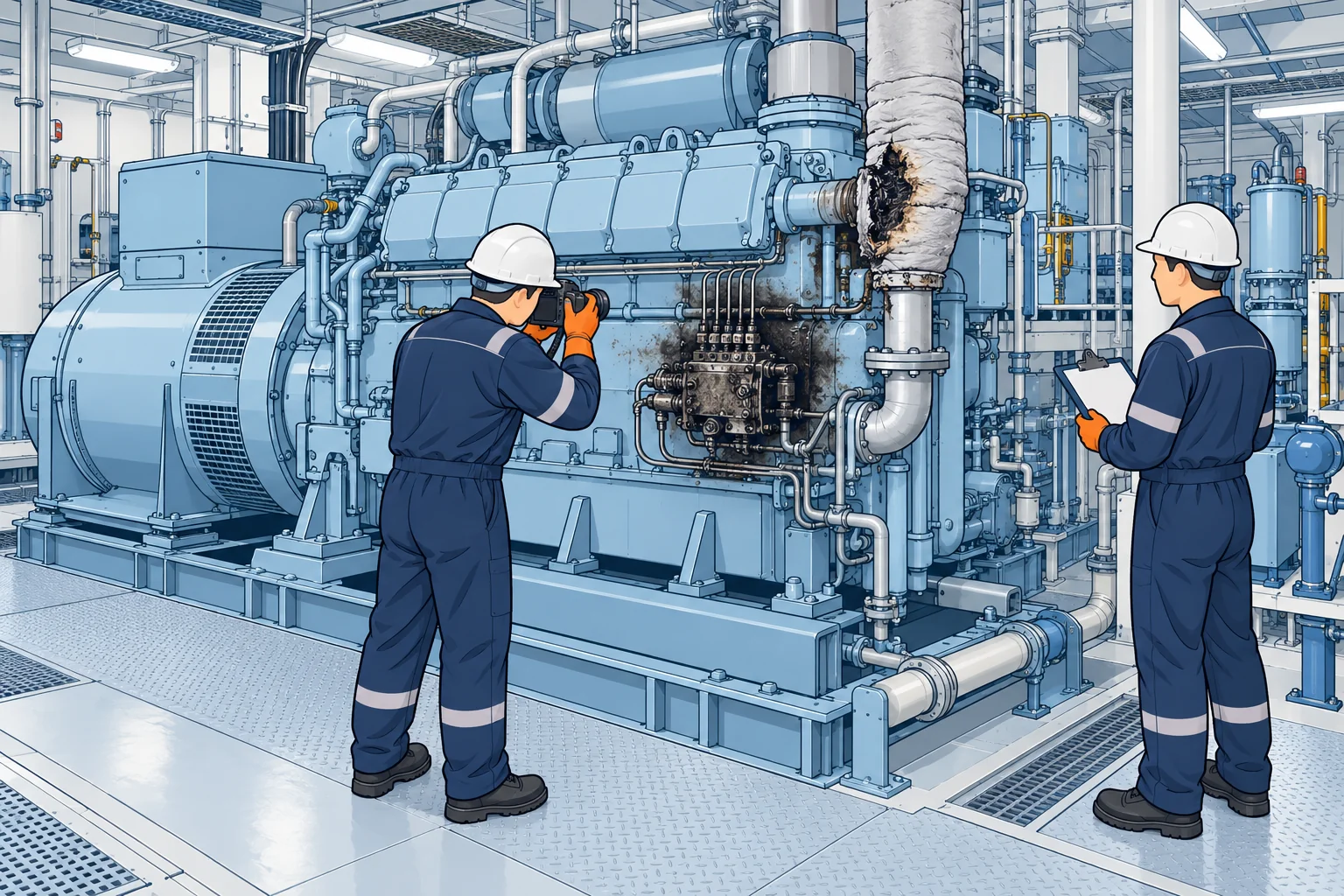
Ask the bridge to save the voyage data recorder (VDR) data and fire-panel log as soon as practicable; do not wait for the fire to end. Once the fire is out and the space is safe, secure the scene and restrict access. Photograph it before clean-up. Keep damaged parts such as hoses, filters and cables. Take short, separate witness statements while memories are fresh.
Find the cause
Identify the point of origin, where the fire started, by comparing damage patterns with alarms, witness accounts, machinery records and the timeline. Deep or low burning is a clue, not proof: ventilation, fuel distribution, fallen material and suppression can mislead you. Identify the fuel and possible ignition source without disturbing evidence. Ask why the equipment or procedures allowed them to meet. Record uncertainty. The aim is prevention, not blame.
Reports
Report as the safety management system (SMS) requires: an internal accident report under ISM Code section 9, a logbook entry, and the casualty report to the flag state. A serious fire may be investigated by the flag state under the Casualty Investigation Code. Clear, factual reports let the company fix the cause across its whole fleet.
Keeping equipment ready
SOLAS II-2/14 requires a maintenance plan for fire protection systems. Its minimum content comes from IMO MSC.1/Circ.1432 as amended, and for CO₂ systems from MSC.1/Circ.1318/Rev.1. The crew does many checks, such as weekly panel and alarm tests and monthly rounds of hoses and extinguishers. Others need a competent person or a service firm, such as hydrostatic tests (pressure tests) of cylinders. As an officer you plan the work, check it and keep the records.
After use
Restore equipment promptly: refill BA cylinders, service used extinguishers, inspect hoses and restore detection. Report every fixed-system operation. Check the agent supply, pumps, controls, valves and coverage against its instructions before declaring it ready. A discharged CO₂ bank needs recharging. Report any impairment immediately; the company must arrange restoration and any required flag/class agreement on temporary precautions or operating restrictions.
2Key data
- Weekly
- Fire panel lamp test; general alarm and public address working
- Monthly
- Test a sample of detectors so all are tested within 5 years
- Annually
- BA air compressor air quality; BA masks and demand valves
- CO₂ cylinder contents
- Every 2 years (cargo ships: at surveys); refill below 90 %
- CO₂ cylinder pressure tests
- At least 10 % at 10 years; all by 20 years
- Maintenance plan
- SOLAS II-2/14; MSC.1/Circ.1432 as amended
3Key points
- 1
Preserve evidence before clean-up: photos, panel log, VDR, damaged parts, statements.
- 2
Establish origin from corroborating evidence; deepest damage alone is not proof.
- 3
Look for the system cause, not just the person; the aim is prevention.
- 4
Report under the SMS (ISM section 9) and to the flag state.
- 5
Keep the maintenance plan up to date and restore all equipment straight after use.
4Frequent mistakes
Wrong: Clean up the engine room at once so the ship looks ready.
Right: Photograph and preserve the scene first; clean-up destroys the evidence of the cause.
Wrong: The investigation is done when you have found who made the mistake.
Right: Ask why the system allowed it: missing insulation, a poor procedure, too little time. Fix that.
5Practice case & exam keys
A fire on the generator engine has been put out with the local water-mist system and a foam extinguisher. The second engineer wants to clean the area and restart the generator before the next port. Burnt insulation lies on the deck under a fuel pipe.
Show the answer
Do not clean up yet. Photograph the area, keep burnt insulation and relevant fittings, and save alarm logs and VDR data. Take witness statements. Keep the generator isolated until competent inspection establishes the cause, corrects faults and verifies safe operation; a fuel leak onto a hot surface is only a hypothesis. Recharge the extinguisher, verify the mist system’s supply and operation before restoring it, and report under the SMS.
Exam keys
- Preserve the scene: photos, fire panel log, VDR, damaged parts, witness statements.
- Establish origin from corroborating evidence; deepest damage alone is not proof. Identify fuel and ignition source.
- Reports: ISM section 9 internal report, logbook, flag state; Casualty Investigation Code.
- Maintenance plan: SOLAS II-2/14; MSC.1/Circ.1432 and MSC.1/Circ.1318/Rev.1 for CO₂.
Finish this unit
When you've read it, answer three questions. Get all three right to finish the unit; opening the page alone doesn't count.
My notes for this unit
No notes