

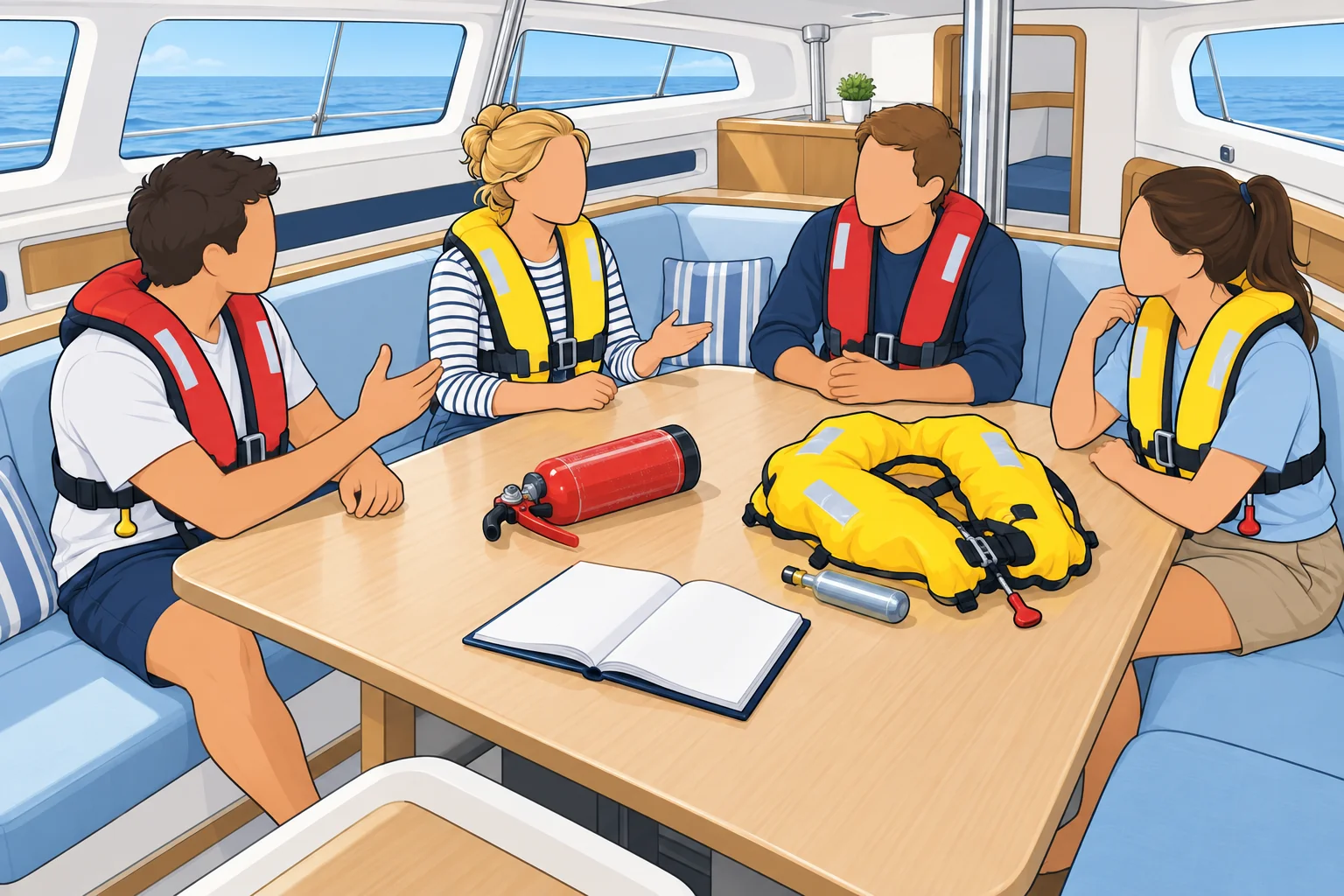
After the incident: debrief and follow-up
1The lesson in plain words
After any incident or drill, talk it through: what happened, what worked, what to change. Then fix the kit, update the cards and report if required.
Right after
Once everyone is safe, check people first: injuries, cold, shock. Restore the boat to a safe state: pumps, seacocks, sails, a safe course or a berth. Make a note in the log while it is fresh: times, positions, actions, calls and who did what.
The debrief
Gather the crew when they have rested, within a day. Ask four questions: What did we expect? What happened? Why was there a difference? What will we change? Let the least experienced speak first. Focus on what happened, not on blame. A good debrief makes people want to speak up next time.
Follow-up
Replace or recharge anything used: extinguishers, flares, lifejacket cylinders, first-aid stock. Repair what failed. Update the emergency cards and the briefing with the lessons. If a drill showed a gap, practise that part again soon.
Reporting
Your flag state is the country where your boat is registered. Report serious accidents promptly to the relevant authorities under flag-state and local rules. Notify your insurer as required. Read published accident reports: they show how small mistakes build up and help you prevent similar incidents.
2Key points
- 1
People first, then make the boat safe, then log the facts.
- 2
Debrief within a day: expected, happened, why, change.
- 3
No blame; let the least experienced speak first.
- 4
Replace and repair kit; update cards and briefing.
- 5
Report promptly under flag-state and local rules; read accident reports.
3Frequent mistakes
Wrong: Debrief only real incidents, not drills.
Right: Drills are where you find gaps safely. Debrief every one, even for two minutes.
Wrong: Use the debrief to find out whose fault it was.
Right: Blame stops people talking. Focus on what happened and what to change.
4Practice case & exam keys
During a gusty day, a crew member was knocked overboard and recovered in eight minutes. The lifejacket inflated, but nobody could find the recovery sling and the halyard was jammed. What do you do after?
Show the answer
Check the casualty for cold and injury; get medical advice if needed. Make the boat safe. Log times and positions. Restore the lifejacket to service following its instructions. Hold a no-blame debrief: why were the sling and halyard not ready? Secure the sling where the crew can reach it quickly, clear the halyard, update the briefing and MOB card, and drill the recovery again. Report promptly under flag-state and local rules.
Exam keys
- After an incident: people, boat safe, log while fresh.
- Debrief questions: expected, happened, why different, what changes.
- Replace used kit, update cards and briefing, re-drill gaps.
- Report promptly under flag-state and local rules; notify your insurer as required.
Open practise
It opens here in IALACOLREG Academy. When you finish, come back to this unit: your result counts towards this module.
My notes for this unit
No notes