

 See units
Fire on ships: fire chemistry, ignition sources, detection and fixed systems (STCW A-VI/1-2)
Ignition sources on ships, and preventing fire
1The lesson in plain words
Engine rooms, galleys (kitchens) and accommodation (living spaces) have familiar fire risks. Spot ignition sources and report defects on your rounds.
Engine rooms
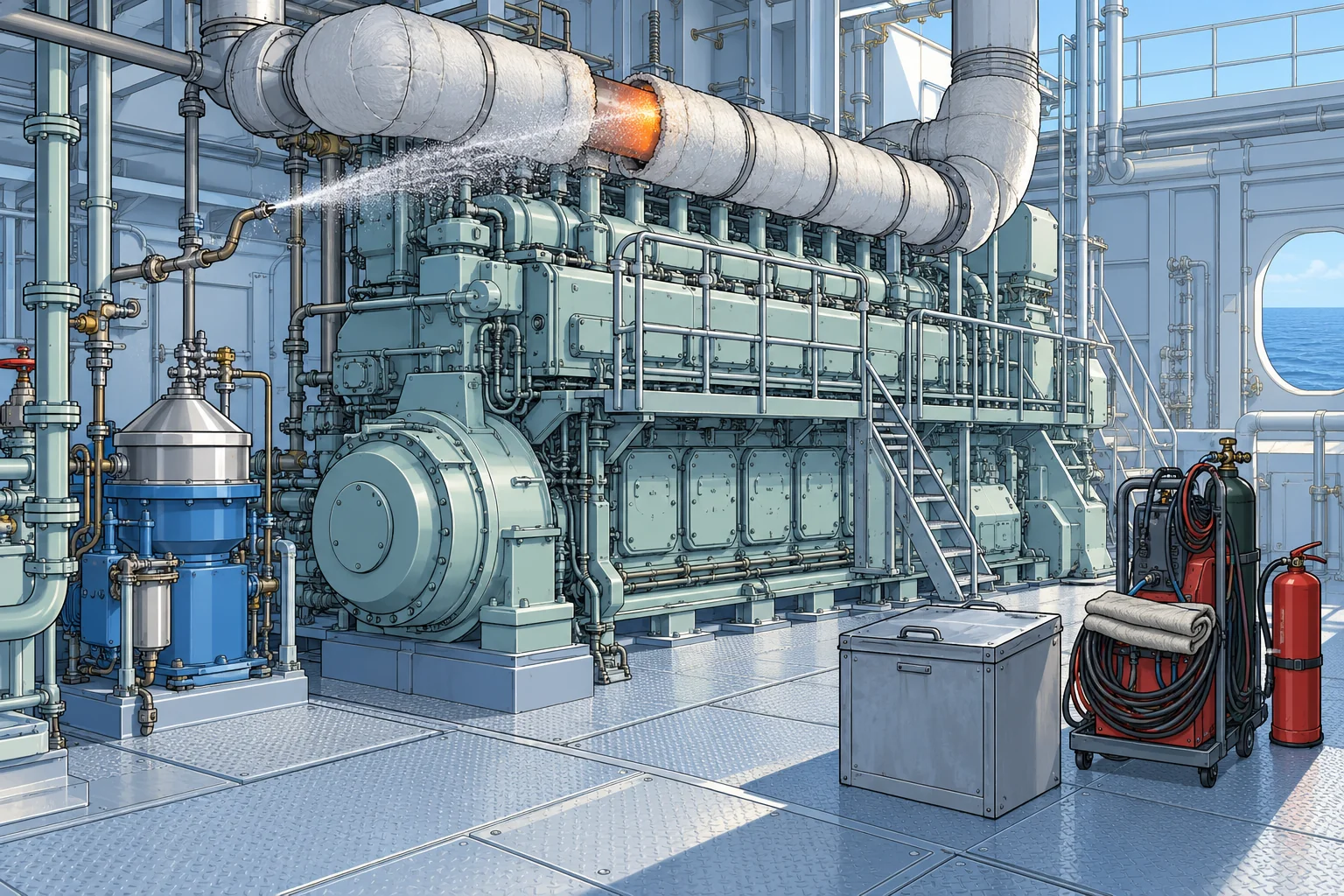
Fuel or oil can leak from pipes, filters and injectors onto hot surfaces, such as exhausts and turbochargers. SOLAS requires surfaces above 220 °C that a leak could reach to have lagging (heat insulation). External high-pressure lines between injection pumps and injectors need jacketed containment; spray shields protect other potential leak points. Leaking purifiers (oil-cleaning machines), oil-soaked insulation and oily bilges (low spaces where liquids collect) add fuel. Report leaks, missing insulation or damaged spray shields at once.
Hot work and electrics
Hot work—welding, cutting or grinding—needs a hot-work permit. Sparks and molten metal can fall through gratings and ignite waste below. Electrical fires can start at overloaded sockets, damaged cables or loose connections that overheat. Personal heaters and faulty chargers in cabins can also start fires. Report damaged or overheating equipment at once.
Galley, cabins and smoking
Galley fires start with unattended pans, overheated oil and grease in the extraction ducts. In cabins, smoking in bed and cigarettes thrown into bins are common causes. Smoke only where the ship allows it, use proper ashtrays and never throw a cigarette over the side, where the wind can blow it back on board or into a ventilator.
Self-heating, static and batteries
Spontaneous combustion happens when a material reacts slowly with oxygen and traps the heat until it ignites. Keep oily rags and cotton waste in closed metal bins and land them ashore. Some cargoes can also heat themselves and ignite. Static electricity can build up as fuel flows or splashes; a spark can ignite flammable vapour. Lithium-ion batteries can overheat uncontrollably, called thermal runaway, and start a fire.
Prevention every day
Fire prevention is everyone's job. Keep spaces clean, stow combustibles away from heat, wipe up oil spills, keep fire doors closed and never block extinguishers, hydrants or escape routes. Report defects such as missing insulation or a failed light. On your rounds look, listen and smell: smoke, a burning smell, heat or the hiss of a leak. Raise the alarm early; this gives the crew more time to respond safely.
2Key data
- Hot surfaces (SOLAS II-2/4)
- Above 220 °C, where a leak could reach: insulated
- Electrical ignition risks
- Overloads, damaged cables and loose, overheating connections
- Oily rags
- Closed metal bin; land ashore; never in a hot corner
- Main fire areas
- Engine room, galley, accommodation, cargo spaces
3Key points
- 1
Engine-room fires mostly start with fuel or oil reaching a hot surface.
- 2
Loose electrical connections can overheat and ignite nearby material.
- 3
Oily rags heat themselves: closed metal bins, landed ashore.
- 4
Smoke only where allowed, and never throw a cigarette overboard.
- 5
Report leaks, missing insulation and damaged cables at once.
4Frequent mistakes
Wrong: A small fuel drip in the engine room can wait until the end of the watch.
Right: Any leak near a hot surface is a fire risk. Report it at once so it can be isolated.
Wrong: A loose electrical connection is harmless while the equipment still works.
Right: A loose connection can overheat and start a fire. Report it and keep clear of damaged equipment.
Wrong: Oily rags are safe in an open cardboard box.
Right: They can heat themselves until they ignite. Use a closed metal bin and land them ashore.
5Practice case & exam keys
In the crew mess, a socket supplying a heater is darkened and smells of hot plastic. The heater still works. A shipmate says it can stay on until the break ends.
Show the answer
Keep people clear and report the hot socket and burning smell immediately. A loose connection can overheat even while equipment works. Have an authorised person isolate the supply. Do not touch the damaged socket or try to repair it. Raise the fire alarm if you see smoke or fire.
Exam keys
- Main ignition sources: fuel on hot surfaces, hot work, electrical faults, galley, smoking, spontaneous combustion, static.
- SOLAS: surfaces above 220 °C that leaks could reach must be insulated.
- Static charge can build as fuel flows or splashes; a spark can ignite flammable vapour.
- Prevention: housekeeping, closed metal bins for oily rags, report defects, keep fire doors closed.
Finish this unit
When you've read it, answer three questions. Get all three right to finish the unit; opening the page alone doesn't count.
My notes for this unit
No notes