

Choosing and using an extinguisher
1The lesson in plain words
Match the extinguisher and technique to the fuel. Follow its label, keep an escape route and leave if the fire is not controlled.
Which agent
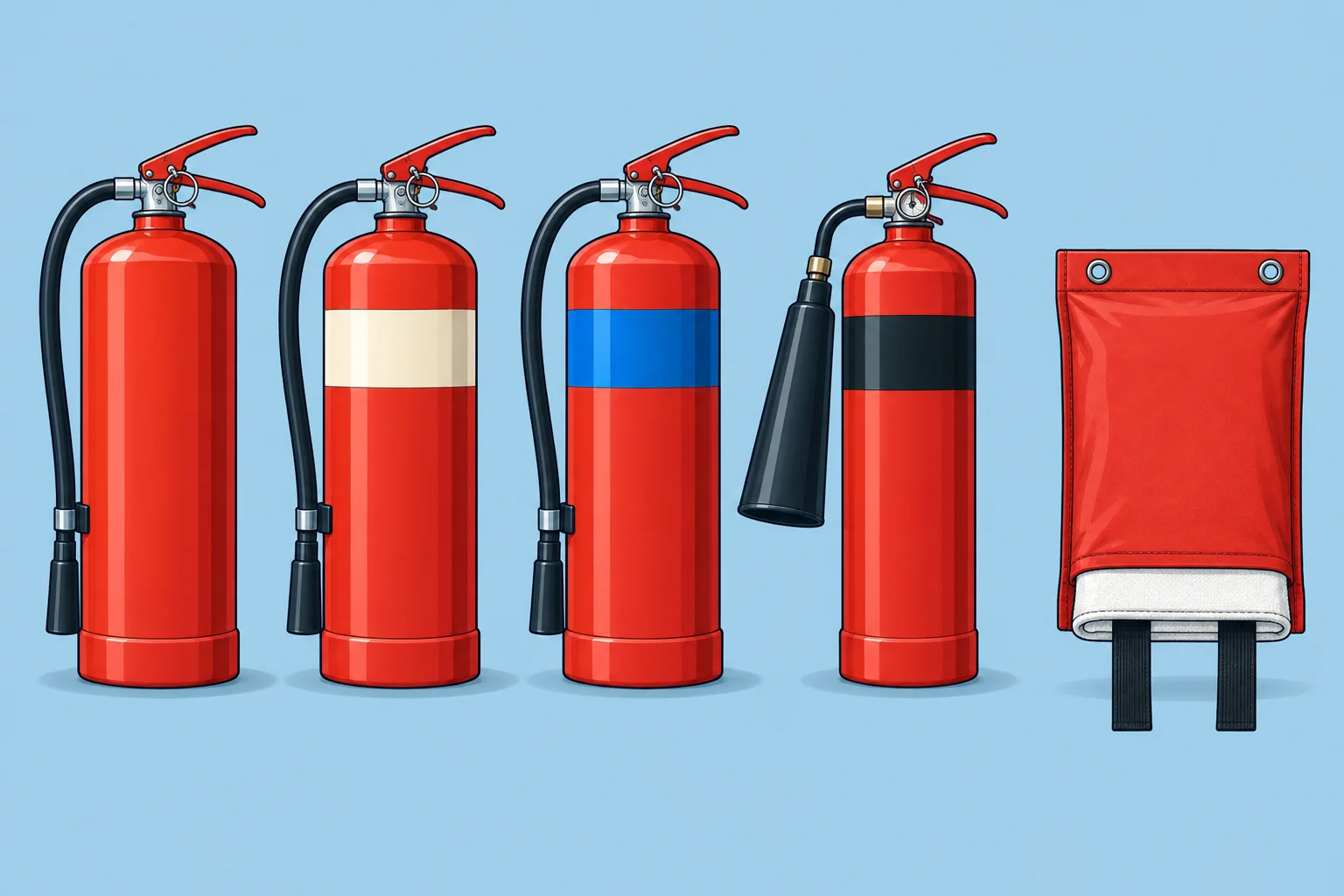
Water cools Class A solids; never use it on oil or live electrics. Foam suits A/B fires, not cooking oil; follow its label’s electrical restrictions. ABC powder suits A, B and C fires but gives little cooling. Its cloud can obscure your exit and irritate your lungs. Never extinguish a gas flame unless you can stop its supply: unburnt gas can explode. On live electrics, use only a rated extinguisher at its labelled distance; isolate power first if safe.
Carbon dioxide
Carbon dioxide (CO₂) suits Class B fires and live electrical equipment, within its label’s limits. It disperses outdoors and can suffocate in a closed space. Evacuate first. For an engine-space fire, keep the hatch shut and use the specified suitable extinguisher through its fire port, a small covered opening, from outside. Never enter the gas-filled space.
Fire blanket
A fire blanket smothers a small pan fire or a person’s burning clothing. Pull the tapes, hold the blanket in front of your hands to protect them, lay it over the pan from the front, turn off the heat if you can, and leave it in place until everything is cool. A wet chemical extinguisher, made for Class F, is rare on small boats.
Using it
Remember PASS: Pull the pin, Aim at the base of the flames, Squeeze the handle, Sweep from side to side. A small boat extinguisher may empty in 10 seconds or less, so start at the distance on its label and advance only as flames subside. Keep low and keep your exit behind you. Have a second extinguisher ready. For foam on liquid, follow the label: never drive a jet into the fuel, which can splash burning liquid.
When to stop
Fight a fire only while it is small and you can do it safely. If one extinguisher does not control it, or smoke fills the cabin, get everyone out, close the hatches behind you to starve it of air, send a Mayday and prepare to abandon to the liferaft or another vessel. Lifejackets on early. A boat can be replaced.
2Key data
- Water
- Class A; never on oil or live electrics
- Foam
- A/B; not cooking oil; check electrical restrictions
- Dry powder (ABC)
- A/B/C; stop gas supply; rated electrics only; little cooling
- CO₂
- B/rated electrics; suffocation risk; evacuate before discharge
- Fire blanket
- Small pan fires and burning clothing
- PASS
- Pull, Aim at the base, Squeeze, Sweep
3Key points
- 1
Water on solids only; never on oil or live electrics.
- 2
Powder: little cooling; stop gas supply first. CO₂: B/rated electrics; evacuate first. Follow electrical label limits.
- 3
PASS: pull, aim at the base, squeeze, sweep. For foam on liquid, follow the label; never drive a jet into fuel.
- 4
Small extinguishers empty in seconds: follow the label’s operating distance and keep an exit.
- 5
Losing it? Get out, close hatches, Mayday, prepare to abandon.
4Frequent mistakes
Wrong: Aim at the flames and smoke where they look worst.
Right: Aim at the burning base, following the label. With foam on liquid, never drive a jet into the fuel: it can splash burning liquid.
Wrong: Keep fighting until the last extinguisher is empty.
Right: If the first one does not control the fire, get out and call for help while you still can.
Wrong: CO₂ is safe to discharge in a closed cabin with people inside.
Right: Clear everyone first. Use only the specified suitable extinguisher through the engine fire port, from outside. Never enter a CO₂-filled space.
5Practice case & exam keys
A cushion smoulders and then flames near a cabin light. You have a powder extinguisher, a bucket and a fire blanket. The light circuit is still on. What do you do?
Show the answer
Shout ‘fire’. Isolate the circuit at a safely accessible control. If the fire is small with a clear exit, use electrically rated powder within label limits at the base. With power isolated, cool the cushion with water; never carry it. Watch for re-ignition. If fire persists or smoke threatens your exit, leave, close the hatch if safe and send Mayday. Ventilate only once the fire is confirmed out and the cushion is cool; if unsure, stay out and seek emergency-service advice.
Exam keys
- Water: A only. Foam: A/B, not cooking oil. Powder: A/B/C, little cooling; stop gas supply before extinguishing. CO₂: B/electrics; evacuate first, specified suitable extinguisher through the engine fire port from outside. Live electrics: rated agents only; follow label restrictions and distances.
- Fire blanket: smother small pan fires; leave the pan covered until cool. It can also smother burning clothing.
- PASS; aim at the base; keep an escape route. Foam on liquid: follow the label; never drive a jet into the fuel.
- If not controlled quickly: evacuate, close hatches, Mayday, prepare to abandon.
Finish this unit
When you've read it, answer three questions. Get all three right to finish the unit; opening the page alone doesn't count.
My notes for this unit
No notes